Guide
What Is DCIM? Data Center Infrastructure Management Explained
What data center infrastructure management covers, how it sits beside the BMS, EPMS and CMDB, and why it is only as good as the records it starts with.
Data Center Automation Editors · Updated
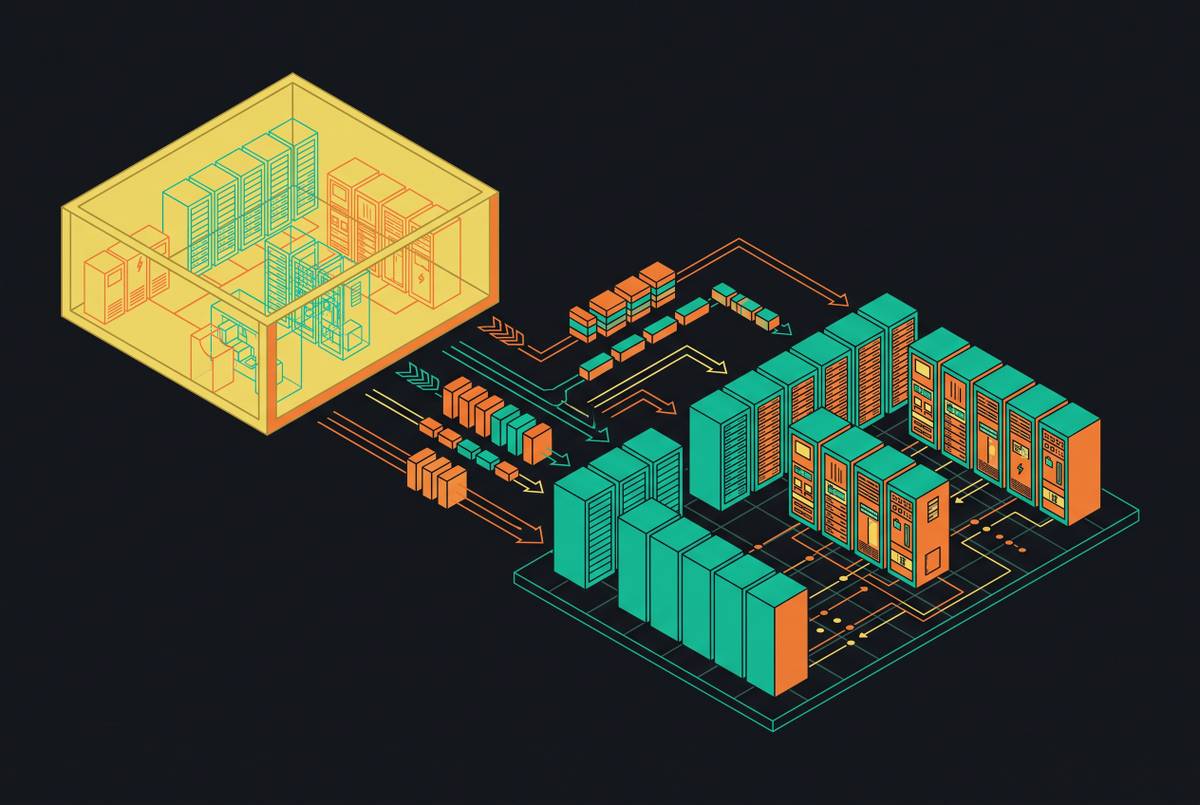
DCIM stands for data center infrastructure management. It is the class of software operators use to keep one record of a data center's physical infrastructure, the racks, IT equipment, power chain, cooling and cabling, and to monitor how much of the facility's space, power and cooling is in use.
Gartner's widely quoted definition describes DCIM tools as tools that "monitor, measure, manage and/or control data center utilization and energy consumption of all IT-related equipment" and of the facility infrastructure that supports it. In practice the term covers two jobs that products weight differently: keeping an accurate inventory of what is where and how it is connected, and collecting live readings from the equipment.
DCIM sits where IT and facilities meet. The IT team owns the servers and network; the facilities team owns the UPS, PDUs, chillers and air handlers. A DCIM system holds the links between them: which server is in which rack, fed from which circuit, on which UPS, in which cooling zone.
| System | Stands for | What it covers | Mostly used by |
|---|---|---|---|
| DCIM | Data center infrastructure management | Racks, IT assets, power chain, cable connections, space, power and cooling capacity | Data center operations, capacity planners |
| BMS | Building management system | Controls and monitors mechanical and environmental plant: chillers, air handlers, CRAHs, sensors | Facilities engineers |
| EPMS | Electrical power monitoring system | Metering and events along the electrical path, from utility incomer to switchgear, UPS and PDU | Electrical and facilities engineers |
| CMDB | Configuration management database | IT configuration items and the services that depend on them | IT service management |
What a DCIM system keeps a record of
Whatever product it is, a DCIM system is a model of the facility's physical infrastructure. Its value depends on how much of that model is filled in and kept current.
- Assets: every rack, server, switch, storage array, rack PDU and piece of facility equipment, with make, model, serial number, owner and location down to the rack unit.
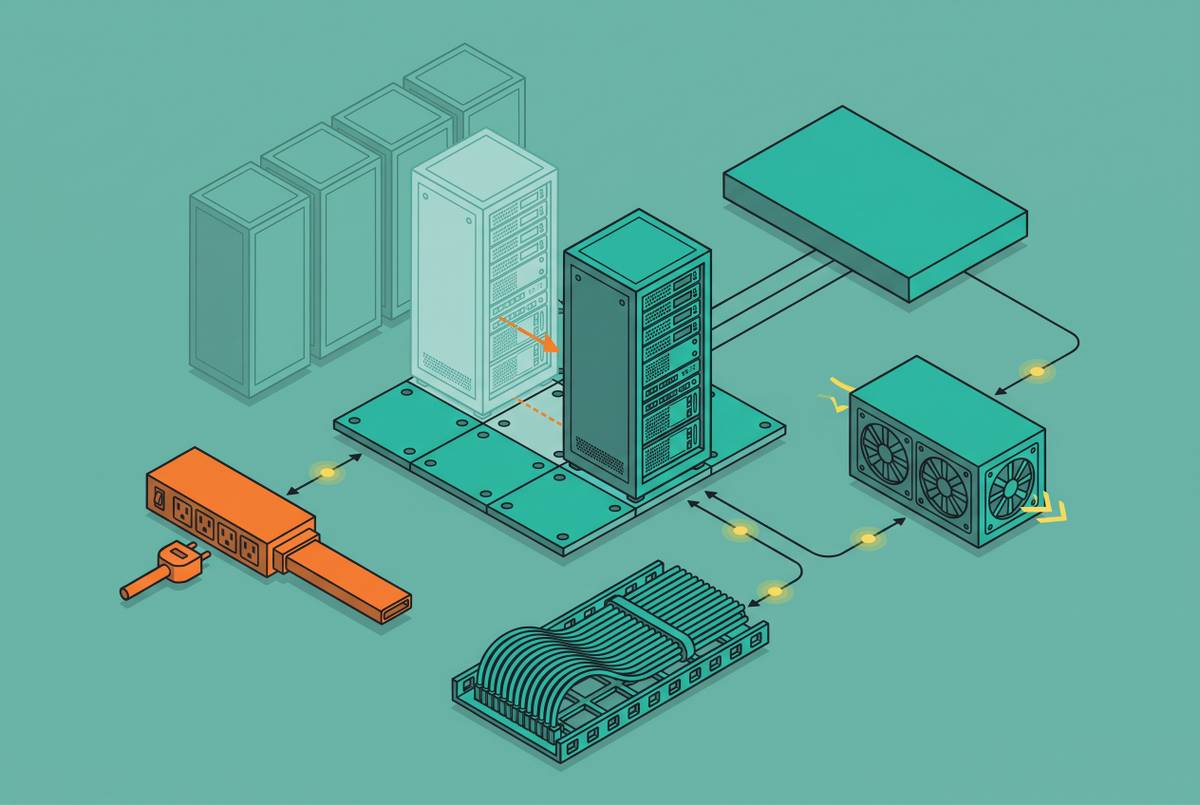
- The power chain: which device is fed from which rack PDU outlet, branch circuit, panel, floor PDU and UPS, so a planned shutdown or a failure can be traced to what it affects.
- Physical connectivity: network and power cable connections port to port, and the patch panels and trays they pass through.
- Space, power and cooling capacity: what each rack, row, room and cooling zone was designed for, what is reserved, and what is in use.
- Environmental and power readings: temperature, humidity and power draw collected from sensors, meters and intelligent PDUs.
What operators use DCIM for
The record is a means to answer everyday operating questions without walking the floor or opening a spreadsheet.
- Capacity planning: where a new rack or server can go with enough space, power, cooling and network ports, and when a room or circuit will run out.
- Change management: planning and tracking moves, adds and changes as work orders, so the record is updated as the work is done. See keeping power, cooling and cable plant in sync after a rack move.
- Finding stranded capacity: power or cooling that exists on paper but can't be used, because space, circuits or airflow run out first. See stranded-capacity reports that update on rack moves.
- Monitoring and alerts: thresholds on temperature, humidity and circuit load, raised before equipment is at risk.
- Energy reporting: trending power use and, where both facility and IT power are metered, calculating PUE.
- Visualisation: floor plans, rack elevations and power-chain diagrams generated from the record instead of drawn and redrawn by hand.
DCIM, BMS, EPMS and CMDB: how they fit together
DCIM does not replace the building management system or the electrical power monitoring system. The BMS controls the mechanical plant and the EPMS watches the electrical path; a DCIM system usually reads data from both and relates it to the racks and IT equipment the plant serves.
On the IT side, a CMDB records configuration items and the business services that depend on them. DCIM adds the physical facts a CMDB rarely holds: the exact location, power feed and cabling of each device. When the two disagree about where a server is, neither can be trusted, which is why many operators integrate them. See why inconsistent infrastructure records after rack moves are a workflow problem.
Product boundaries vary: some DCIM products include power monitoring that overlaps with an EPMS, and some BMS platforms show rack-level data. What each system is the source of truth for should be decided per facility and written down.
Where DCIM data comes from
Live readings arrive over the protocols the equipment speaks, commonly SNMP from IT devices and intelligent PDUs, and Modbus or BACnet from facility equipment, either directly or through the BMS and EPMS.
The inventory, the connections and the design capacities are a different matter. They have to be entered, and on a new facility they describe what the design and construction teams built. If that information arrives at turnover as drawings, spreadsheets and PDF O&M manuals, someone retypes it into the DCIM system, and the record starts life already out of date.
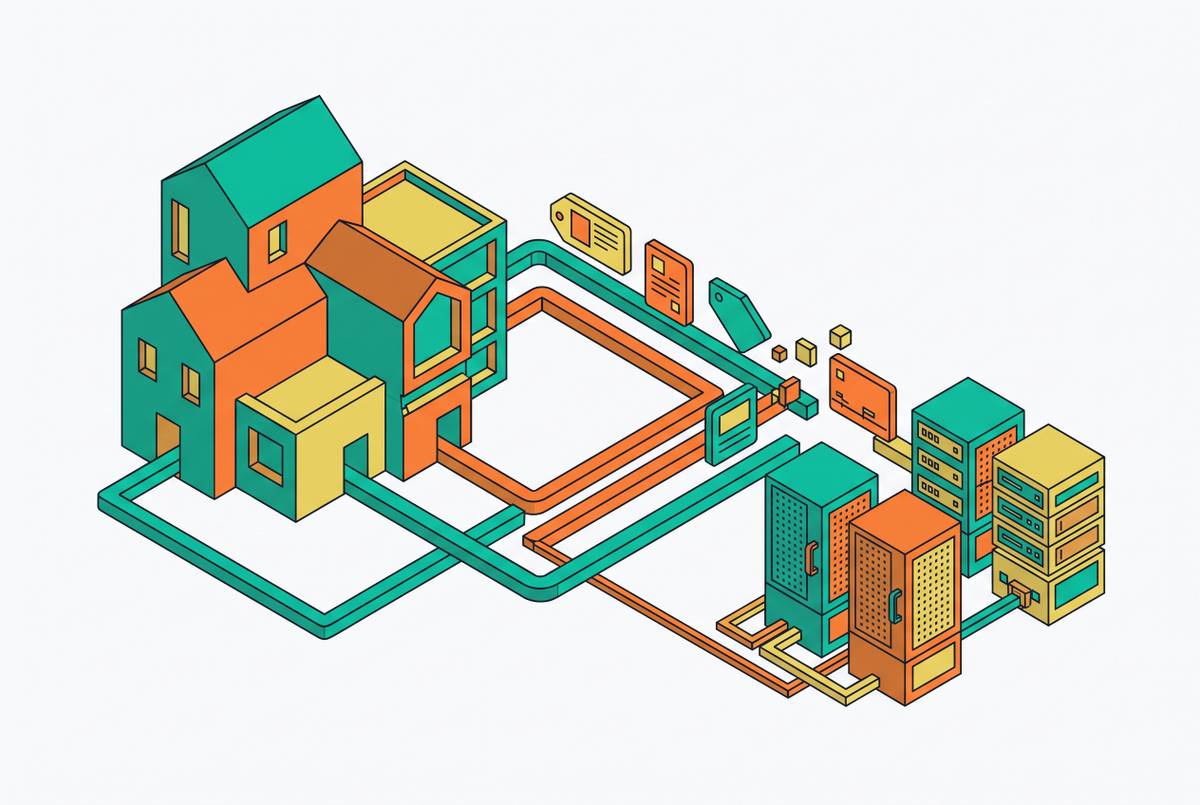
The alternative is to define the asset data the operator's DCIM needs at the start of design, carry it through the design model and submittals, and hand it over in a structured form that can be loaded directly. See DCIM data population from design models at project handoff and structured asset data requirements for a DCIM-ready BIM handoff.
Why DCIM records drift from reality
A DCIM system is accurate only while every physical change is recorded in it. Records drift when work is done outside the change process, when a rack move updates the location but not the power feed, cable connections or cooling zone, or when equipment is replaced like for like without a new serial number being captured.
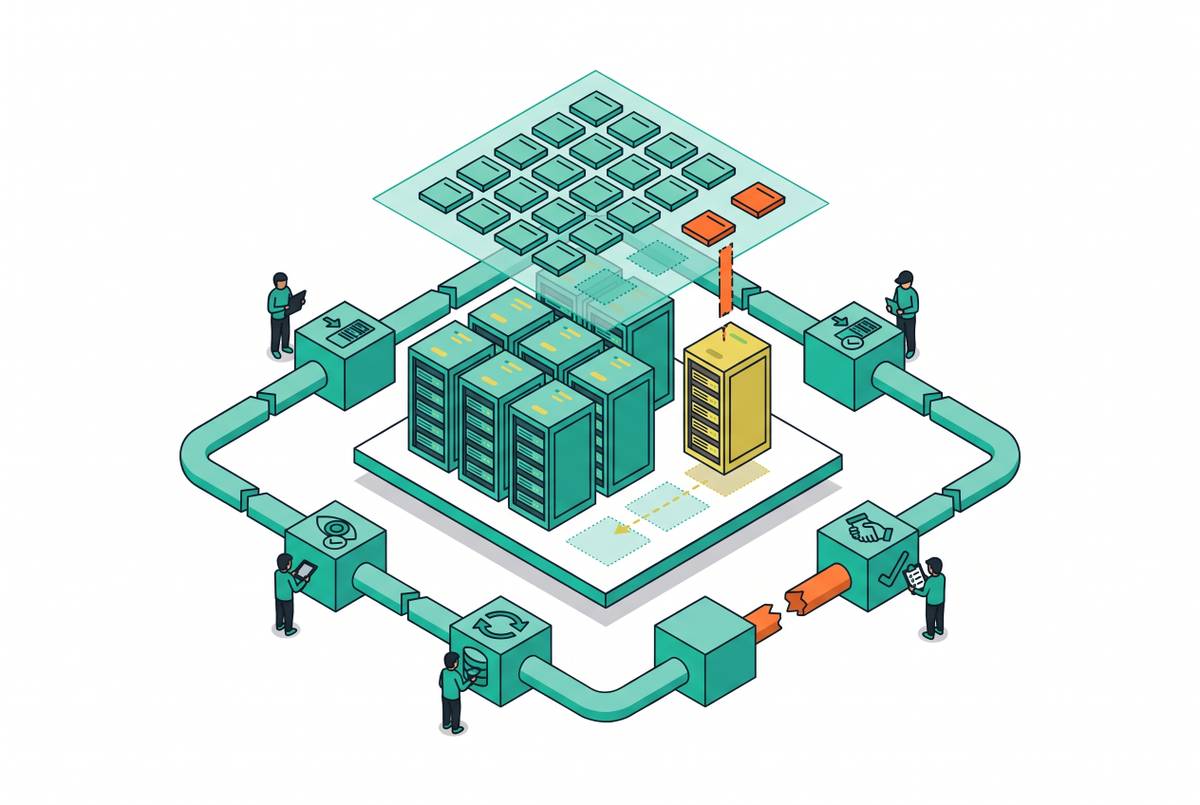
Operators who keep DCIM trustworthy tend to make the record part of the work itself: no move without a work order, no work order closed until the record matches, and periodic audits against the floor. Platforms differ in how much of a change they carry through on their own; see DCIM platforms that cascade power, cooling and cable records on rack moves.
Getting DCIM ready at turnover on a new facility
For a new build, the day the operator takes over is the cheapest moment to get the DCIM record right. Before turnover, check that:
- The operator's DCIM data requirements (fields, naming and asset tag conventions) were issued to the design team and contractors, not discovered at handover.
- Asset records capture the as-delivered nameplate data and serial numbers recorded during commissioning. See the data center commissioning levels guide.
- The power chain in the handover data matches the as-built single-line diagram and panel schedules, including breaker and circuit identifiers.
- The points the DCIM system reads from the BMS and EPMS were verified during functional testing. See BMS integration data requirements at turnover.
- The handover format can be imported without retyping, for example a COBie or other structured export agreed with the operator. See IFC and COBie data standards in critical-facility projects.
Questions to ask when evaluating a DCIM product
DCIM products range from monitoring-led tools to asset- and capacity-led platforms. Check the vendor's current documentation and ask for a trial on your own data rather than relying on feature lists:
- Which equipment, protocols and existing BMS, EPMS and CMDB systems it integrates with, and through what API.
- Whether its equipment model library covers the makes and models in your facility, and how missing models are added.
- How it models the power chain and redundancy (A and B feeds, N+1 and 2N), and whether it calculates capacity against them.
- How changes are planned and recorded, and which related records a move updates on its own.
- How it imports a structured handover from a design model or spreadsheet at turnover.
- How it is licensed and hosted (on premises or as a service), which only the vendor's current quote can answer.
Questions
What does DCIM stand for?
Data center infrastructure management: the software and practice of recording and monitoring a data center's physical infrastructure, including racks, IT equipment, power, cooling and cabling.
Is DCIM the same as a BMS?
No. A BMS controls and monitors the mechanical and environmental plant. A DCIM system models the IT and power infrastructure and capacity, and usually reads data from the BMS rather than replacing it.
Does DCIM calculate PUE?
Many DCIM products can trend PUE, but only where total facility power and IT power are both metered and fed into the system. Without that metering, the figure is an estimate.
Does DCIM replace a CMDB?
Usually not. A CMDB tracks IT configuration items and the services that depend on them; DCIM tracks physical location, power and connectivity. Operators often integrate the two so each is the source of truth for its own data.
Is DCIM only for large data centers?
No. The need to know what is installed, how it is powered and how much capacity is left applies to a single server room too. The scale changes how much monitoring and integration is worth paying for.