Why Inconsistent Infrastructure Records After Rack Moves Are a Workflow Problem Not a Human Error Problem
Rack move records fail because workflows let jobs close early.
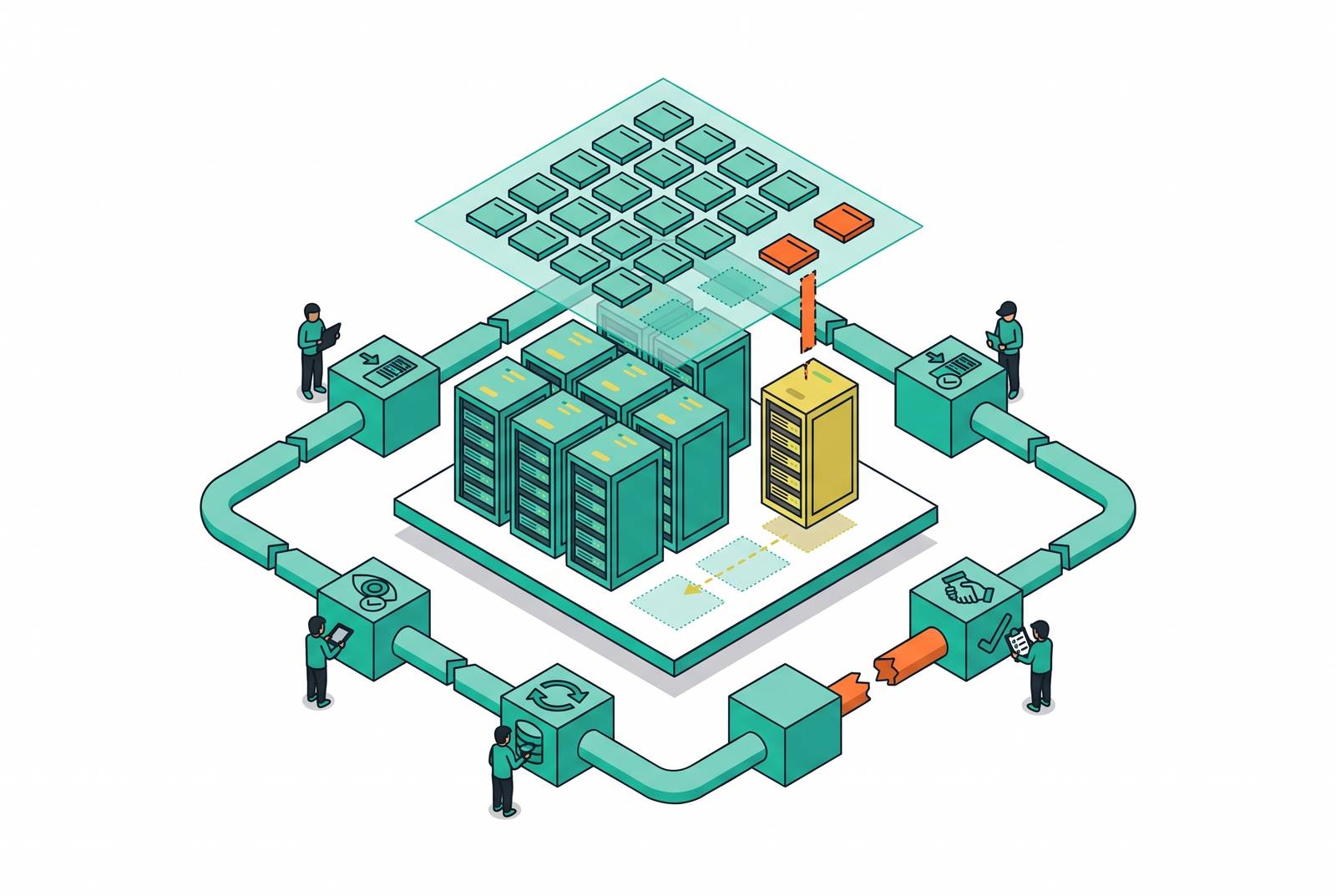
Inconsistent infrastructure records after rack moves are a workflow problem. Accuracy requires a move to remain open until its changes propagate through power, cooling, cabling, capacity, and documentation records.
Why rack moves reliably produce record errors regardless of who performs them
A move is complete, the rack has physically changed, and three systems still show the old state. The technician may have done the physical work correctly and updated the tool used to manage it. Yet the other records remain untouched because nothing in the workflow required them to change before the job closed. The physical task is finished. The information task remains unfinished, and that split is the mechanism behind the error.
Three failure classes explain where the split occurs. A capture failure means the change was never logged anywhere. A process failure means the workflow completed without enforcing the update step. A system reconciliation failure means the update reached one tool but never propagated to the others. These are distinct defects in recordkeeping.
The remedy depends on which defect caused the discrepancy. A process failure needs a gate that stops the job from closing, while a system reconciliation failure needs integration between tools. Neither is repaired by reminding a technician to pay closer attention. Fatigue and time pressure can cause people to skip capture steps, so human behavior is part of the picture. But diligent technicians still work inside processes that allow unfinished updates and disconnected systems, and a reliable workflow cannot depend on sustained discipline to bridge those gaps.
How the absence of a workflow gate makes record drift the default outcome
When a work order can close without a confirmed record update, the process treats accurate documentation as optional. The update may be expected, but it is not enforced. Most data center tools record transactions without checking what is physically there, so their records are right only if someone enters every change correctly. In a live facility with constant moves, adds, and changes, small omissions accumulate. Close-out is where that dependency repeatedly breaks.
Each move that goes unrecorded makes it more likely that the next planned move starts from a stale baseline. A team can follow its records carefully and still plan against equipment locations or connections that no longer exist as documented. The error therefore feeds the next decision. Between audits, drift grows as mistakes build on one another.
Dashboards continue reconciling against other system data, which may share the same outdated assumptions. Performance indicators can look stable until a physical audit or an outage exposes the disagreement with the floor. By then, months of discrepancies may obscure the original missed step. Putting record updates after the physical move, with no barrier to closing the order first, creates both the drift and the conditions that keep it hidden.
Why record errors after a single rack move contaminate every connected system simultaneously
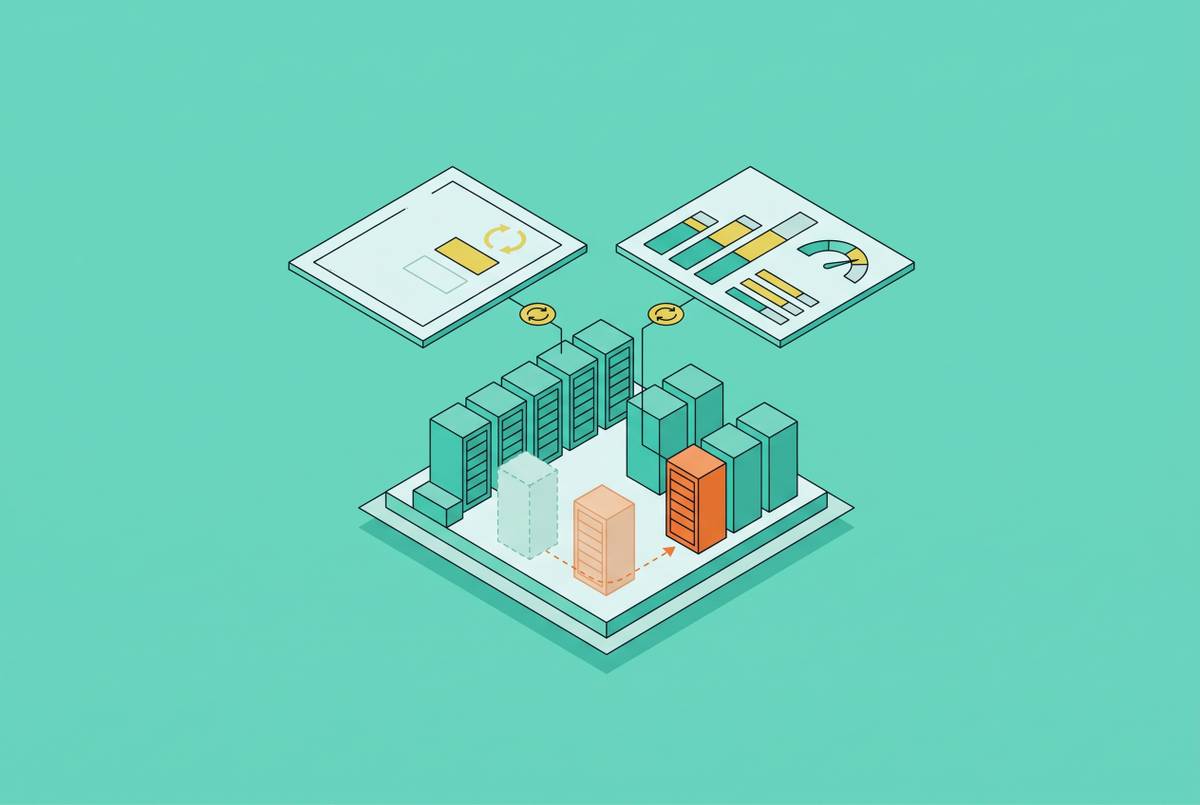
A rack move changes more than a location field. It touches power, cooling, cabling, and capacity records together, so an unrecorded change affects every downstream system that relies on those fields. The physical event is shared, but the records may not be. Updating one tool cannot settle the others unless the workflow propagates the change.
That fragmentation is especially clear when data center infrastructure management, IT asset management, and configuration management records operate as separate silos. DCIM may show the new location while ITAM or the CMDB still holds the old state. The same asset can then have conflicting locations, statuses, and power draws. Each tool has a record. None necessarily has the complete current picture.
Carma’s 2026 inventory sync analysis shows how this happens with power data. Contracted kW lives in the CRM, design capacity lives in electrical drawings and DCIM, and metered draw lives in the BMS. Those are different measures, but they describe one customer and belong to different teams. Without coordinated updates, they drift independently after a change.
Colocation workflows expose the same fragmentation across work orders. Electrical decommission, cross-connects, physical teardown, and record updates can have separate owners and no shared deadline. DCIM can consequently show available rack space that is still electrically unavailable. Records that must agree before the space can be used have a broken relationship.
What organizations actually lose when records and racks disagree
Stranded capacity is one direct consequence of that broken relationship. Space, power, and cooling are still set aside for phantom equipment, so a facility looks full while capacity that could be used sits idle. Sales and capacity planning then depend on numbers nobody can defend. The loss begins before any equipment fails. When a workflow never checks that equipment has been retired or moved, resources stay tied to an outdated record.
Operational safety is a separate exposure. Wrong capacity data can lead a team to load a circuit or cabinet beyond its real limit. A device labeled as spare may still run an application, so decommissioning it may be unsafe despite what the record says. Hidden dependencies become visible during the change itself. In each case, the technician’s decision may follow the documentation while the documentation no longer describes the floor.
An assessor may request a chain of custody that the records cannot produce, while untracked hardware can sit outside patch cycles. Missing history also obstructs decommission and refresh projects, which must either pause for reconciliation or proceed on assumptions. That delay is another operational cost.
How the as-built handoff gap embeds record drift before operations even begins
For new facilities, construction handoff often establishes an incomplete baseline because the delivered documentation cannot load into operational systems without manual translation. Later rack moves then add discrepancies to records that were never fully aligned with the installation.
The Carma analysis identifies the formats behind this handoff problem, including CAD or PDF drawings, commissioning test reports, and electrical contractor spreadsheets. These documents do not load cleanly as structured inventory or DCIM data. Someone must translate them under tight deadlines. When DCIM is populated from drawings after construction, the model reflects those drawings and may differ from what was installed. The opportunity to resolve discrepancies during construction has already passed.
Operational data requirements should be defined at project kickoff. Those requirements include the model format, asset tagging structure, and fields needed by the operator’s maintenance management system and DCIM. Construction records can then be built for import from the start. Equipment data taken from manufacturer specifications should flow into models and schedules so no one has to enter it again at handoff.
Treating structured asset data handoff to DCIM, EPMS, and BMS as a delivery endpoint addresses this specific gap by connecting design information to operational records. Without that discipline, operations teams spend their early months taking inventory of what was installed by hand. The resulting record may already be outdated and lack traceability to substitutions made during construction.
Why floor-walking audits fix the record but not the workflow that broke it
A physical floor audit is the right response to accumulated drift. It establishes what is present and allows the recorded state to be corrected. But it does not change what the next move workflow permits. A clean inventory begins degrading again with the next unlogged change, even if the audit itself was thorough.
To diagnose the cause rather than just measure the damage, the audit should begin with a blind physical count. Reconciliation then separates findings into matched, physical-only, and record-only items. Each exception should be traced to its last touch and classified as a capture, process, or system reconciliation failure. The classification directs the repair. A raw variance number shows how far the records disagree, but not which part of the workflow needs investment.
If process failures dominate, the fix is a mandatory update gate. If system reconciliation failures dominate, the fix is integration. More frequent audits shorten the interval between cleanups while leaving the source of the errors intact.
Continuous automated tracking, including RFID and fixed readers, addresses a different part of the problem. It can improve capture and is a necessary layer in high-velocity environments. Yet detecting a physical change does not by itself prevent a work order from closing before the CMDB, DCIM, and power records are updated. Capture and enforcement are complementary. Continuous verification protects accuracy only when record updates are also tied to each move, add, and change.
How do you automate power, cooling, cabling, and documentation updates after a rack move?
The workflow needs a mandatory closure gate, connected updates, and a deployment-status model defined before construction starts. These principles address different failure points. The gate stops the job from closing too soon, integration keeps updates from staying in just one tool, and the status model tells each system how far the rack has progressed. Automation without those shared definitions can still leave records disagreeing about what a change means.
For operations, the gate should block closure in the ticketing system, DCIM, or any other tool used to complete the move. Closure requires confirmation of the status change, new location, updated power connections, and new cable paths. A single confirmed change should propagate across the connected tools, eliminating separate entries. The update becomes a precondition for completion. Merely adding a documentation task after the move preserves the original weakness.
For new builds, Studio connects layouts, critical-systems engineering, cable routing, documentation, RFIs, and operations-ready handoff in one workflow. Moving a rack in the design model cascades the change through power, cooling, cable, and documentation. This is the design-side counterpart to an operational closure gate.
The deployment-status model must distinguish planned, staged, installed, energized, commissioned, and operationally accepted states from project kickoff. Those states keep teams from treating installation as proof that equipment is ready to use and give them structured data for handover. Traceability is equally necessary. Every RFI answer, design decision, and equipment parameter should connect to the information supporting it, so the completed record explains both the current state and its basis.
The organizational shift required to treat record accuracy as a workflow output
Enforcing the full sequence requires one team or function to own it end to end, including the record update. Individual teams can still perform different tasks, but they need a shared deadline and closure criterion. Otherwise, each group can finish its own task while the move as a whole is still unfinished. Local completion is not end-to-end completion.
Electrical decommission, cross-connects, physical teardown, and documentation compete with revenue-generating work, leaving disconnected tasks without an owner responsible for finishing the sequence. A limited set of racks should be reconciled properly, with exceptions classified by error type and investment directed toward the dominant cause. That avoids moving bad records into new tooling and finding the same variance six months later.
The ownership principle also extends back through delivery. Defining structured asset data at kickoff and maintaining it through construction gives operations a defensible baseline and avoids an inventory reconstruction project. Studio’s connection between design decisions and DCIM, EPMS, and BMS handoff is the delivery-side expression of that approach.
The decay rate between audits measures operational performance. A workflow that enforces updates produces a decay rate near zero, while one that leaves updates optional allows drift to compound until reconciliation is forced. That distinction changes what the organization evaluates.
Sources
GuideWhat Is DCIM? Data Center Infrastructure Management Explained