Eliminating Manual Documentation Rework When Server Racks Are Relocated
One live rack-position record can replace weekend-long document hunts.
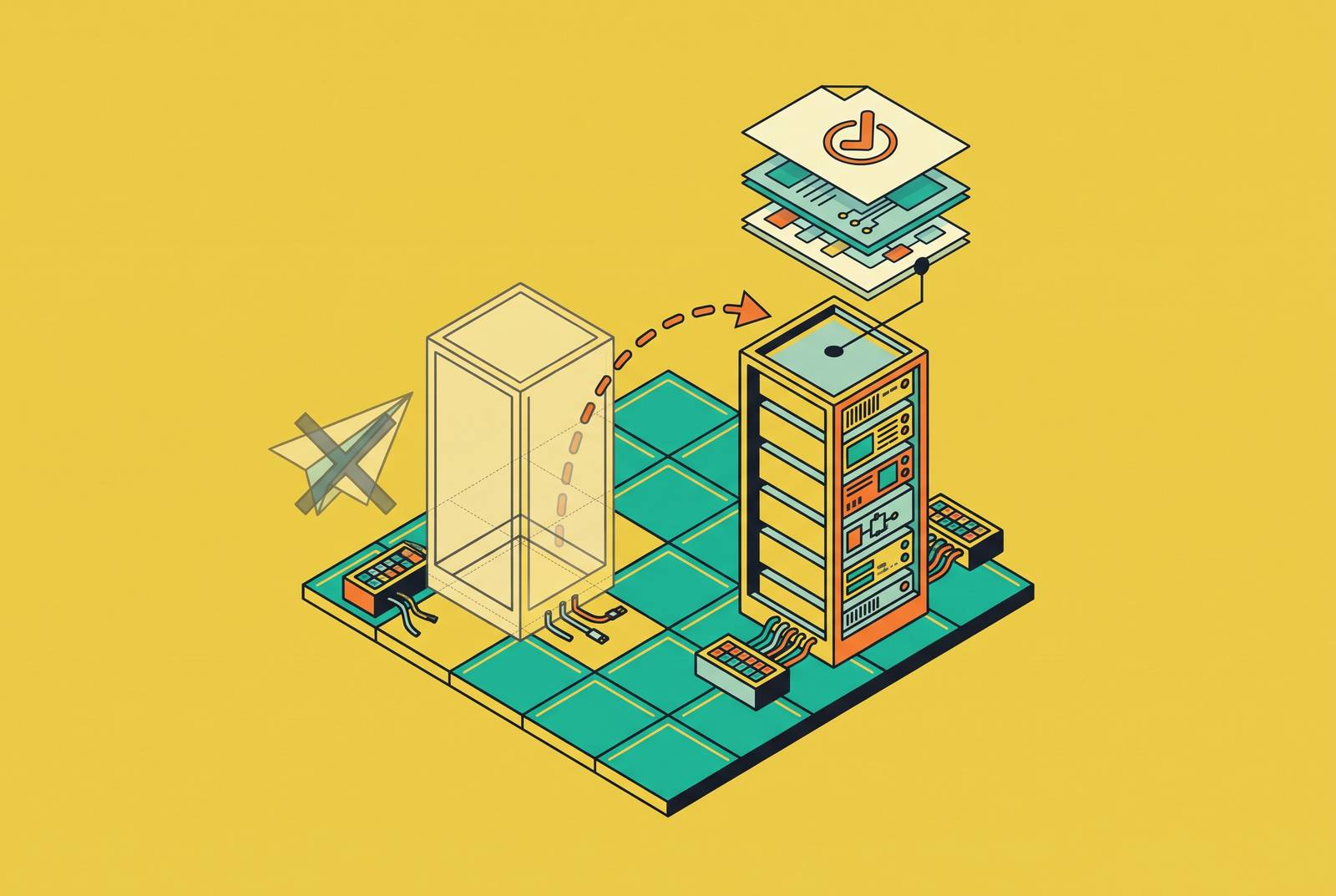
Eliminating manual documentation rework when server racks are relocated requires one live source for rack position that power, cooling, cabling, sheets, and asset records read automatically. The real cost is the manual rework that follows the physical move across disconnected records. Deterministic rules must propagate the change, rather than people editing every document or AI guessing what belongs in it.
Why a rack move becomes a documentation emergency across four disciplines
A rack move is approved, and the document hunt begins. Someone must find the drawings that show its current position, identify the records that depend on that position, and ask their owners to make changes. Someone must open each record, edit it, and check it again. Meanwhile, the move window stays where it is. Hours of documentation work compress into the same weekend as the physical relocation.
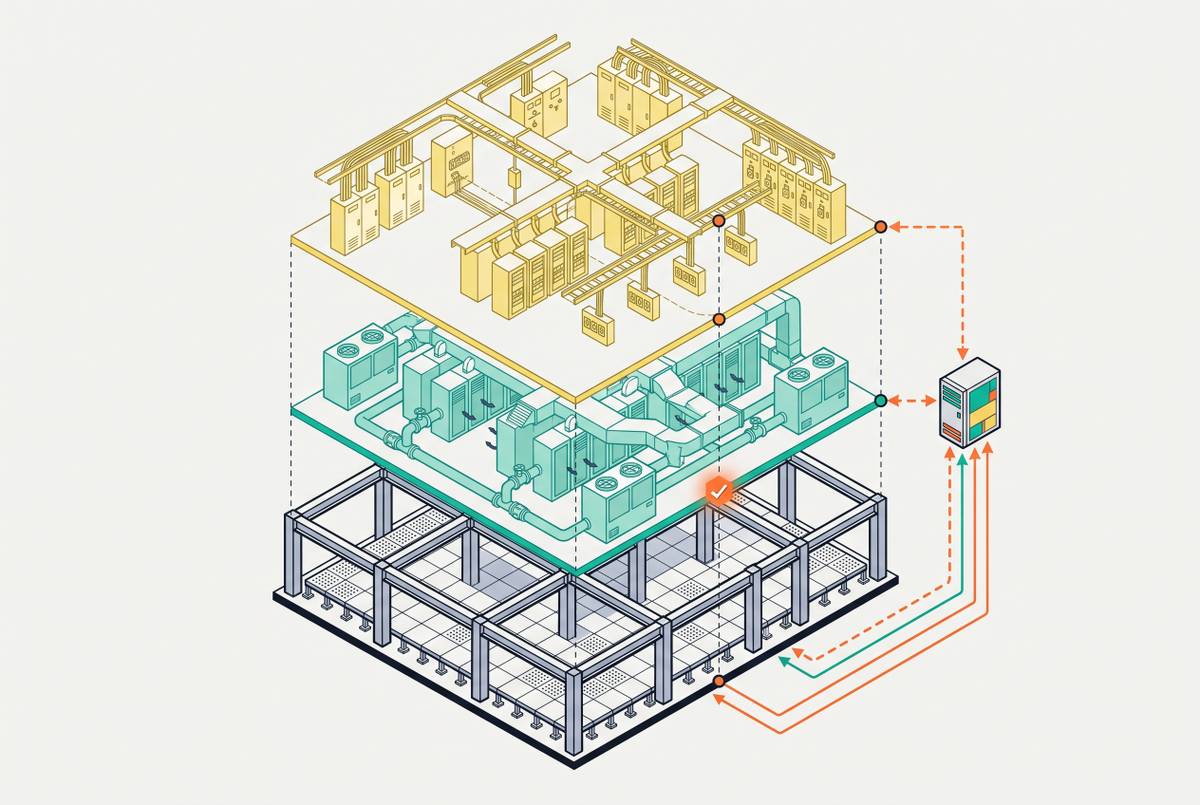
Electrical, mechanical, structured cabling, and operations teams each own records, but those records do not automatically read changes from one another. A relocation is therefore a power event, a cooling event, a cabling event, and a fiber-routing event. The move also changes what drawing packages and asset inventories need to show. The way ownership is split builds this coordination failure into the structure.
Higher rack densities put more pressure on that structure. 3XE Hosting's 2026 guide says that high-density GPU colocation and AI training clusters can give off more heat than traditional cooling units can handle, so they need liquid-to-chip cooling or rear-door heat exchangers as capacity grows. A room average is not enough to judge readiness. The relevant figure is the power and cooling the destination can support at the individual rack, especially as design loads above 100 kW per rack become an increasingly requested capability in specialized hyperscale facilities.
Capitol Moving's 2026 checklist identifies verified destination power, cooling, and floor loading as prerequisites before hardware leaves the origin facility. Those checks depend on records held by different teams. If the documents still show the old rack position, the teams are checking readiness against stale information.
The four legs of the rework cascade and how each one breaks
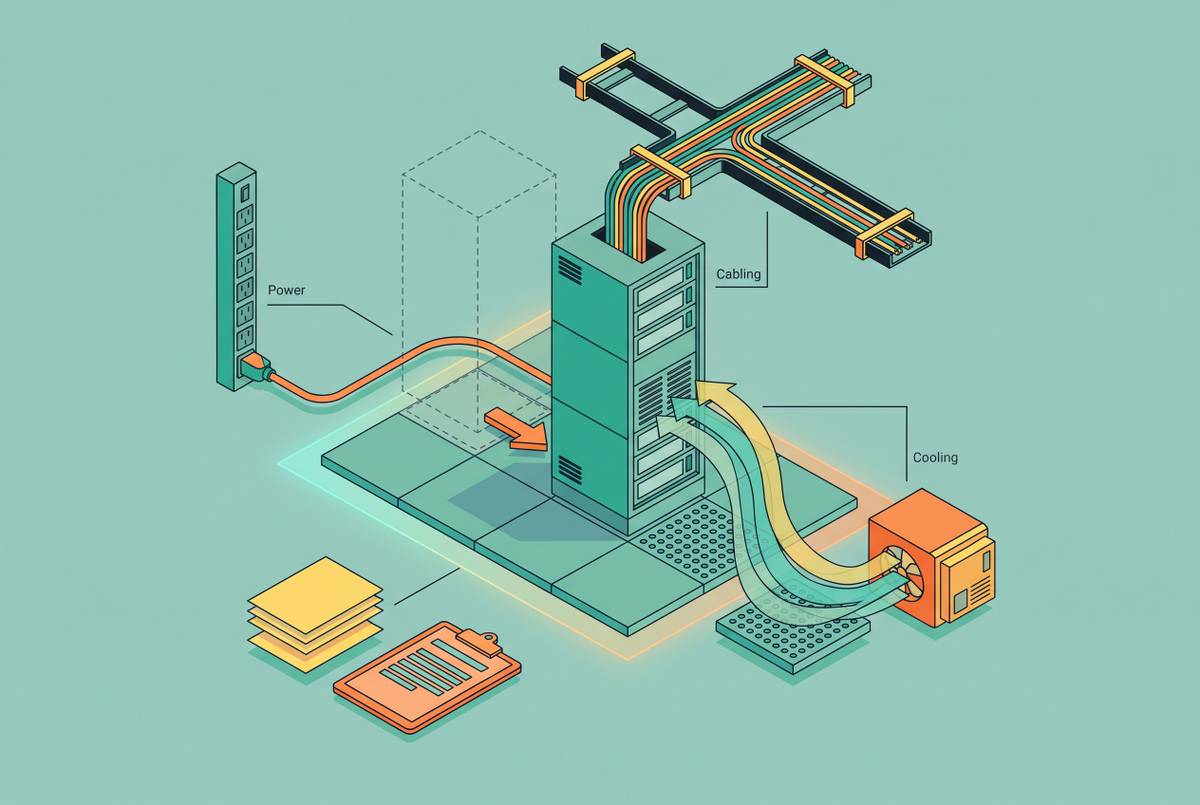
Power records lose their validity when a rack moves to a different row or bay. Circuit assignments and PDU port maps need to show the destination, and electrical one-lines and power room layouts need to change to match. Otherwise, commissioning begins with drawings that no longer match the installation. Connector compatibility needs a fresh check as well. The 3XE Hosting guide identifies C19/C20 versus C13/C14 mismatches as a preventable move-day failure that planning should catch.
Cooling breaks through a different dependency, because thermal calculations depend on where the heat is released. Moving a high-density rack changes local airflow assumptions for the space beneath that rack and the surrounding row or zone. The effects can cross discipline boundaries again. A mechanical engineer rerouting ductwork without updated rack positions may create a conflict with structural clearances or electrical conduit paths. Teams may only find that conflict when installation begins.
Cabling and fiber records show where connections are. After a move, teams must check that patch panel port maps, cable labels, and fiber backbone documentation agree. AMB Moving's 2026 server rack guide allocates one to two weeks for documentation and surveys, including site surveys at both locations, before physical work begins. Rack elevations also need rebuilding for the destination, with each unit's position, cable path, and power source recorded. Origin records for fusion splices and OTDR traces become invalid references unless they are actively updated, while fiber sizing must account for the uplink needed in three years.
Those changes also reach sheets and schedules in separate packages. Construction documents, as-built drawings, and submittal logs each require attention, while asset inventories must connect serial numbers to the new rack positions. Fast-track delivery makes this harder because design and construction overlap, phased permits split packages, and dense MEP systems force cross-discipline coordination. One change rarely stays on one sheet. The shared root cause is a single rack position held in multiple disconnected, manually maintained records.
Why RFIs and schedule risk multiply when rack position data is fragmented
A field team encountering conflicting rack records needs an answer before it can proceed. That question becomes a request for information, or RFI, but the question did not create the problem. A conflict, omission, or ambiguity in the documents did. Every manual transfer of a position change creates another chance for that gap to appear. The RFI is how the field exposes it.
The cost extends beyond the time spent replying. An unresolved question can block procurement of long-lead equipment and push the delay into commissioning. Even a clarification that involves little money can carry a large risk if electrical energization or integrated systems testing depends on its answer. Teams must weigh how the answer could affect the schedule, procurement, costs, and the work other teams do next. The apparent size of the question can conceal the size of the dependency.
Fragmentation also creates work after construction has ended. Operations teams inherit DCIM records, rack layouts, and asset inventories that must match the relocated equipment before those records can support facility management. If design equipment tags differ from DCIM asset identifiers, integrations and reports need a translation layer. That is an ongoing cost. It starts with a design documentation gap and persists through operational use.
Capitol's checklist identifies weak chain of custody without signed handoffs as a common relocation failure mode, because an untraceable missing server becomes a dispute. Retired hardware also needs chain-of-custody logs, certificates of data destruction, and recycling or resale paperwork held together. Disconnected records make both the installed environment and the disposition of removed equipment harder to establish. Faster RFI handling alone cannot repair that underlying fragmentation.
How do you automatically update power, cooling, cabling, and documentation after a rack move?
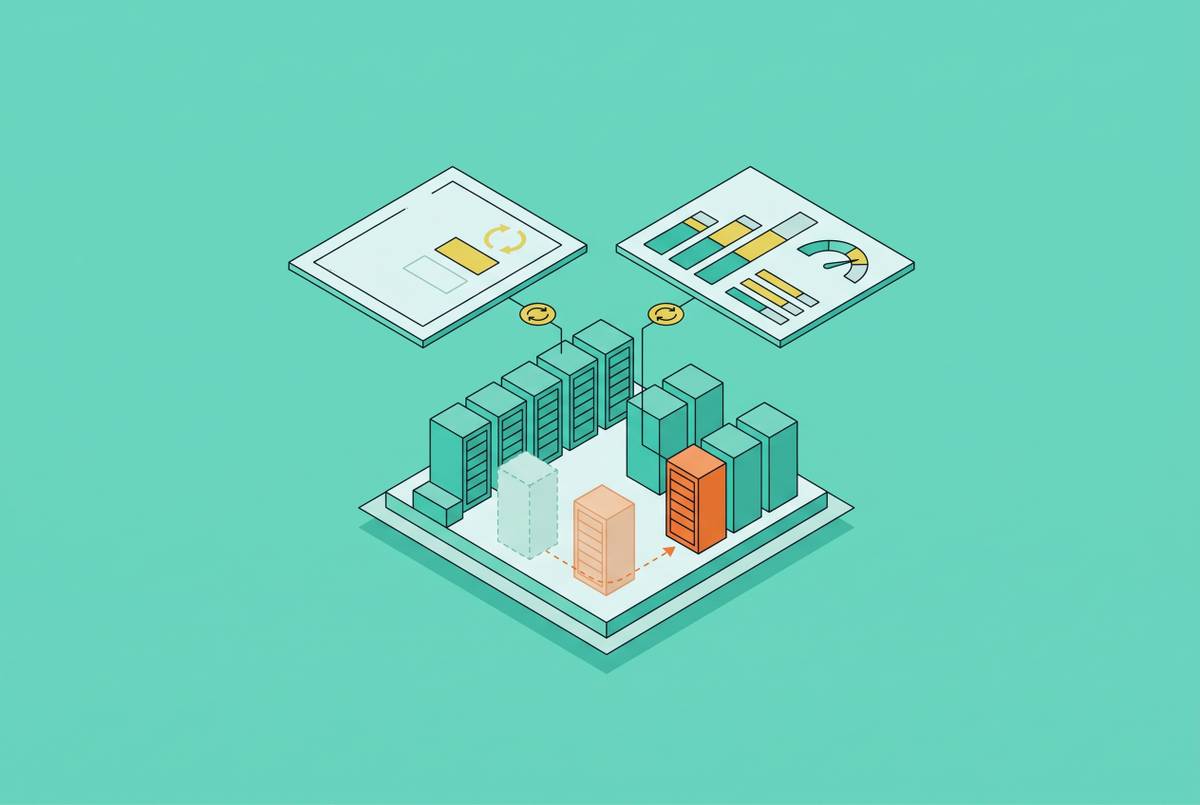
Rack position must have one authoritative home, with downstream documentation reading from it to keep copies consistent. A change to that source then triggers the rules that govern dependent records. Circuit assignments update, PDU port maps reflect the new bay, thermal zone calculations run again, cable path documentation updates, and sheets regenerate. The change is entered once for all disciplines. This replaces fragmented record ownership rather than adding another coordination task on top of it.
“Automatic” has a precise meaning in this model. Deterministic rules re-evaluate circuit assignments, PDU port mappings, and thermal zone assignments when position changes. The same rules govern each change, making their results predictable and auditable. That is different from asking AI to infer a suitable assignment from surrounding documents. A circuit assignment or load calculation is a safety and compliance decision.
AI has a separate role where interpretation is useful. It can help interpret an RFI, draft a submittal response, or extract parameters from a manufacturer PDF. It should not replace the rules that write infrastructure records. Keeping that boundary clear also supports traceability, because each parameter change remains connected to the rack position change that caused it. That record can support both an RFI response and the eventual operations handoff.
The source must also serve the systems that will run the facility. DCIM, EPMS, and BMS need usable asset data. A populated, tagged asset register connects design information to that operational use. Matching BIM asset tags to DCIM identifiers removes the need for a manually built translation layer. For that handoff to work, the source must be structured around operational requirements from project kickoff.
How connected automation changes the economics of a rack relocation project
Connected automation removes the repeated editing that consumes time across several teams. The time set aside for documentation in AMB's preparation window can shrink when dependent records already show the authoritative position. Physical surveys, labeling, and readiness checks still have work to do. People no longer need to reconstruct the same location change in every tool before those checks can begin.
A connected operating system for data center projects is the practical implementation of this model, making rack position the live source all disciplines read from. Its role is to connect the location change to power, cooling, cable, and sheet updates. That addresses the specific breaks described earlier, from outdated PDU maps to drawing packages showing different positions. For design firms, the economic change is less repeated document production and cross-discipline reconciliation. It is not a claim that engineering judgment or physical verification disappears.
Electrical one-lines, busway routing, and chilled-water piping bring systems together in tight spaces, so field teams are especially likely to ask how they fit together. Regenerating connected sheets resolves position-related ambiguities at the drawing stage, before installation. With equipment lead times of 36–48 weeks for switchgear, chillers, and UPS systems, questions that hold up procurement can be especially costly. Avoiding one can remove potential weeks of schedule risk, though connected records do not eliminate every possible RFI.
For owner-operators, the return also appears at handoff. A populated, verified asset register replaces a paper archive that operations must reconstruct before using it. Technology partners can work with asset identifiers and attributes defined for integration from the start, avoiding mismatch repairs at closeout. Control interfaces between EPMS, DCIM, BMS, and the workload scheduler still need validation. Their tests can, however, use records reflecting the final rack positions, including the last changes.
Keeping custody logs, data destruction certificates, and recycling or resale paperwork together makes the disposition of each asset traceable. This addresses the record gaps behind the disputes identified by Capitol's checklist. The value extends beyond the relocation window because operations receives a usable account of what remains installed and what has left.
What teams must do before the move to make connected documentation work
Before construction begins, teams must agree on what the contracts and data must include. The operator's DCIM asset tagging structure, model format, and required attributes belong in contract deliverables with acceptance criteria. CMMS requirements need definition at project kickoff as well. Otherwise, the documentation may serve design teams but fall short of what operations needs at handoff. A configured, populated DCIM environment should be a project deliverable, including baseline telemetry, tested control system integration, and initialized anomaly detection rules.
The initial records need a physical audit before any position changes are modeled. Every asset must have its make, model, serial number, current rack U-location, power draw, and network connections recorded. The 3XE Hosting guide recommends remote hands support for physical audits and rack elevation checks when internal teams cannot be there. Teams need to give application dependency mapping just as much attention, because an equipment inventory alone does not show which systems depend on which rack positions. The live source cannot fill in what teams have yet to learn.
The move runbook must use that knowledge to set out who does the work. AMB's guide specifies an owner, prerequisite, duration, and verification step for every task. The 3XE Hosting guide also requires a documented back-out plan for every move milestone. Its example is a critical database that fails to initialize at the new site within a 120-minute window, requiring a scripted return to the original environment. That recovery process depends on accurate pre-move records.
Rack sequencing, power-on order, elevator weight limits, and loading dock reservations cannot sit in a separate workstream from the records used to approve readiness. Capitol's checklist identifies arrivals before destination circuits, cooling capacity, or rack layouts are confirmed as a cause of costly staging delays. Teams must therefore check floor loading, freight elevator capacity, and door clearances at both ends against what the racks actually weigh and how they are configured. An old design specification is not an adequate substitute.
The route belongs in the pre-move record too. AMB's guide calls for de-racking equipment as the default before interstate or long-distance moves, and says loaded cabinet moves need certified rack-moving equipment and a route confirmed to be level and obstruction-free. These preparations give teams the physical facts and dependencies to record in the connected source. With that foundation in place, the first rack position change can trigger trusted downstream updates and spare teams another round of document hunting.