Equipment Library Governance for Data Center Design Teams
Stale equipment data produces silent failures across power, cooling, and structural workflows.
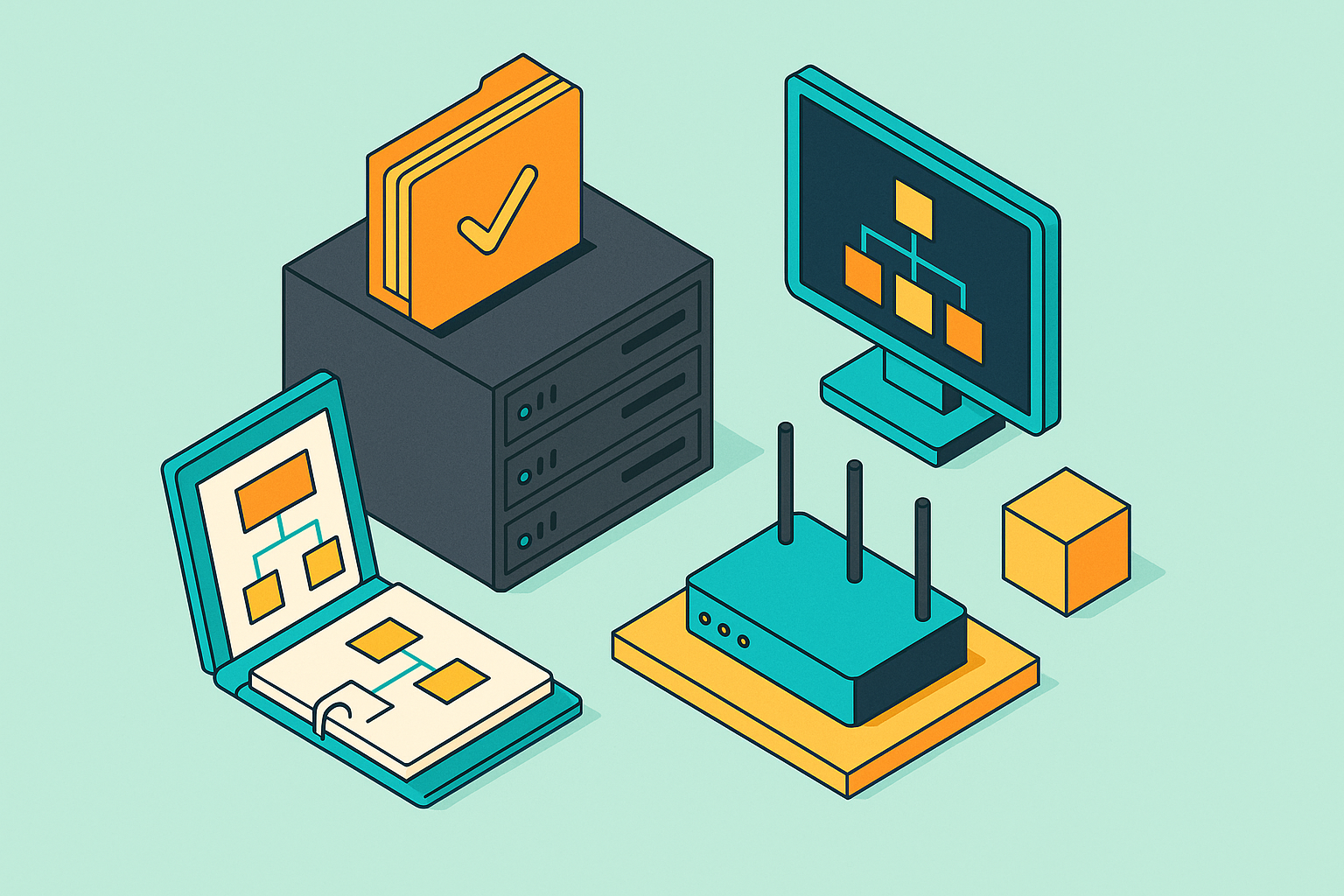
An equipment library object carries a lot more than shape and size. Dimensions, weight, power draw, heat output, port counts, cooling requirements, connectivity parameters, manufacturer metadata: all of it gets bundled into one thing, and downstream tools treat that bundle as ground truth without question.
Here's where the confusion starts. A generic design item, like a plain cabinet or a generic power distribution unit, is not the same thing as a vendor-specific object built to represent real equipment with physics-based characterization. Treat them the same and you've already made your first mistake. Cadence's Reality Digital Twin Platform, for example, draws its Digital Ecosystem library from more than 750 component makers, each with its own datasheet quirks and revision history. SimReady library objects (the kind built to run inside digital twin simulations) need attributes that hold up under simulation, not placeholder values that just look right in a 3D view. Not placeholder values that just look right in a 3D view.
DCIM asset records, further downstream, capture equipment identity, physical location, and connectivity details. That's the operational layer the design library has to seed correctly at handoff, or operations inherits every gap the design team left behind.
Governance is hard because each attribute class has a different owner. Facilities teams own power and cooling parameters. IT owns port and connectivity data. Procurement owns model numbers and lead times. Operations owns U-position and as-installed actuals. Spread ownership across that many people and attribute types, and version drift stops being a risk and becomes the default, unless someone explicitly assigns custody over each piece.
The failure mode here is the sneaky kind, and it's the part most teams underestimate. A library object missing a weight value silently falls back to a default rather than throwing an error. It just quietly produces an invalid structural calculation somewhere downstream. A missing document gets noticed, because it's obviously missing. A blank field in a library object sails through the system looking complete, right up until someone's standing on a data hall floor wondering why the numbers don't add up.
How ungoverned libraries produce silent errors across power, cooling, cable, and structural workflows
Start with power. A stale power-draw figure in a library object flows straight into UPS sizing, busway capacity math, and redundancy modeling, whether that's N+1 or 2N. An understatement doesn't announce itself. It compounds quietly through every calculation that touches it, until commissioning finally reveals the shortfall, usually at the worst possible moment.
Cooling has the same problem in a different shape. Wrong heat-output values feed bad inputs into CFD models, and a layout built around the wrong thermal load can bake in hot-spot risk that nobody catches until the equipment is physically installed and already running hot.
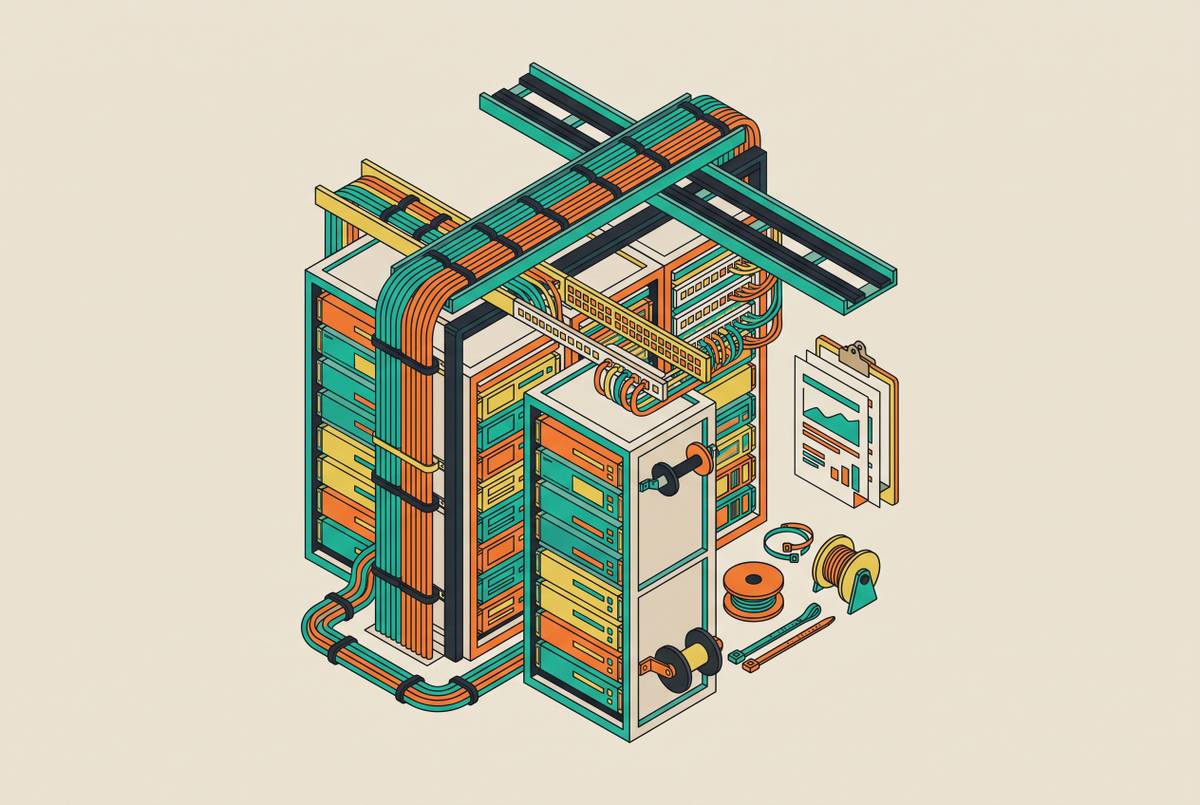
Cable routing depends on port counts and connector types baked into the library object. Get the port count wrong and the cable schedule is wrong, the tray sizing is wrong, the material order is wrong. High-performance fabrics like InfiniBand need ports and cabling pre-provisioned with real headroom, so a small error here doesn't stay small for long.
Structural loading runs on weight-per-object, and this is the one that should worry firms most right now. AI-era racks weigh far more than the legacy objects most libraries were built around, and an outdated weight value can quietly invalidate a structural design with zero visible warning anywhere in the model.
Now stack all four together. In a fragmented workflow, each discipline keeps its own copy of equipment data, including the power engineer's spreadsheet, the cooling engineer's CFD model, and the cable team's schedule. Each copy drifts from the master library independently, at its own pace. Swap one vendor's rack for another mid-design, and every one of those copies needs a manual update. The more fragmented the workflow, the more places that single substitution has to get chased down and fixed by hand.
Supply chain delays and labor shortages get most of the blame when a project slips its delivery date. But design rework driven by stale equipment data is a compounding factor that rarely gets counted separately, and it should be, because it's often the harder one to catch. Silent errors are especially dangerous in critical facilities for one simple reason: they don't surface until commissioning, energization, or, worst case, live operations. By then the fix costs a lot more than a spreadsheet correction would have.
The four governance decisions that determine whether a library works as infrastructure
Ownership. Who can write to the library, and who can only read from it? A library with no named maintainer ends up owned by whoever touched it last, which in practice means owned by no one. Write access should sit with a named steward, maybe a senior designer, a BIM manager, or a design-technology lead, while read access stays wide open so every project team can pull from it freely. A one-off vendor substitution on a single project shouldn't get made locally and then forgotten. It should flow back through the steward as a proposed update. Larger firms often run a tiered version of this: a firm-level steward sets the standard, and project-level coordinators manage project-specific extensions within it.
Update triggers. What actually forces a library object to get reviewed? A new equipment class entering the pipeline. A manufacturer revision. A design review or commissioning walk that turns up a mismatch between library data and what's actually installed. A project team asking for a new vendor object. Skip defined triggers, and updates happen whenever someone happens to notice, which in practice is usually too late. AI-era hardware density climbed roughly 11 times over between 2020 and 2025, so the update pace that worked fine on legacy projects is simply too slow now. Firms clinging to that old cadence are already behind without knowing it.
Validation. Before an object gets promoted into the approved library, it needs a completeness check on every required field: dimensional, power, thermal, weight, port, manufacturer metadata. Every parameter has to trace back to a manufacturer datasheet, a tested value, or a documented engineering assumption, never a guess. Power, cooling, and structural attributes need review from the actual relevant discipline, not just a sign-off from whoever modeled the geometry. This is a spot for deterministic rules, not AI inference: a weight field is a sourced number or it's nothing. Validation is also the step that gets cut first when schedules get tight, and it's the one whose absence causes the most silent errors downstream. Skipping it to save a week now is how a firm loses a month later.
Versioning and deprecation. Objects need version identifiers so a project can pin to whatever version was current at its design-freeze date. When a manufacturer revises a product, the old object gets deprecated, not deleted, since projects already underway still need the version they were designed against. Deprecated objects should carry a visual flag so no new project accidentally starts from something outdated. Skip versioning, and a library update silently rewrites the ground truth for every project referencing that object, including ones already sitting in construction documents.
How equipment data flows from the library into models, schedules, and downstream systems, and where flow breaks
In the ideal setup, one library object is the single source of truth, and any change to it propagates automatically into layouts, equipment schedules, power and cooling calculations, cable schedules, and eventually into DCIM, EPMS, and BMS at handoff.
In practice, flow breaks in a handful of predictable spots. A designer exports a library object into a local project model, edits it for some project-specific condition, and that edit never makes it back into the library. Equipment schedules live in a separate spreadsheet, re-keyed by hand from the model, so a model change doesn't touch the schedule at all. Submittal review turns up a revised spec (a manufacturer confirms the actual power draw differs from the datasheet), someone marks it up on a PDF, and it never flows back into the library or the model. By handoff, operations ends up holding a PDF equipment list that doesn't match the model, which doesn't match the submitted datasheet: three versions of the same asset, and none of them authoritative.
Clash detection, cable routing, CFD inputs, everything BIM coordination is supposed to deliver depends on the equipment data inside those library objects being right in the first place. A geometrically perfect model built on wrong thermal or power attributes just produces confident-looking analysis that happens to be wrong, and confident-wrong is worse than obviously incomplete, because nobody thinks to double-check it.
DCIM systems need make, model, rack location, U-position, and port relationships to function, but only if that data shows up at handoff already structured in a form DCIM can actually ingest. Protocol interfaces like BACnet and Modbus appear at handoff as integration points, another dependency that traces straight back to whether the library was attribute-complete to begin with. When each tool keeps its own copy of the data, one rack substitution cascades into manual rework across power, cooling, cable, structural, and schedule documents. A library governed to stay the single source of truth turns that cascade automatic instead of manual.
What governed library data makes possible at operations handoff
BMS handles facility-level HVAC and environmental controls. EPMS covers electrical distribution and energy metering. DCIM ties IT and facility data together. All three need structured, accurate equipment data to work as designed, not a pile of manual re-entry at commissioning.
When a DCIM analytics layer sits on top of BMS control data, operators get a unified view linking IT load, electrical distribution, and mechanical systems, but only if equipment attributes arrive at handoff already consistent and structured. White space (the IT assets) and gray space (the facility infrastructure) tend to sit with separate teams and separate tools, and a library governed consistently across both, with shared naming and shared classification, is what actually bridges that divide.
A library object carrying make, model, port configuration, power draw, and cooling requirements in a structured schema can seed a DCIM record directly, cutting out the manual re-keying that commissioning teams would otherwise have to perform. The ungoverned version of handoff looks like a PDF equipment list, a model full of local edits nobody reconciled back to the library, and a submittal log that's really just a folder of PDFs. Operations then rebuilds the asset records by hand, and those records are only as good as the effort that went into re-entering them. Which is to say, not very.
The governance work done at the design stage pays back at operations. Every attribute that shows up structured and verified at handoff is one less thing someone has to discover, re-enter, or reconcile during commissioning or the first year of running the facility. There's a broader push underway toward common data schemas for digital twins, things like Brick Schema (a semantic metadata ontology) or Project Haystack (a tag-based system) for standardizing sensor and equipment data. Firms that govern their libraries to produce structured, schema-consistent output now are the ones positioned to plug into that future without a retrofit later.
Building a governance model that scales across projects and teams without becoming a bottleneck
Most governance efforts fail from something other than lack of will. They fail from lack of enforcement. A policy that exists on paper but isn't enforced in the tooling just gets bypassed, because building a local object is faster than requesting one from the steward. That's the honest reason so many governance programs collapse the first time a schedule gets tight.
Governance has to live inside the workflow, not get bolted on as an extra review step. The library needs to be the easy path, not the obstacle everyone routes around, and if the fastest way to get work done is to skip the library, people will skip the library every time.
A few structural pieces make that scale:
- A simple intake form for new object requests, capturing required attributes and source documentation, routed to the steward with a clear turnaround expectation.
- A staged library, with a "proposed" tier holding new or revised objects under review and an "approved" tier that projects actually consume, so designers can reference something proposed with a known caveat attached.
- Automated completeness checks at the point of promotion, so the tool enforces populated fields instead of a human catching a blank cell in a spreadsheet three weeks later.
- A change log visible to every project team, so an object update shows up as something to assess, not something discovered by accident.
A quarterly review cadence is a reasonable starting point for most firms, with the steward auditing objects against current manufacturer datasheets and flagging anything superseded.
Platform matters here too, more than most firms give it credit for. A library embedded directly in the design environment, where layouts, schedules, and routing actually get produced, propagates governed data automatically. A library sitting off in a separate system needs a manual export and import step, and that step is exactly where governance breaks first once the schedule gets tight. ArchiLabs Studio's approach, tying equipment library data directly to layouts, critical-systems engineering, cable routing, documentation, and operations-ready handoff inside one workflow, reflects that same principle: governance scales when it's built into the platform itself, not when it depends on someone remembering to copy data across systems by hand.
A well-governed library costs real time upfront: a named steward, a defined intake process, validation rules that actually get enforced. That cost pays back many times over, and firms that skip it aren't saving time, they're borrowing it against commissioning. A library with no governance carries its own hidden assumptions and biases. It's a library that quietly breaks every downstream workflow depending on it, and nobody finds out until the bill comes due.