Validation Rule Authoring for Data Center Design Platforms
Automated validation catches design flaws before they become expensive field problems.
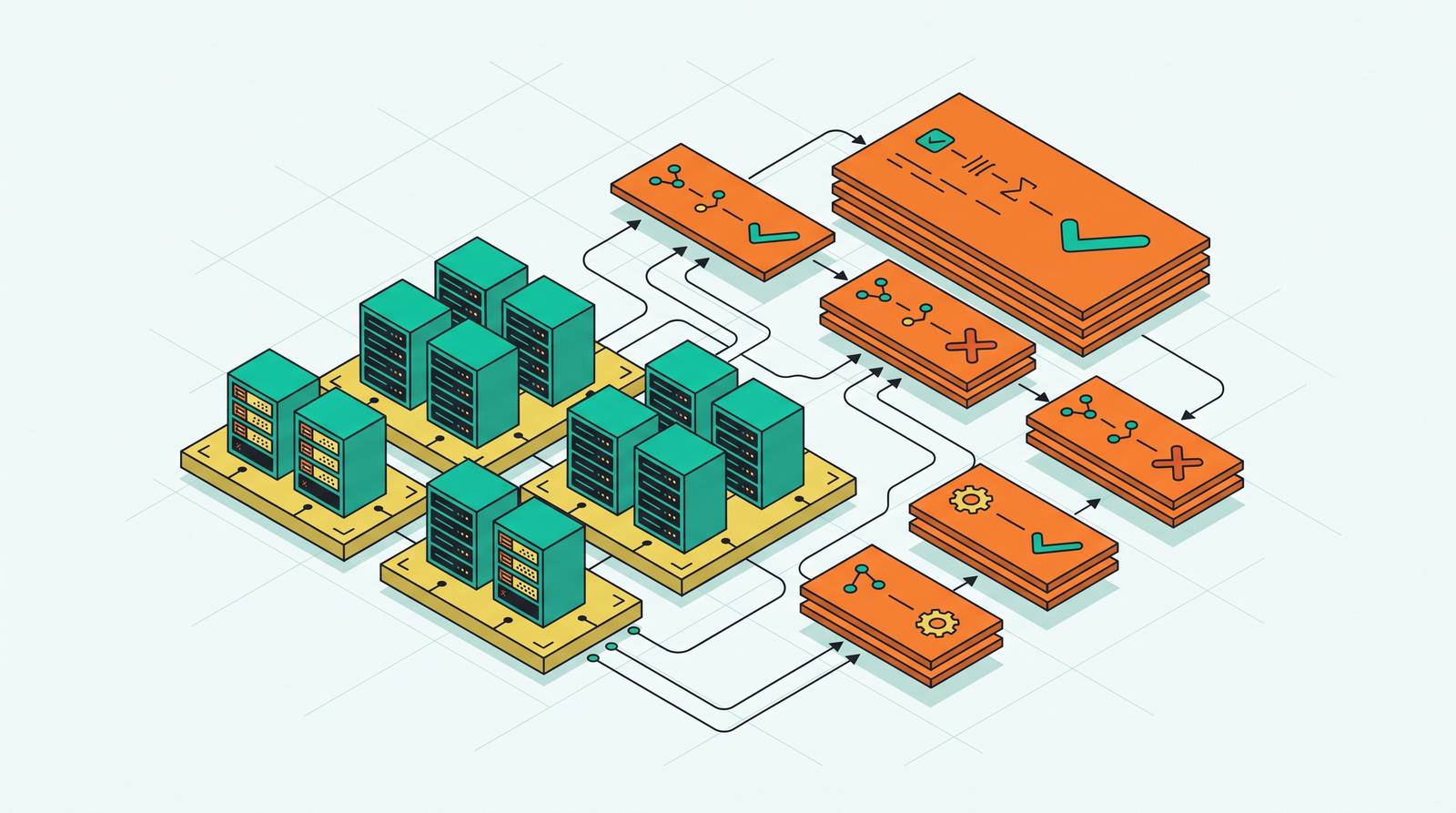
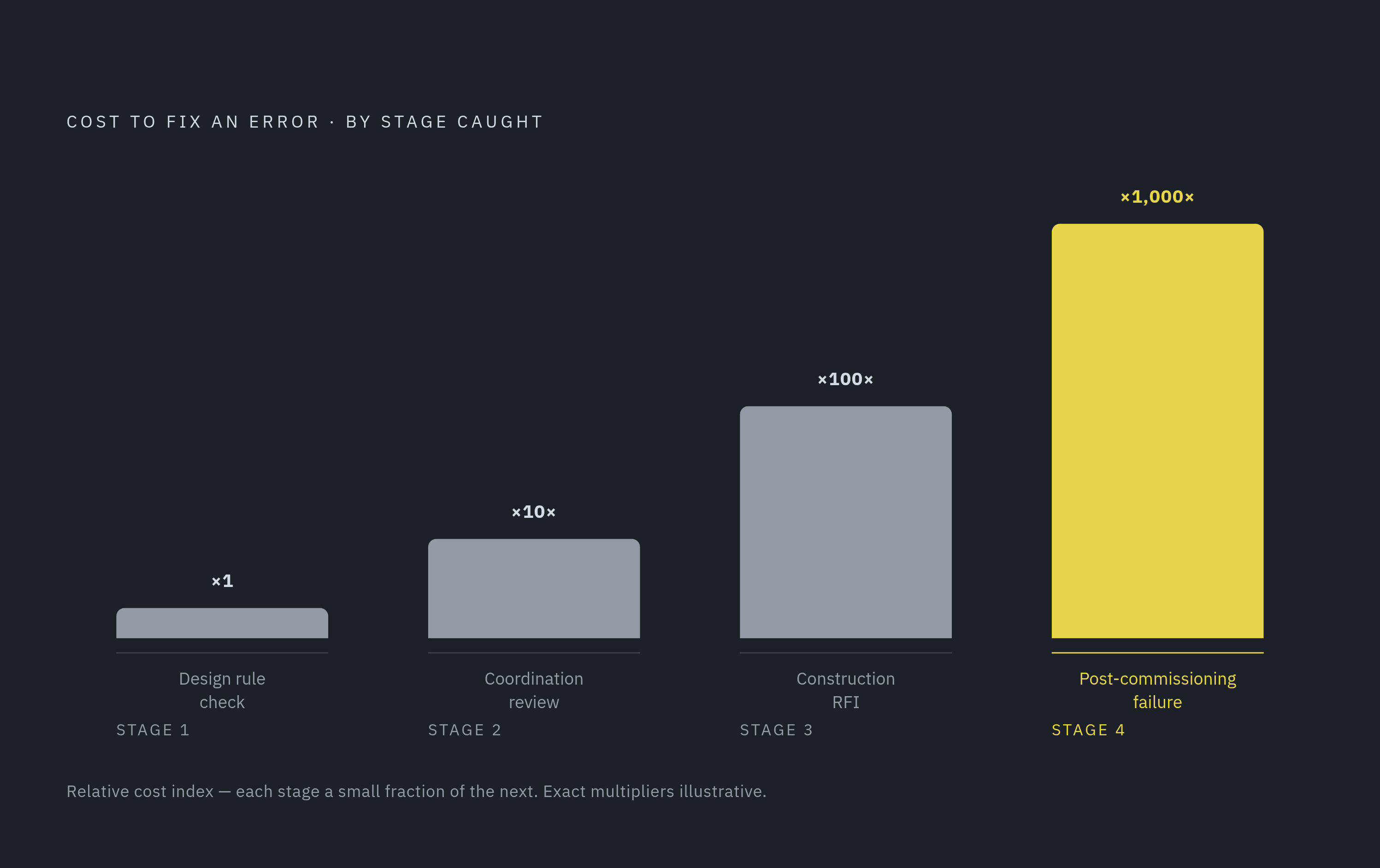
Validation rule authoring turns engineering requirements, power limits, cooling clearances, cable fill ratios, naming standards, into logic a design platform runs on every change, automatically. Get it right and quality control stops living in the redline meeting and moves into the workflow itself. You catch the problem the moment it happens, when fixing it barely costs anything, instead of three weeks later when the price has already climbed.
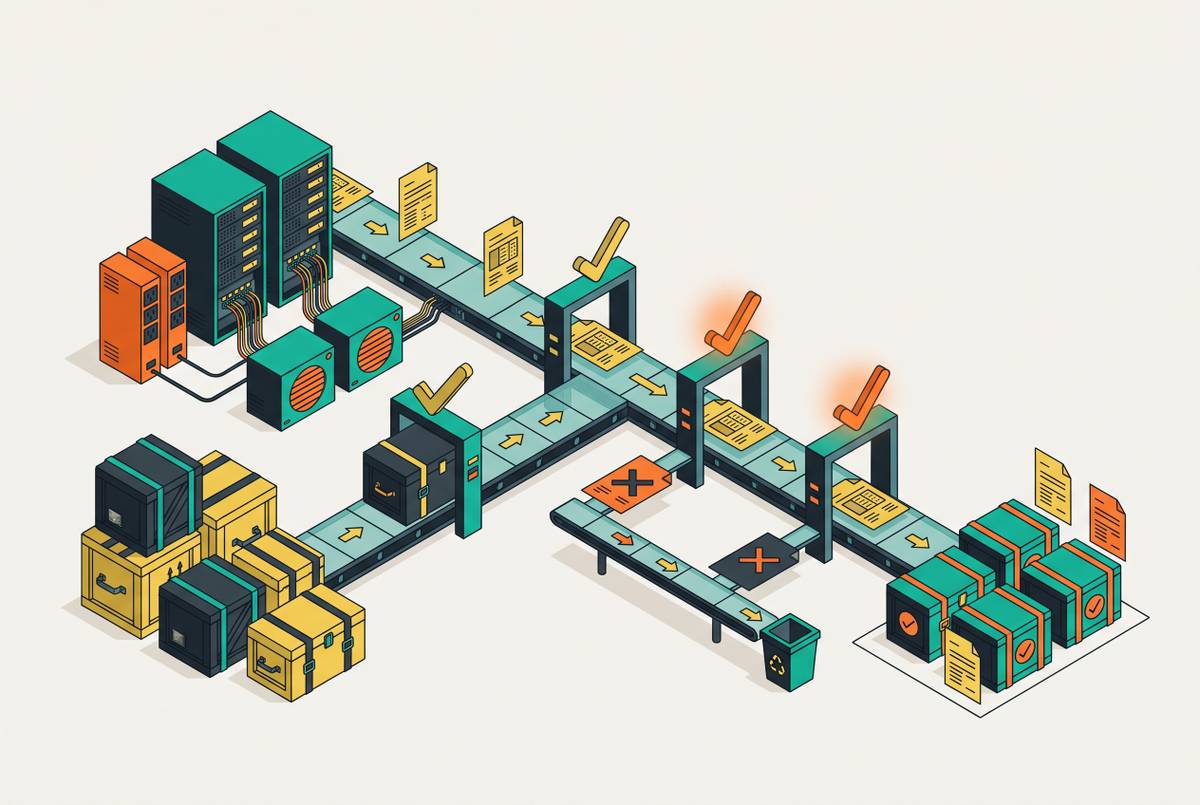
A QA pass happens after the fact, when someone opens a set of drawings and hunts for what's wrong, usually under deadline, usually tired. Rule authoring runs on a different clock. You build the rule once, load it into the platform, and it fires on every revision after that, so nobody has to remember to ask for it, which is the whole point.
Data centers need this more than most building types because nothing in them fails alone. Move one rack on a layout sheet and you've touched the power path, the cooling zone, and the cable schedule, all at once, all needing a recalculation somebody has to actually do. No reviewer, however sharp, catches every downstream effect of a "minor" move on every single revision. These buildings are dense and interdependent in a way that punishes anyone still working off a checklist mentality.
Writing these rules sits between two disciplines, and I don't think enough people say that plainly. You need the engineering background to know a busway can't share overhead space with chilled water piping, full stop, and you need the precision to write that constraint so a machine can check it without guessing what you meant. A platform with a strong rule engine still spits out garbage if the rules loaded into it are vague or half-finished. Sloppy authoring undermines even the best tool.
The cost pressure that makes continuous automated validation worth the investment
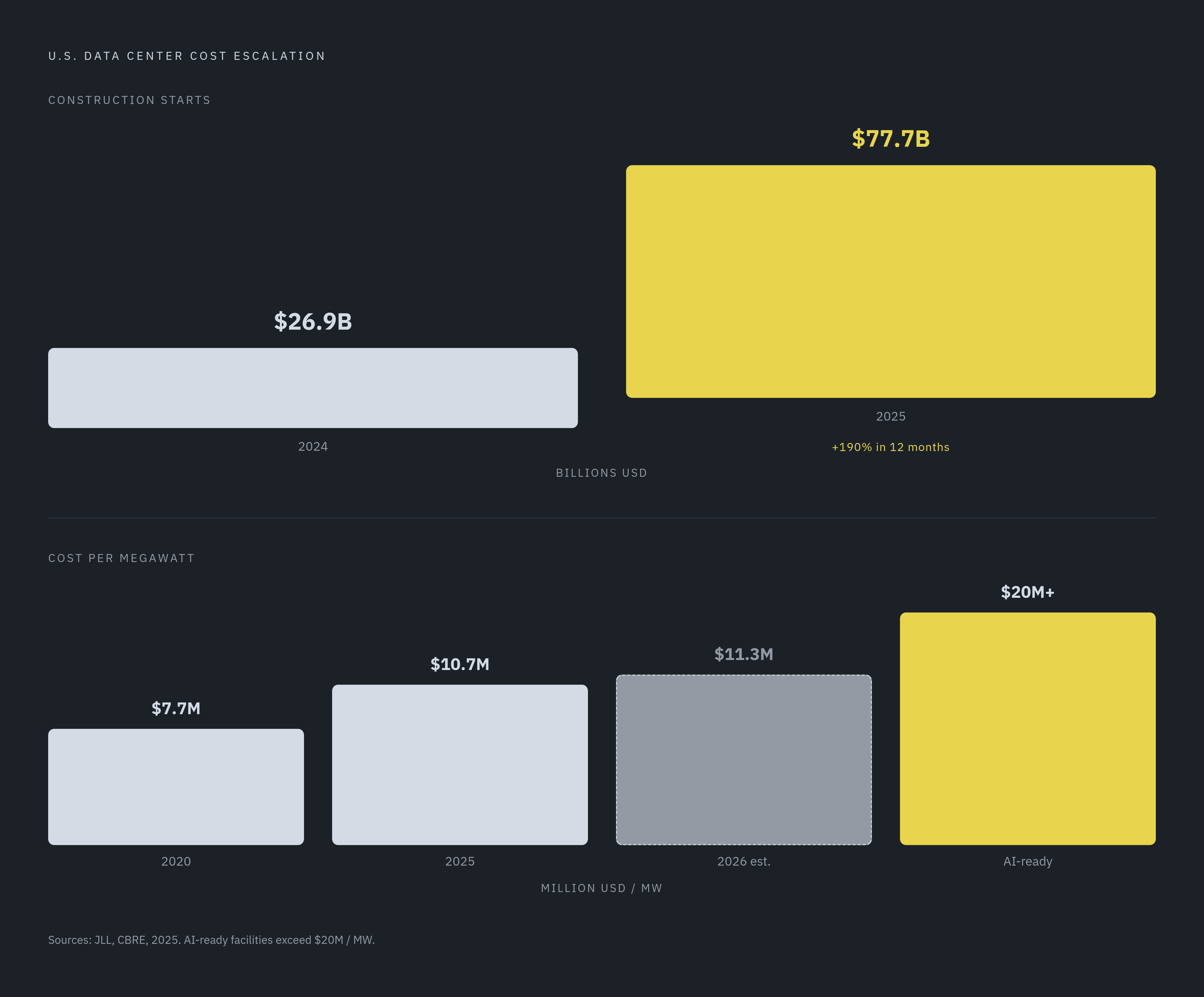
U.S. data center construction starts went from $26.9 billion in 2024 to $77.7 billion in 2025. That's about 190% growth in twelve months, and growth at that pace compresses every timeline on the board while raising the price tag on any mistake that slips through unnoticed.
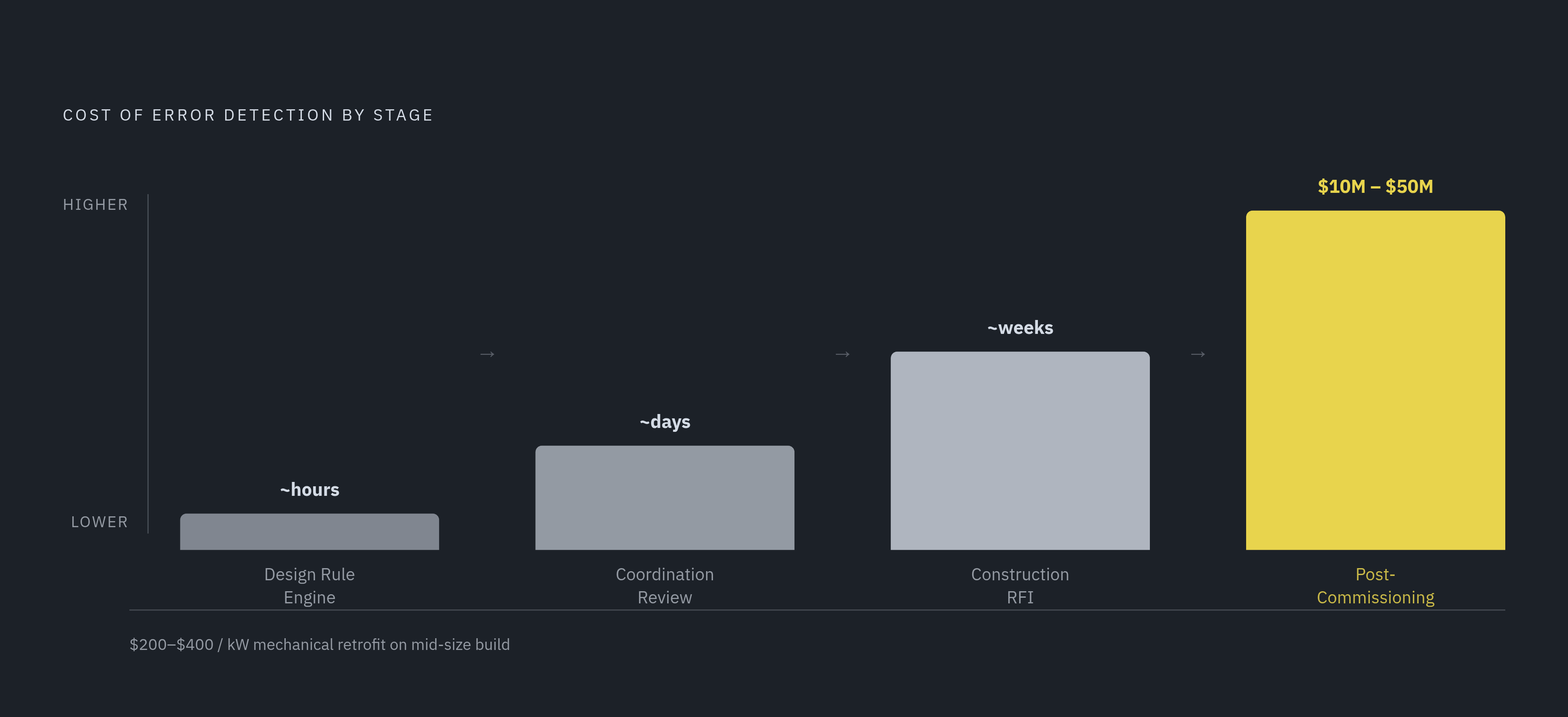
Cost per megawatt keeps climbing too. It ran $7.7 million per MW in 2020, hit $10.7 million in 2025, and JLL is projecting $11.3 million per MW for 2026. AI-ready facilities run well past that, $20 million or more per MW. And if the cooling system wasn't sized for AI density from day one, retrofitting it later runs $200 to $400 per kW in mechanical upgrades. On a mid-size build, that's $10 million to $50 million spent cleaning up after a design assumption somebody should have caught in month two.
Timelines don't help matters either. Getting from a request for services to a construction start takes 12 to 36 months on most jobs I've seen. An error that survives that whole stretch and shows up in construction becomes a schedule problem, and schedule was already the tightest constraint on the project before anything went wrong.
At these dollar figures, a person scanning a PDF redline can't keep pace with the risk. Enforcement has to move upstream into the design tool itself, running continuously, ahead of any checkpoint that might come too late.
The categories of constraints that validation rules must encode
I sort a data center rule library into four buckets, roughly, and your list might look different depending on the project, but this covers most of what crosses my desk.
Power limits come first: rack-level kW caps, panel ampacity headroom, A/B path redundancy checks. The shift toward 40 to 50 kW AI racks broke a lot of older rule sets that were built around 10 kW assumptions, and that's the bucket eating most of my maintenance time right now, more than any other.
Cooling constraints follow: clearance envelopes around CRAH units, hot-aisle and cold-aisle containment geometry, airflow rules that stop a cable tray from blocking return air. Cooling eats the largest share of mechanical spend on most projects I've worked, and a violation here doesn't show up until the room's under real load and something starts running hot. By then it's a physical problem, and physical problems cost more to fix.
Clearance and spatial rules cover service corridors, separation between power and data cabling to avoid EMI, and conduit fill limits, with best practice capping cable tray fill around 30% to keep airflow moving through the tray. This bucket also governs the running fight between chilled water piping and electrical busways over the same overhead space, probably the single most common coordination conflict I run into, project after project.
Naming and identification rules round out the fourth bucket, and teams skip these until it costs them, every time. Asset naming schemas, rack ID formats, panel labeling aligned to something like ANSI/TIA-606-C: none of it feels urgent right up until handoff, when the DCIM platform can't parse an asset identifier and operations has to sort it out by hand, one label at a time.
Each category fails its own way, worth noting. Power and cooling problems turn into field change orders or post-commissioning failures, while spatial problems turn into RFIs and rework on site. Naming problems stay invisible until they break an integration at handoff, months after anyone remembers the meeting where the decision got made. A shared understanding on the team about where the busway goes only becomes a rule once somebody writes it down in a form the platform can actually test against.
How engineering intent gets translated into executable rule logic
Every rule starts as a sentence someone says out loud in a meeting: no rack in row 7 exceeds 15 kW total draw. The author's job is turning that sentence into something unambiguous, complete, and testable by a machine. It sounds simple, but it isn't, not once you actually sit down and try it.
Three questions need answers before a rule is worth writing at all. What's the input, meaning which object, which attribute, at what scope: zone, row, rack, circuit? What's the condition, a threshold, a relationship between two attributes, a pattern match against a naming standard? And what happens on failure: does the rule block the action outright, throw a warning, or just log the violation for someone to look at later?
That last question carries more weight than it sounds like it should. Not every violation deserves to stop the workflow cold. A power limit exceeded, or a physical overlap, that should hard-block, no debate, while fill approaching the 30% threshold is worth an advisory flag and nothing more urgent than that. A naming mismatch that doesn't break any downstream integration might just need a record somewhere. Get this mixing wrong and engineers learn to ignore the rule engine altogether, because it cries wolf one too many times and nobody trusts it anymore.
Scope is where most rules quietly break, and I mean quietly. A rule that fires against the wrong object type, or aggregates at the row level when it should be aggregating at the rack level, throws false positives left and right. False positives are corrosive, teaching people to click past warnings instead of reading them, which defeats the entire purpose of having the rule in the first place. Some rules also depend on others running first: a cooling zone assignment has to resolve before a clearance rule that depends on zone membership can evaluate correctly. That sequencing has to be modeled on purpose; it never just happens.
A rule isn't finished when it's written. It's finished when it has a test case, a defined pass state and a defined fail state, proving it actually does what it claims to do. Skip that step and nobody can verify the rule still works the next time the model changes underneath it, which it will.
Some checks call for deterministic rules; others call for something more flexible. Power limits, fill ratios, clearances, naming pattern matching: these need to behave the same way every single time, no exceptions, no judgment calls. AI-assisted checks have a place too, mostly around interpreting ambiguous spec language pulled from a PDF, or flagging a layout anomaly that doesn't trip a specific threshold but just looks wrong to a trained eye. Current AI-assisted checks are not yet reliable enough to run unsupervised against safety-critical parameters, and that's exactly why the deterministic layer stays put no matter how good the AI assistance gets in the meantime.
Where rule authoring connects to the live design workflow rather than sitting beside it
Rules that only run at milestone gates let errors stack up in the gaps between checkpoints. Every design decision built on top of a bad assumption during that gap adds to the eventual cleanup bill, and that bill doesn't come due until much later, usually at the worst possible moment.
Continuous validation means rules fire on the event that changes something, not on a calendar somebody set up months ago. A rack power update triggers the power path and panel headroom rules immediately. A layout move triggers clearance, cooling zone, and cable routing rules without anyone lifting a finger to ask for it. Swap in a different piece of equipment and you trigger the nameplate attribute rules, plus anything downstream that referenced the old part's specs.
None of this works unless the platform holds one live, structured model as the actual source of truth. Rules can't evaluate an attribute that only lives in a spreadsheet somebody keeps off to the side, or a PDF nobody's opened in a month.
When a rule fires on a change, the violation needs to trace back to the RFI or design decision that caused it. That way, teams can look back later and understand why a constraint got modified, not just that it did, which matters more than people expect during a dispute.
MEP coordination is where all of this gets tested hardest. Chilled water piping and electrical busways fight over the same overhead real estate on nearly every project I've touched. Without rules checking both systems against the same spatial model at the same time, that conflict only surfaces in a coordination review meeting, late, in front of a packed room, when fixing it costs a lot more than it would have three weeks earlier.
ArchiLabs Studio builds around this. Validation logic lives inside the same connected workflow handling layouts, power, cable routing, and documentation, so rules check against the same structured data driving everything else, not some snapshot somebody exported for a QC pass on a Friday afternoon.
Authoring rules for operations-ready handoff, not just construction
DCIM platforms pull data through a range of integration protocols. For asset data to land cleanly in those protocol-specific fields, it has to get structured and tagged correctly at design time. Patching it together by hand after turnover burns time and budget that a design-time rule would have saved outright.
Naming rules carry more weight at handoff than people expect going in. An identifier that looks perfectly fine during design but doesn't match the DCIM's expected taxonomy creates a gap, and closing that gap by hand can eat weeks of an operations team's time after the building's already live and running loads.
A rule set built for handoff readiness needs to check a short list, and each item on it actually matters. Every asset needs a populated, correctly formatted identifier matching the target DCIM or EPMS naming schema. Equipment attributes required for BMS integration, nameplate kW, phase configuration, protocol type, need to sit present and within expected ranges, not blank, not guessed at. And no placeholder or "TBD" value should survive on a parameter an operational system is going to poll the second commissioning starts.
BMS, EPMS, and DCIM aren't the same system, and they don't want the same data, which trips people up constantly, even experienced ones. BMS covers facility-level HVAC and environmental control, EPMS covers electrical distribution and energy metering, and DCIM gives a unified view across IT and facility systems. Each one expects its own set of attributes, so rule sets need authoring per target system, tailored to what that system genuinely requires.
Ownership groups building multiple facilities on a consistent BMS and EPMS architecture can template these handoff rules and reuse them project to project. That cuts a lot of repeated reconciliation work down the road. Model data that reaches turnover incomplete, or disconnected from the operational systems waiting downstream, creates real cost for the operations team stuck inheriting it. Structured handoff is the actual finish line here; validation rules are what get the model there in shape to cross it.
Managing rule libraries as design requirements evolve
A rule library isn't something you write once and walk away from, ever. The move from 10 kW to 40 to 50 kW AI racks made a pile of older power rules obsolete almost overnight. Fiber standards keep shifting too, with higher-speed deployments at 400G and above driving changes in what specifications are required. Changes like this call for a deliberate review process, not scattered patches whenever somebody happens to notice something looks off.
Real governance is what lets a library survive that kind of churn. Every rule or rule group needs a named engineering owner keeping it aligned with current standards and codes, somebody whose name is actually attached to it, not a shared inbox nobody checks. Rules should carry a version tag tied to whatever standard or project requirement they implement, so when TIA-942 changes, it's obvious which rules need a second look and which don't. And retiring an old rule should be a deliberate, documented step, never a quiet toggle to "off" that nobody logs anywhere. A disabled rule sitting undocumented in the system is a hazard waiting for somebody to flip it back on against a design environment that's since moved on without it.
Different project types need different rule tiers, too. A hyperscale shell-and-core build has a different constraint profile than an enterprise retrofit or an AI-density facility, and pretending otherwise just clutters the library. A well-built library segments rules by where they actually apply instead of forcing every rule onto every project regardless of fit.
False negatives are the real danger here, more than false positives will ever be. A rule that wrongly passes something bad hands a team false confidence, and false confidence is worse than no confidence at all, worse by a wide margin, because at least uncertainty makes people double-check. Running test cases against known-bad model states on a regular schedule confirms the library still catches what it's supposed to catch. Documentation matters just as much as the logic itself: every rule needs a plain description of what it checks, which standard it implements, and what happens if the violation slips through undetected. That way somebody new to the team can evaluate or fix a rule without hunting down whoever wrote it three years back and has since left the company.
What good rule authoring looks like in practice on a delivered project
The clearest sign of a mature rule library: the redline review meeting stops being where problems get discovered in the first place. By the time that meeting happens, the rule engine already caught most of it weeks earlier, quietly, without anyone needing to raise a hand.
A well-authored rule set on a finished project shows up in ways you can actually go check for yourself. No power path violations turning up at panel schedule review, because rack load rules caught them the moment the load got assigned. MEP conflicts between overhead busways and chilled water piping resolved before the coordination model even gets issued, not discovered live in front of the room. Handoff to operations happening without a separate reconciliation sprint bolted on afterward, because naming rules kept identifiers DCIM-compatible the whole way through design. RFIs that trace back to a specific rule violation, so the record shows the constraint behind the question and not just the question floating there on its own, unexplained.
The economics follow pretty directly from this. An error caught at the design rule stage costs a small fraction of what the same error costs once it reaches coordination review, and far less again than one that makes it all the way to a construction RFI or a post-commissioning failure. The earlier enforcement sits in the process, the cheaper every caught error turns out to be, every time, no exceptions.
None of this needs a massive team behind it, either. A rule library with clear ownership and real test cases lets a small engineering group cover a lot more ground across many projects at once, not just the one sitting in front of them today.
ArchiLabs Studio, the core product of Archil Labs, a data center design automation platform that unifies layouts, power, cable routing, documentation, RFIs, and ops handoff inside a single structured workflow, runs deterministic rule evaluation inside that same connected workflow, so violations show up right next to the design action that caused them, in context, inside the view the team's already working in anyway.
Rule authoring is engineering work, plain and simple, and it takes the same domain knowledge, the same care in how you word a constraint, the same ongoing upkeep the design itself demands. I've worked projects where rule authoring got treated as an afterthought, something to bolt on near the end, and I've worked ones where it got the respect it deserved from day one. The difference shows up on the punch list, and it shows up again in the operations team's first month running the building, when the pager either stays quiet or doesn't.