Data Center Cost per Kilowatt by Cooling Architecture
Liquid cooling becomes cheaper than air cooling around 30 kW per rack.
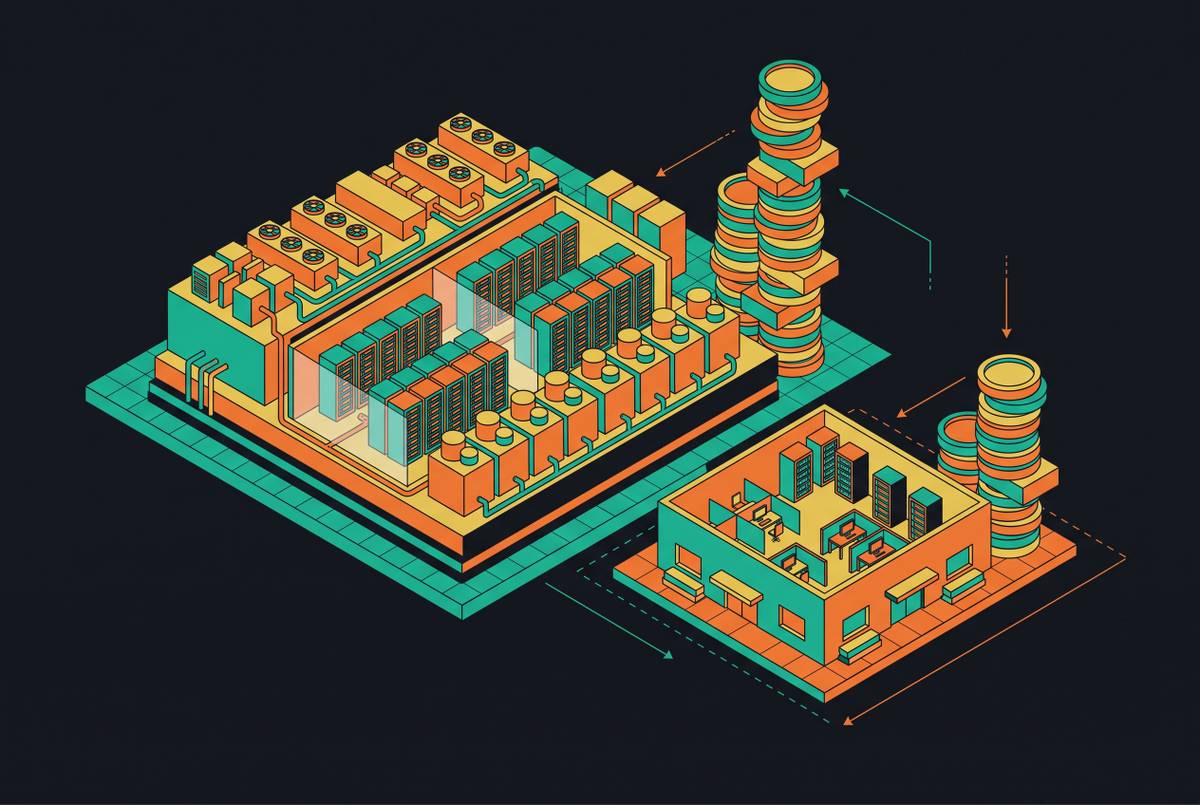
For years, the cost model for a data center project put electrical systems at the top of the budget and treated cooling as a smaller mechanical line beneath it. That model no longer fits what it actually costs to build or run an AI-optimized project.
Rack densities in new AI-optimized deployments now reach 40 to 80 kW per rack, up from the 8 to 12 kW standard that dominated enterprise deployments through 2022. That jump in density is what makes cooling architecture, not electrical design, the variable that stretches or collapses the entire per-kilowatt cost structure of a project. Electrical systems still take up the largest single share of a construction budget, but cooling architecture now decides how that budget gets allocated and how much operating cost piles up over the life of the facility. The decision about how to cool the racks, made early and often quickly, is the decision that sets which cost tier the whole project is.
The capital cost profile of air cooling
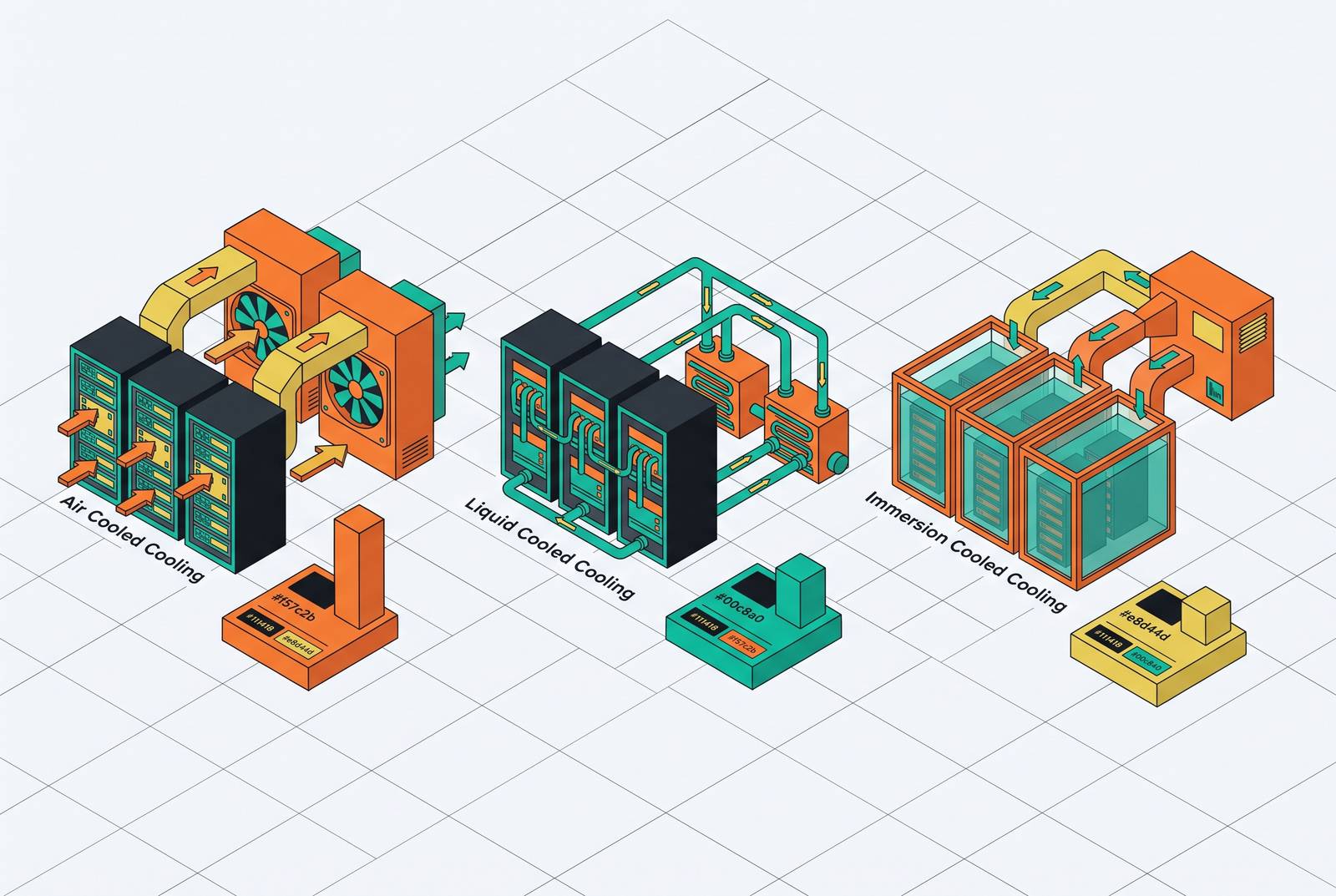
Air cooling costs less to install than either liquid alternative, and for most of the industry's history that made it the default. At 16-rack scale, rear-door heat exchanger air cooling runs $1,800 to $3,200 per kW in capital cost, the most accessible tier available and the one standard enterprise and colocation projects reach for first.
That advantage holds only up to a point. If a rack hits 15 to 20 kW, raised-floor air cooling hits a thermal wall, because the floor plenum can't move enough air to remove the heat at that density. Past that line, air cooling isn't a design choice anymore, because it turns into a bottleneck. Standard enterprise (Tier II) and colocation (Tier III) builds still run air cooling most often, and in 2026 U.S. construction benchmarks they cost $8 to 10M and $10 to 12M per MW, so the cooling architecture is baked into those numbers before a single rack goes in.
The costliest mistake happens after the fact. Teams that built on raised floors years ago now face AI-scale density demands, and they often try to retrofit the existing air-cooled space. Retrofitting an aging raised-floor room for higher density frequently costs more than designing a purpose-built high-density space from the ground up. The decision that looked cheap at design time becomes the expensive one five or ten years later, so the liquid-cooling premium deserves examination on its own terms.
The capital cost premium of direct-to-chip and immersion cooling
Direct-to-chip and immersion cooling both cost more upfront than air cooling. What that premium buys is a different operating profile, not just colder racks.
At 16-rack scale, direct-to-chip (DLC) cooling runs $3,500 to $5,000 per kW in capital, roughly double what air cooling costs to start. Single-phase immersion cooling runs higher still, $4,300 to $6,500 per kW, the top capital tier of the three because it requires purpose-built tanks, dielectric fluid management, and structural provisions that air and DLC systems don't need. Measured against air cooling directly, the CAPEX premium for direct-to-chip systems comes out to roughly $2,500 to $4,500 per kW, a large number on paper but a bounded one against the scale of a full deployment.
What that spend buys appears on the operating side. Immersion cooling can improve PUE from the 1.45 to 1.60 range typical of air-cooled facilities down to 1.03 to 1.08, and it cuts real estate needs by roughly 60 to 75% at comparable capacity. AI-optimized facilities using liquid cooling in 2026 run $15 to 20M or more per MW in construction cost, well above the $8 to 12M range for standard enterprise and colocation builds, and the cooling system itself accounts for a real share of that gap. Air-cooled builds put roughly 22% of construction cost into mechanical systems, while liquid-cooled builds put roughly 33% into mechanical, with electrical's share falling in turn. Liquid cooling doesn't just add cost on top of the old model. It rearranges where the money in the budget concentrates.
The ten-year TCO inflection point where liquid cooling's operating savings overtake its capital premium
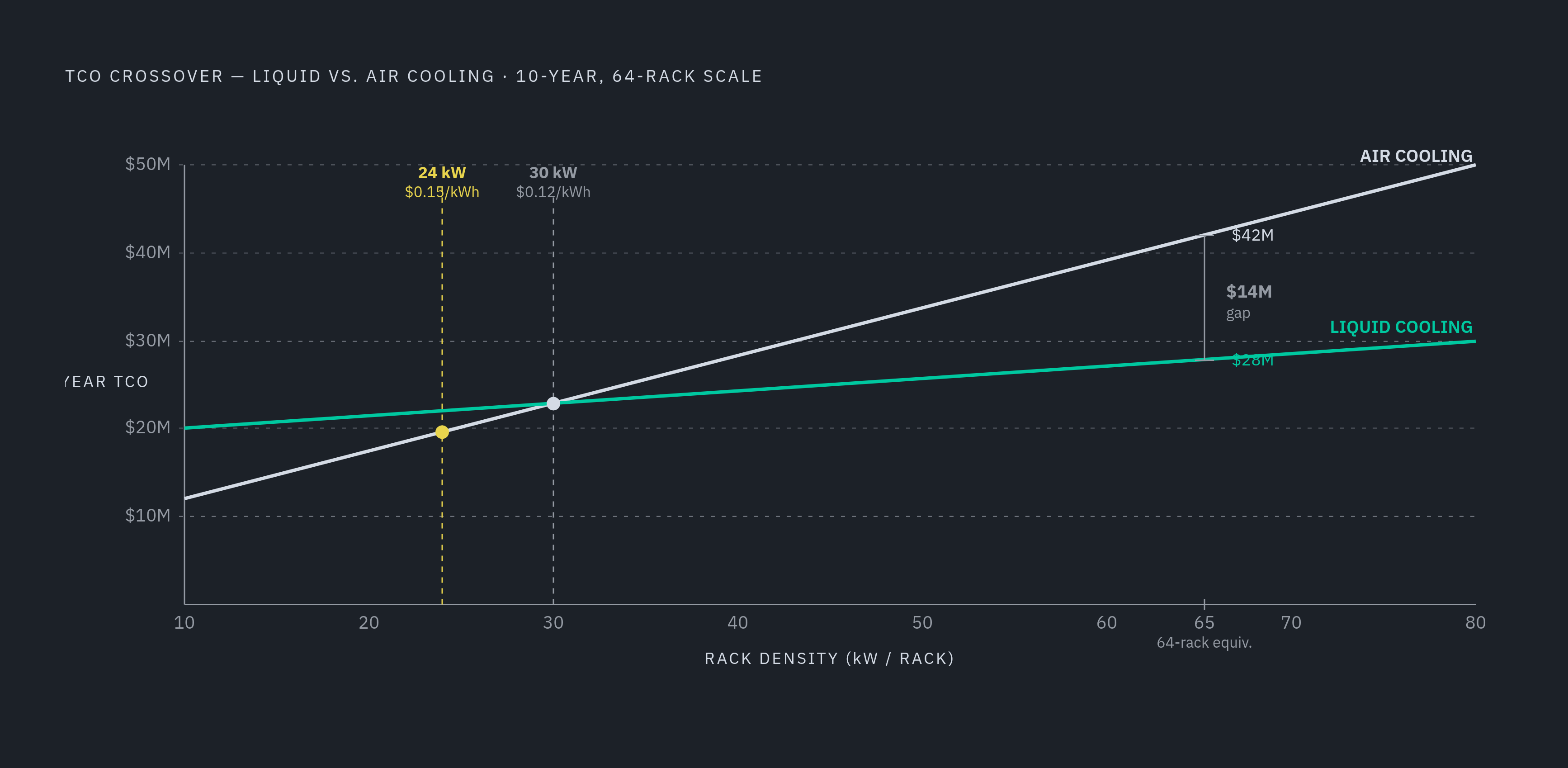
Past a certain point in the density curve, the extra money spent on liquid cooling is no longer a premium; it is the cheaper path. That crossing point is calculable, and it moves depending on three variables: rack density, local electricity rate, and the PUE improvement the architecture delivers.
At 64-rack scale, immersion cooling produces a ten-year TCO of approximately $28M against approximately $42M for air cooling at the same scale, and that gap comes from the PUE improvement and the real-estate reduction, not from any cut in capital spend. At standard commercial electricity rates of $0.12/kWh, that inflection point, where liquid cooling's ten-year TCO advantage exceeds its upfront capital premium, is approximately 30 kW per rack. If you push the electricity rate up to $0.15/kWh, common across New England and California, the threshold drops to approximately 24 kW per rack. More projects cross into liquid-cooling economics in high-rate markets than planning teams typically assume.
Electricity rates themselves are moving in a direction that pulls more projects toward that threshold. The national average commercial electricity rate climbed to 14.12 cents per kWh as of May 2026, and that jump pushes the inflection point lower for a wide set of projects. That matters because power and electricity costs make up 40 to 60% of annual operating expenditure at a standard enterprise facility, making PUE the single most powerful lever in the entire operating cost model. Annual operating costs for high-density deployments running liquid cooling with 2N redundancy reach $3,200 to $4,800 per kW per year, well above the $1,440 to $3,000 per kW per year that standard workloads run. Yet at the densities AI workloads actually require, that higher operating number still produces the better ten-year outcome, because the alternative is either an air-cooling system that physically cannot do the job, or a real-estate bill that keeps growing to make up the difference.
Teams that skip this modeling at the design stage are making a ten-year financial commitment with no framework to evaluate whether it was the right one.
Redundancy tier's compounding effect on cooling costs
Redundancy tier sits on top of the cooling architecture decision, not beside it. Moving from Tier II to Tier III adds roughly 15 to 25% to overall construction cost, and moving from Tier III to Tier IV adds another 30 to 50%. Each step up doubles distribution paths or adds fault tolerance that touches electrical and mechanical systems at the same time, compounding the cost.
Mission-critical AI workloads are driving a lot of the growth in Tier IV construction right now, because fault-tolerant power and cooling redundancy becomes a basic requirement for running the workload once compute density reaches a certain point. Hyperscale and Tier IV builds already run $12 to 15M or more per MW before you apply any liquid-cooling premium. Adding immersion cooling to a Tier IV design pushes the project into the $15 to 20M-plus range that now defines the top of the cost tier spectrum. A high-density liquid-cooled design combined with Tier IV redundancy produces a cost that is categorically different from either variable modeled on its own. The two need to be priced together from the start.
What the Cooling Architecture Choice Locks In Downstream
Choosing a cooling architecture is not a late-stage mechanical decision that can be revisited once the rest of the design is set. It sets structural loads, electrical topology, and integration requirements that run through the entire project, and it does so earlier than most other major decisions on the job.
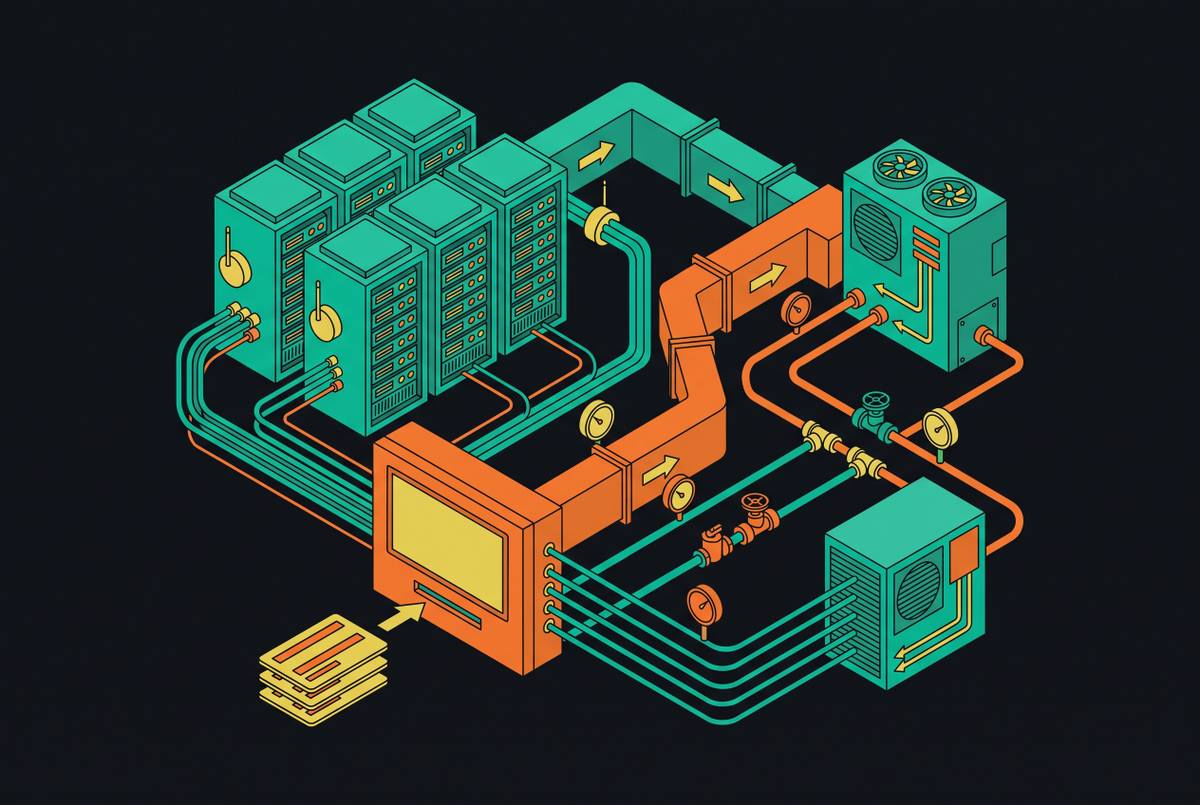
Immersion cooling needs structural provisions for tank loads and dielectric fluid containment, along with electrical and mechanical systems that have to be specified before the structural and electrical design is finalized. Direct-to-chip cooling brings its own complication in the form of coolant distribution units, or CDUs, whose telemetry (flow rate, temperature delta, pump status, leak detection zones) has to be defined as an integration requirement before design is finalized.
The systems that manage this data don't do the same job, and treating them as interchangeable is where coordination breaks down. BMS, EPMS, and DCIM serve different operational audiences, and the integration architecture has to spell out which system owns each data point, which one triggers alarms, and how data moves between them without gaps or duplication. That resolution has to happen at the cooling-system design stage. Some platforms now pull data from EPMS, DCIM, and intelligent PDUs together to enforce power caps at the rack and outlet level, prioritize critical workloads, and shed nonessential load under constraint, but none of that coordination works unless the cooling architecture and its data points were defined as integration inputs from the start rather than discovered once the system is already running.
The practical cost of skipping that step appears the first time something moves. A rack relocation in a liquid-cooled high-density environment isn't a simple layout adjustment. It triggers a recalculation of CDU capacity allocation, power topology, cable routing, and structural load distribution all at once. If teams run disconnected systems, they absorb that as manual rework spread across every one of those tools separately.
The BIM model's limits for carrying cooling data to operations
A BIM model does real work during construction: coordination between trades and clash detection in a high-density cooling environment depend on it. That model is not built to run the facility once construction ends, and the gap between what BIM delivers at turnover and what the operations team needs to run liquid cooling infrastructure gets decided by choices made at the start of the project, not at handover.
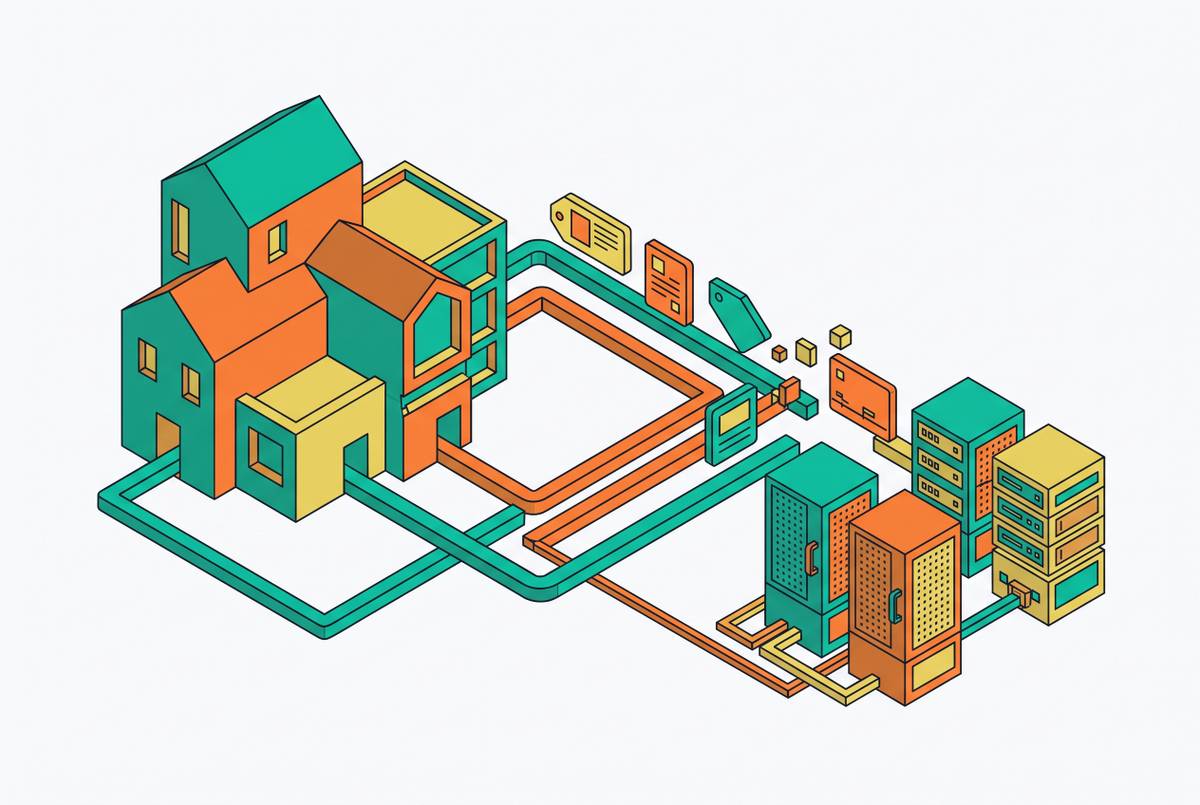
It's common for a developer to deliver a construction BIM model that the operator can't use for facility management without substantial rework. For liquid-cooled facilities, that rework runs deeper, because the data operations actually needs, CDU parameters, coolant circuit topology, leak detection zones, isn't part of a standard BIM object's properties. Getting from BIM to a usable DCIM record requires the schema and the asset identifier strategy to be aligned before construction starts. Trying to build that alignment after handover costs far more and rarely finishes the job completely.
Once the facility is running, the DCIM platform carries the live operational record forward, with the BIM model serving as a reference for what was designed. That split only works if the asset identifiers, the schema, and the spatial relationships were aligned before construction. An operations team taking over a liquid-cooled facility needs more than as-built drawings to run it safely: validated alarm logic, documented thresholds explaining why each one was set where it was, trend baselines, and a clear RACI for who owns the cooling infrastructure.
The mismatch between the facility's physical life span and the pace of AI hardware adds another layer to the problem. You amortize a data center's physical infrastructure over 15 to 20 years, while new generations of AI accelerators appear every 12 to 18 months. If a static BIM model isn't built to update, it becomes outdated before the facility even reaches full occupancy. Structured, updatable asset data is the only record that stays useful across that mismatch, because it can change as fast as the hardware it's tracking does.
Using the cost-tier framework to make the cooling architecture decision before it locks in
The cooling architecture decision breaks down into four inputs: density target, electricity rate, redundancy requirement, and integration scope. Those four place a project into one of three cost tiers, and the modeling needs to happen at concept, before detailed design, not after.
Start with the density target. Below 25 kW per rack, air cooling remains a defensible choice. If you're above 30 kW, liquid cooling gives you the better ten-year TCO when electricity rates are standard. Between 25 and 30 kW, the electricity rate and the redundancy tier decide which architecture wins, so that band needs the full model run. Apply the local electricity rate next: above $0.15/kWh, the liquid-cooling inflection point drops to roughly 24 kW per rack, which pulls more projects into liquid-cooling economics than planning teams usually expect going in. Layer redundancy tier on top rather than after: when you model cooling architecture and tier classification together, you get a cost multiplier that looks nothing like either variable modeled by itself. Finally, define the integration scope at concept. CDU telemetry, DCIM schema, BMS alarm logic, and asset identifier strategy are design inputs that need resolving before structural and electrical design is finalized.
Getting this decision wrong costs more than a capital overrun. Field workarounds appear when cooling infrastructure conflicts with power topology that was designed around a different assumption. Missed factory slots occur when liquid-cooling equipment with a long lead time needed to be ordered months earlier than the schedule allowed. An operations team that can't safely manage a facility is the result when the data architecture never caught up to the physical one.
Most of this breaks down in practice because the information needed to run the framework sits scattered across separate models, specifications, CDU datasheets, and operational systems that don't talk to each other. When the cooling layout changes, those changes don't propagate automatically across power, cable, structure, and documentation, so the fragmentation itself becomes the obstacle to applying a framework that is, on paper, straightforward to calculate. Knowing the cost tiers is the first step. Acting on them requires the design, power, structural, and data decisions to move together as the project evolves, rather than getting reconciled by hand every time one of them changes.