Fragmentation Costs in Data Center Project Delivery
Fragmentation between disconnected tools drives 12% rework costs across data center projects.
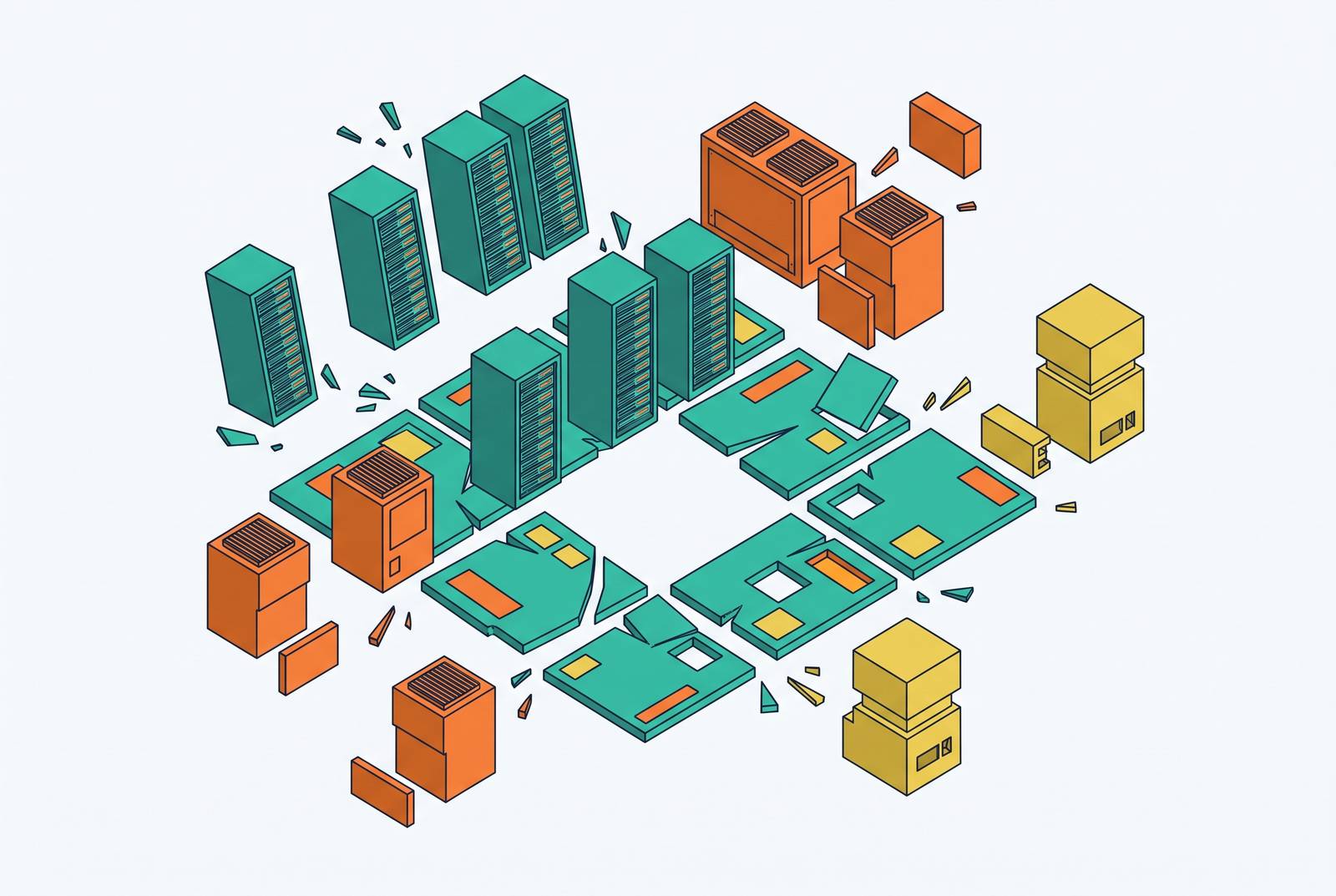
Data center project costs hit $597 million on average in the 12 months ending November 2025, up from $374 million the year before. Inflation and bigger buildings explain part of that jump. Fragmentation explains the rest: the same information gets rebuilt by hand at every handoff, and the cost compounds phase after phase until it lands on a budget line. Most teams blame their tools for this, but the tools are usually fine. What's broken is the space between them, and that space is where the money disappears.
When rack moves, power drops, and cable routes live in separate disconnected tools, a single six-foot rack move triggers four separate manual updates across four separate systems, and each update is a fresh chance to miss something or work off numbers that are already stale. That rekeying problem doesn't stay contained to one phase: each phase inherits whatever gaps the last one left behind, and the errors compound rather than add. By construction, crews are working off specs that are incomplete or unconfirmed, which drives rework to roughly 12% of project value on average, with a meaningful share of that tracing straight back to information gaps rather than bad craftsmanship. At an average project cost of $597 million, even a partial recovery from better-connected workflows shows up directly on the budget line.
What fragmentation actually means in a data center project context
Fragmentation is what happens when the same piece of information gets rebuilt by hand in every tool that touches it. Layouts sit in one system, power schedules live in another, cable routes get modeled in a third. RFI answers pile up in email threads, and handoff data gets flattened into PDFs nobody can query. Every time information crosses from one tool into the next, someone has to retype it, reformat it, or work it back out by hand. That's where things drift, lag, or just vanish.
Most teams diagnose this wrong, and it costs them. They reach for better software as the fix, but plenty of teams already own capable individual tools. The gap sits in how those tools talk to each other, or don't, and no amount of new software closes a gap between two systems that were never built to share data in the first place.
Take something as ordinary as moving a rack six feet to the left. In a connected workflow, that move cascades on its own: power drops adjust, cooling zones recalculate, cable routes update, documentation reflects the change. In a fragmented workflow, that same six-foot move triggers four separate manual updates across four separate systems, and each one is a fresh chance to miss something or work off numbers that are already stale.
People also confuse fragmentation with complexity, and that mix-up sends teams after the wrong fix. Complex systems get managed fine as long as information flows cleanly between the people and tools handling them. Fragmented systems don't get managed well even when every individual piece is sophisticated. Caliber Global's 2026 analysis backs this up on schedule performance: the organizations that hit their delivery dates are the ones with the clearest visibility into dependencies, ahead of the ones relying on the fanciest point solutions.
What happens to project costs when rack moves, power drops, and cable routes are tracked in separate disconnected tools, and how does that fragmentation compound across phases?
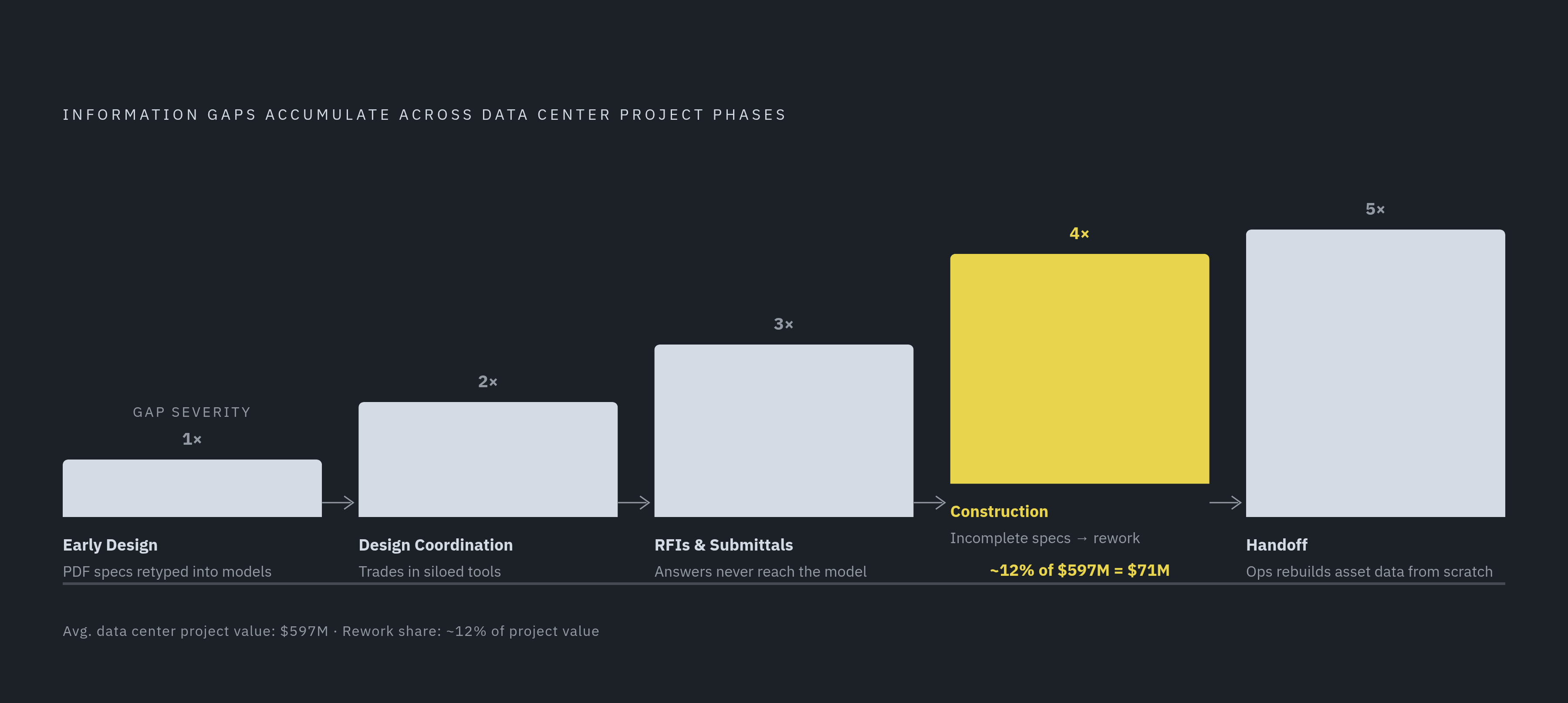
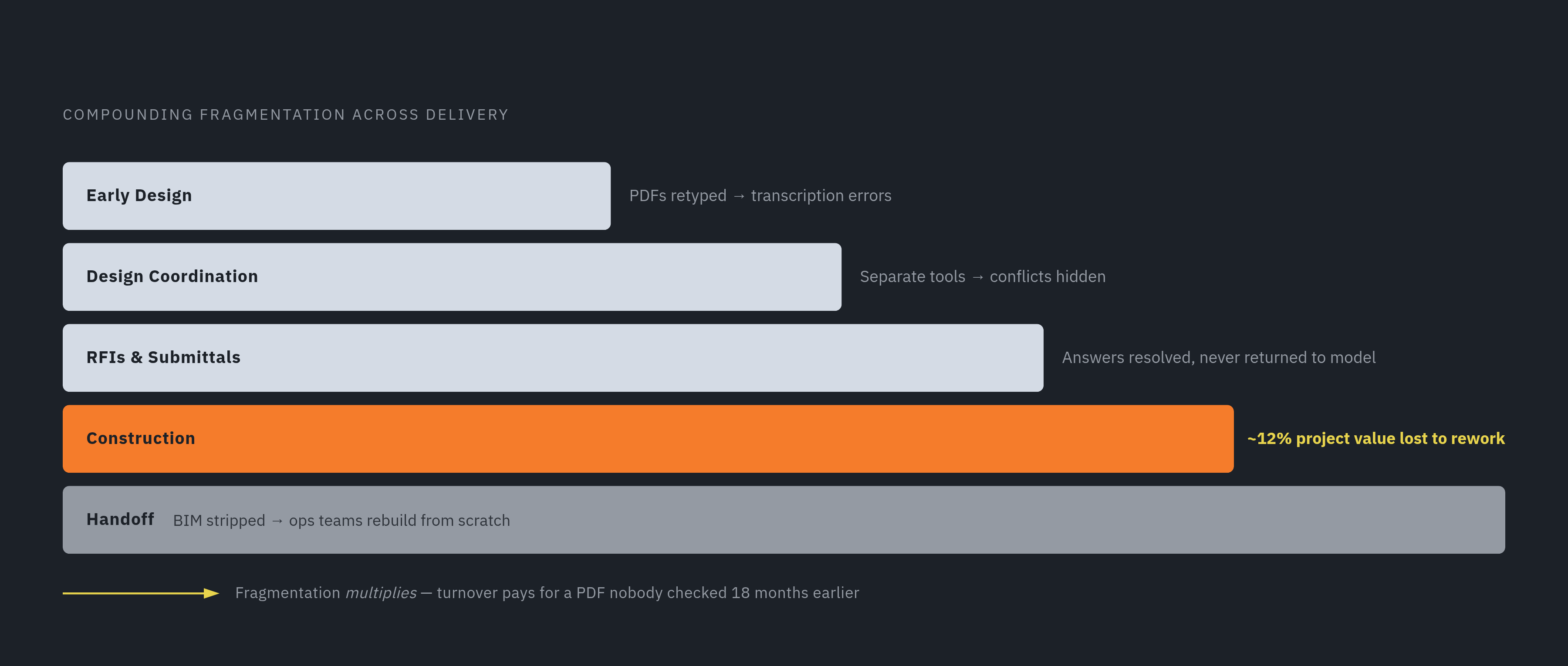
Fragmentation doesn't show up once, and it doesn't show up randomly. It shows up at every handoff, and each phase inherits whatever mess the last one left behind.
Early design is where it starts. Equipment specs arrive as manufacturer PDFs, and engineers retype those parameters by hand into models, schedules, and validation rules. A transcription error made here compounds before a single piece of steel gets ordered.
Design coordination comes next. Separate trades model power, cooling, and cable routing in separate tools that don't talk to each other, and conflicts between those systems tend not to surface until construction, well past the point where a design review could've caught them cheap.
Then come RFIs and submittals. An answer gets resolved in one system but rarely makes its way back into the model or the schedule, so the design of record and the built condition quietly start pulling apart.
Construction inherits all of it. Crews work off specs that are incomplete or unconfirmed, and rework runs to roughly 12% of project value on average, according to Construction Dive, with a meaningful share of that tracing straight back to information gaps rather than bad craftsmanship.
Handoff is the last stop, and often the worst one. BIM data that reaches turnover without structured links to DCIM, EPMS, or BMS systems gets rebuilt from scratch by operations teams. Every bit of intelligence built into that model over months of design work gets left at the door.
Each phase doesn't just add its own fragmentation on top of the last one. It compounds, and by the time you're standing in a finished building, you're paying for mistakes made in a PDF nobody double-checked eighteen months earlier.
How power systems concentrate fragmentation risk
Electrical systems eat up 40 to 45% of total data center construction budget, the single largest cost category on the project. That's also exactly where fragmentation risk concentrates hardest. Nothing else touches as many downstream systems, so nothing else punishes a coordination miss as hard.
AI-ready facilities need to handle loads that swing from idle to full peak in milliseconds. Every distribution path and every protection device has to get engineered as one connected system, modeled together, not bolted together from parts designed in isolation by different people at different times.
Wood Mackenzie projects a 30% supply deficit for power transformers in 2025. Late design changes caused by coordination failures are landing on a transformer market with no slack left to absorb reorders, and power procurement and transformer lead times already rank among the top causes of schedule overruns. A fragmented power model doesn't just slow the design phase down. It pushes changes into procurement windows that are already stretched thin, turning a coordination miss into a line item measured in real weeks and real money.
Overhead busway and modular distribution can shrink the surface area of rework, since they let teams deploy power in stages instead of committing everything up front. That only works, though, if the design model serves as the one authoritative source rather than one PDF among several competing versions floating around the project.
Cooling coordination as a design-time problem that operations inherits
Rack densities have climbed from 5 to 10 kW in legacy facilities to 30 to 80 kW in today's AI clusters, with 100 to 150 kW per rack already shipping as a productized target. Nvidia's GB200 generation pushes rack density toward 132 kW, nearly double the GH200's 72 kW. That jump compresses the window where cooling decisions can still get revised without triggering structural rework, and it compresses it fast.
Facilities not designed for AI density from day one face $200 to $400 per kW in mechanical retrofits, adding up to $10 to $50 million on a mid-size build. Those are decisions made during construction, and they get brutally expensive to fix once commissioning wraps.
Cooling strategy comes down to three things: rack layout, power density per zone, and airflow modeling. Get any one wrong and the other two don't save you. In fragmented workflows, three different people model those three domains in three different tools, and reconciliation happens late, if it happens at all. CFD simulations and heat mapping inside a BIM environment can catch these gaps before anything gets built, but only when layout, power data, and cooling design all pull from the same source. Skip that step, and cooling stops functioning as a design decision. It turns into a repair job, and repair jobs on cooling systems don't come cheap.
Cable routing as the coordination layer that touches every other system
Cabling isn't its own island. It's the physical result of every decision made upstream: where the racks sit, how power gets distributed, where the cooling zones fall, how the network gets laid out.
AI-era cabling demands have jumped fast. Rack constructions that used to run on 16 A or 32 A circuits now call for 70 A, 100 A, even 200 A, in the same physical footprint. Higher-bandwidth requirements have increased cable bulk and added physical constraints that earlier generations didn't face. A late routing change carries real physical weight now, not just paperwork.
In fragmented workflows, cable routing tends to get modeled last and revised first. It's the discipline stuck absorbing whatever changes ripple down from power and layout, and rework lands exactly when schedule pressure is worst. Folding cabling and patching scopes into a shared BIM model can tighten routing accuracy and cut material waste, but only if that model reflects current, confirmed information and not a snapshot frozen three design revisions ago. This is where fragmentation stops being an abstract information problem and turns into a physical one. Reversing a bad routing decision is a lot harder than reversing a bad schedule entry.
RFIs and submittals as the paper trail of unresolved fragmentation
RFIs get treated like routine paperwork, but they're really the formal record of every question a fragmented design process failed to answer before construction started.
When an RFI gets resolved over email or inside a standalone tracking tool and never makes it back into the model, the design of record and the built condition start pulling apart. Work proceeds on specs nobody's fully confirmed, and that's a primary driver behind the 12% average rework figure from Construction Dive's 2025 report.
Microsoft's January 2025 pause on its Wisconsin data center construction shows what this looks like at hyperscale. The company cited a need to evaluate scope and recent technology changes and how those might affect facility design. That's a stopped-work event, at hyperscale, over exactly the kind of design misalignment fragmentation produces.
RFI volume is a lagging indicator, and that's the part worth sitting with. By the time RFIs start piling up, the coordination failures behind them are already weeks, sometimes months, old. Every answer, every design decision, every equipment parameter should trace cleanly back to whatever information justified it. In a fragmented workflow, that trace gets reconstructed after the fact, assuming anyone bothers reconstructing it at all.
What BIM maturity determines about handoff quality
BIM is table stakes for data center delivery at this scale now. Nobody's coordinating power, cooling, cable, and structure without a shared 3D environment anymore.
BIM maturity varies a lot from project to project, though, and this is where most of the real damage hides. A low-maturity model works mainly as a picture, useful for visualization and not much else. A high-maturity model works as a structured data asset, one that can drive automation, feed validation rules, and survive the handoff into operations.
Here's the uncomfortable part: most BIM models handed over at project turnover aren't operations-ready. They've got geometry, sure, but they're missing the structured metadata that DCIM, EPMS, and BMS systems need to function on day one. Without that metadata, operations teams end up rebuilding asset data from scratch, repeating the exact rekeying problem that fragmented the design phase, just on the other side of the handoff line.
Teams working from a higher-maturity BIM environment get a shared source of truth that AI tools can actually use to flag risks and optimize layouts. The principle holds broadly: the more complete and trustworthy the underlying data, the more value automation can pull out of it. A BIM model that reaches turnover without a structured link to operational systems delivers maybe half of what it's capable of, and that's a generous estimate.
Why a connected project workflow changes the economics, not just the process
Fragmentation's cost was never one line item. It's the sum of rework, rekeying, idle crews waiting on answers, rushed procurement, RFIs that took too long to close, and operations teams re-onboarding data that already existed somewhere upstream, in someone else's tool, three handoffs ago.
At $597 million average project cost, clawing back even a slice of that through better-connected workflows shows up directly on the bottom line. The split matters too, since AI accounts for some of this and not all of it. The distinction between where automation adds flexibility and where precision and compliance can't bend still has to be managed deliberately. Mixing those up is its own kind of fragmentation, just wearing a newer coat of paint.
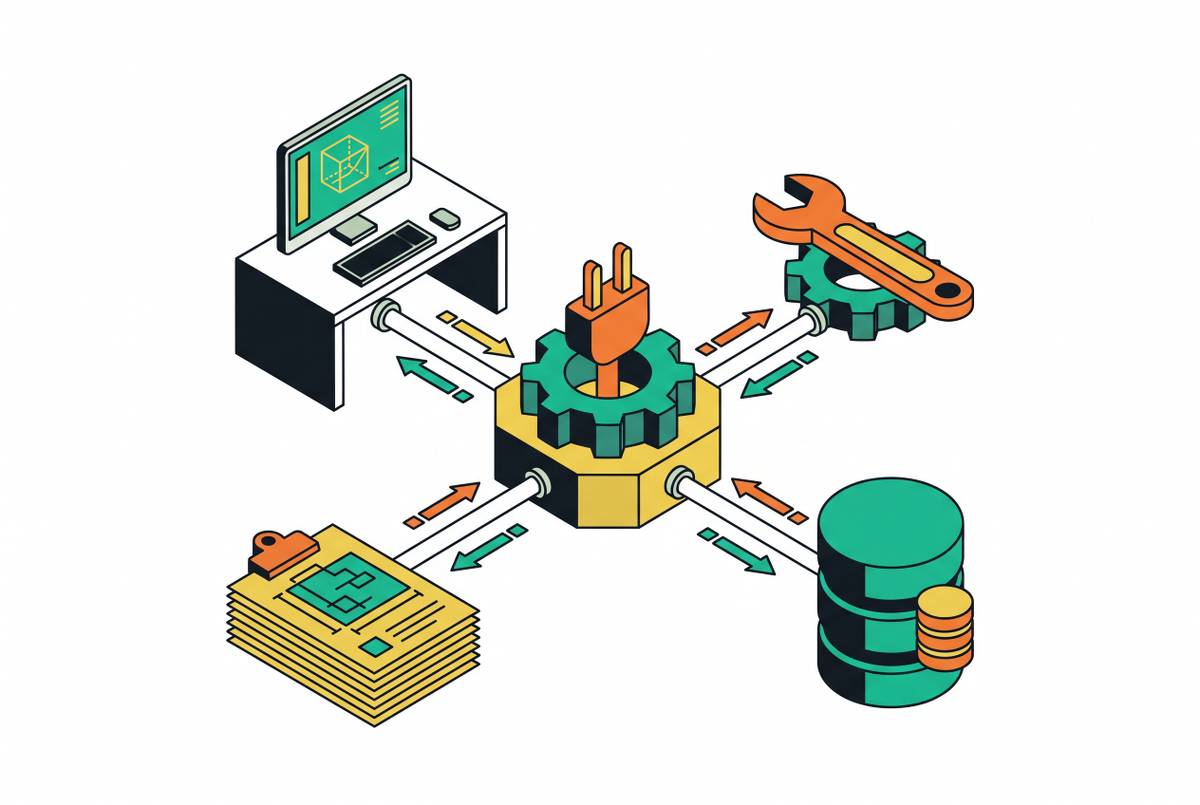
A connected project workflow, one where layouts, critical-systems engineering, cable routing, documentation, RFIs, and handoff data all share the same information base, means that six-foot rack move cascades on its own instead of triggering four rounds of manual cleanup, platforms such as Archil Labs, a data center design automation platform that runs layout, documentation, RFIs, and structured ops handoff through a single connected workflow, are built specifically to close that gap between tools. ArchiLabs Studio is built around this model: a design automation platform made specifically for data center delivery, connecting layout, power, cooling, cable, RFIs, and operations handoff inside one workflow, so information travels with the project instead of getting rebuilt at every boundary it crosses.
The teams hitting their schedules consistently are the ones coordinating best, and that distinction only matters more as budgets climb. Automation cuts down how much of that coordination has to run through a person retyping the same numbers for the fourth time, but it doesn't remove the need for coordination itself; someone still has to own the model. U.S. data center construction starts hit $77.7 billion in 2025, up from $26.9 billion the year before, and a market growing that fast has no room left for delivery models built on manual translation between tools that were never meant to talk to each other.