Natural Language Interfaces for Design Automation Platforms
Data center design teams use natural language interfaces to move faster and cut manual work.
Data center systems spending is set to grow 55.8% in 2026, pushing total spend past $788 billion, according to Gartner's IT Spending Forecast Gartner IT Spending Forecast. That kind of number doesn't just mean more buildings. It means more pressure to deliver those buildings faster, with fewer specialists per project, because the talent pool isn't growing at 55.8% a year Gartner IT Spending Forecast. JLL's 2026 Global Data Center Outlook backs this up from a different angle: 97 gigawatts of new capacity are expected globally between 2025 and 2030, nearly doubling the sector JLL 2026 Global Data Center Outlook. A pace like that breaks manual, fragmented workflows almost by definition. You cannot double an industry's output while keeping the same spreadsheet-and-PDF handoffs that built the last generation of facilities JLL 2026 Global Data Center Outlook.
Operations teams have already made the call. A Futurum survey cited by Introl found that 67% of IT teams now use automation for monitoring, and not a single respondent said they were running with no modern automation at all. The debate over whether to automate is over on the operations side. The live question is how far automation reaches, and into which decisions Futurum survey.
Design is catching up to that same question, and it's arriving through natural language specifically because plain language is the lowest-friction way to get more people, at more skill levels, doing useful work inside a platform they didn't spend years learning. That's the promise. But data center design isn't a monitoring dashboard. It's a coordination problem where power, cooling, and construction sequencing all touch the same physical inches of a room, and where one bad instruction doesn't just look wrong, it cascades. So the real story here isn't "NL interfaces are arriving." It's where they belong once they arrive, and where something more rigid has to hold the line.
What natural language interfaces do inside a design automation platform
When the marketing language is stripped away, an NL interface does one specific job: it translates what a person types or says into what the platform actually does, whether that's a query, a parameter change, a layout tweak, or a documentation trigger. The user doesn't need to know the command syntax underneath. They just need to say what they want.
There are two distinct modes, and they carry very different levels of risk. The first is conversational query: someone asks, "which racks are within 10% of power capacity?" and the system pulls structured data and hands back a readable answer hakia.com. Nothing changes in the model. Nothing gets built or moved. The second mode is agentic command, where someone says, "route fiber from row C to the MDA," and the system actually executes, or drafts, a sequence of actions across connected subsystems. That second mode is where things get interesting, and where things get dangerous, because now language is standing in for engineering judgment.
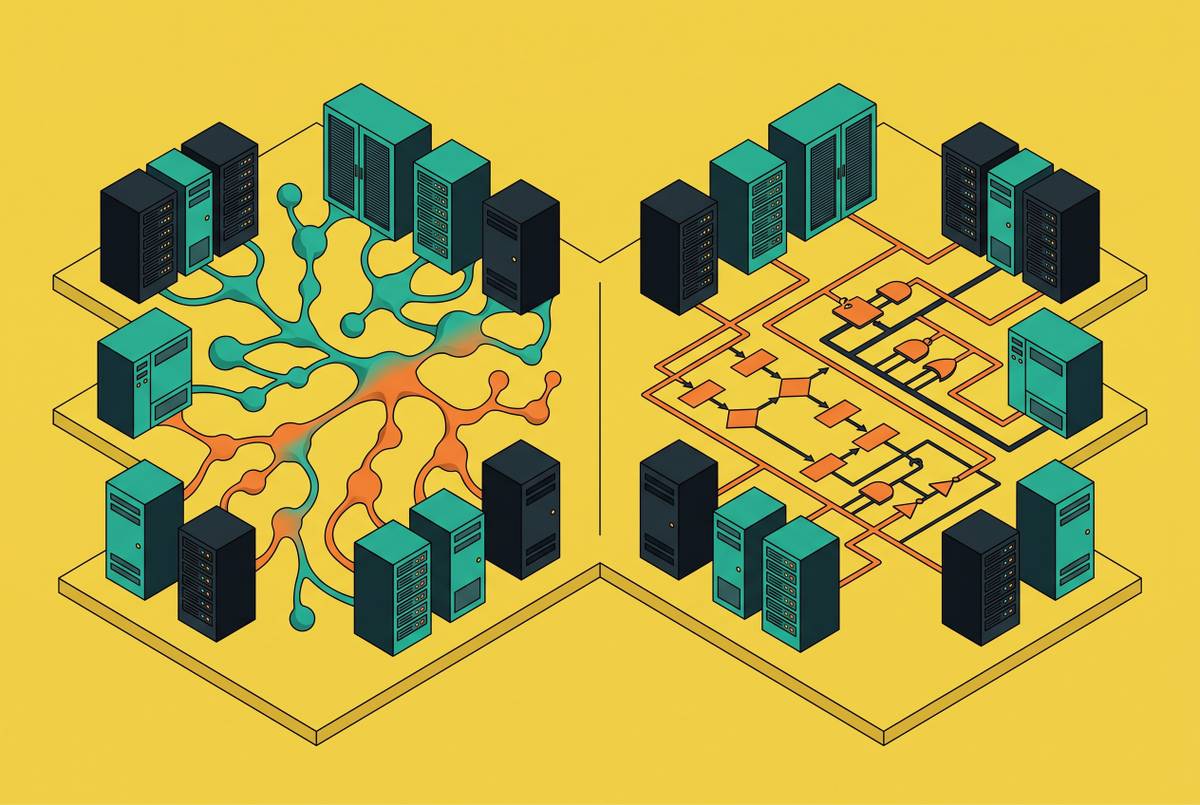
Research on natural language interfaces for visualization tools, specifically the RAGE-Vis work, found that language-only interaction tends to produce results that are "locally plausible but globally inconsistent" whenever the system doesn't understand how the pieces relate to each other. In a chart-editing tool, that's a cosmetic problem. In a design platform where every component depends on the ones around it, it's a structural warning. One response researchers point to is a hybrid approach, sometimes called DynaVis, that pairs natural language for expressing intent with directly manipulable widgets for verification. You say what you want, and then you can see and adjust it directly, rather than trusting the words alone to capture the full picture.
The data architecture underneath makes any of it trustworthy. Retrieval-Augmented Generation, or RAG, has become the dominant approach in enterprise AI, reportedly used in the large majority of production systems Hugging Face State of AI Report. In a design automation context, RAG means the language model is reasoning over your actual project data, equipment specs, capacity tables, routing rules, not just general knowledge scraped from the internet Hugging Face State of AI Report. That distinction matters enormously. An LLM's job, done well, is intent parsing, synthesis, summarization, and generating clear language. The platform's job is something else entirely: validated data, rules that execute the same way every time, and a record of what happened that can be checked later.
Where NL interfaces genuinely accelerate design work
Start with accessibility, because it's the most immediate win. An engineer who has never learned a platform's scripting language can still ask it a question, pull a report, or flag a conflict, without waiting on a specialist to run the query for them. That alone cuts down on ticket queues and the kind of manual handoffs that quietly eat a week of schedule.
Early-stage design is another clear win. Generating layout options, running quick capacity scenarios, or filling in a preliminary equipment schedule from a plain-language prompt compresses work that used to take hours of clicking through menus. This is the exploratory phase of a project, where trying five ideas and throwing out four is the whole point. Flexibility here is a feature, not a liability.
Equipment data extraction is a quieter but genuinely valuable use case. Manufacturer spec sheets arrive as dense PDFs containing rich specification data that can be parsed and surfaced directly into model parameters and validation schemas, eliminating manual retyping across tools. NL-powered extraction can pull that data straight into model parameters and validation schemas, cutting out the retyping and the transcription errors that come with it. Some platforms, such as Archil Labs, a data center design automation platform that parses manufacturer PDFs and routes the extracted specs directly into connected models, schedules, and validation rules, treat this as a core workflow rather than a bolt-on feature.
Documentation and RFI work sits in the same category. Drafting RFI language, synthesizing submittal packages, or summarizing a design decision in plain language are high-volume, low-stakes-for-precision tasks where LLM fluency accelerates without risk to engineering integrity. An engineer reviews and signs off either way, so the LLM's fluency speeds things up without putting engineering integrity at risk.
The tooling world is already moving this direction at the workflow layer. PTC announced in August 2026 that it was adding natural language commands to automate processes inside its CAD platform. When a major CAD vendor embeds NL into its core workflow, design automation platforms that don't offer something comparable start looking dated by comparison.
There's also proof, on the operations side, that AI reasoning over solid data produces results you can actually measure Hugging Face State of AI Report. Google DeepMind's cooling AI cut cooling energy use by 40% and dropped overall PUE by 15%, working from sensor readings taken every five minutes and fed through deep neural networks introl.com hakia.com. The lesson is broader than cooling specifically. AI delivers reliable, measurable outcomes when the data underneath it is structured and sound introl.com hakia.com. Across every one of these examples, a pattern appears: NL is accelerating tasks where a wrong answer means some rework, not a safety failure or a compliance violation. The system proposes, and a person corrects it before it does any damage.
Rack density has moved the stakes in a way that's easy to undersell. Five years ago, a typical rack drew 5 to 8 kW introl.com. AI workloads now push that to 15 to 50 kW per rack, and Deloitte projects that next-generation AI racks could hit densities around 370 kW in 2026 introl.com. At those numbers, a power circuit that's off by a small margin, or a cooling path blocked by a misrouted cable, doesn't cause a minor inconvenience. It causes an immediate thermal or electrical event introl.com.
A study in the Journal of Construction in Developing Countries, by Shah and Awang, analyzed 65 MEP clashes on a single project and found that unresolved conflicts generated additional costs of MYR 60,323.80 in a single case. Now put that in a data center context, where an electrical clash doesn't stay contained to electrical. In data centers, thermal consequences compound electrical rework rather than simply adding to it Journal of Construction in Developing Countries.
Physical routing, at its core, is a constraint satisfaction problem, not a language problem. Overhead zones in a data center get fought over by chilled water piping, CRAH units, electrical busways, and cable trays, all trying to occupy the same limited real estate at the same time. Poor cable pathways choke off airflow in hot-aisle setups. Electrical equipment placed in the wrong spot throws off pressure balance across the floor. None of these conflicts get resolved by a well-phrased sentence. They get resolved against IEEE separation standards, thermal models, and power capacity math, checked precisely, not approximated.
Hardware cadence adds another layer of volatility that a language-first system struggles to keep pace with. NVIDIA moved from the Blackwell GB200, built on ConnectX-7 with 400G InfiniBand, to the GB300, which uses ConnectX-8 and 800G InfiniBand, and the company already has Vera Rubin and Rubin Ultra outlined for 2026 and 2027 hakia.com. Cycles that fast mean power and cooling parameters can shift before a facility even finishes construction hakia.com. A design system that can't enforce updated rules with precision simply falls behind the hardware it's supposed to be designing for hakia.com.
Go back to that RAGE-Vis finding about results being "locally plausible but globally inconsistent," and apply it to this world instead of a chart-editing tool Google DeepMind. In a spreadsheet chart, an inconsistency is an ugly axis label. In a data center, it's a cable tray blocking the return-air path for a row of 50 kW racks Google DeepMind. Those aren't the same category of mistake, and treating them the same way is the actual danger here. LLMs are probabilistic by nature. They're optimizing for what sounds plausible given the context they've been given. Deterministic rules optimize for something different: correctness given fixed constraints. In critical-facility coordination, correctness is the whole job. It's the whole job.
The architectural split: what LLMs own versus what rules must own
None of this makes LLMs the wrong tool. It makes them the wrong tool for certain jobs, and figuring out which jobs is the actual design decision every platform team has to make, not a hierarchy where one technology outranks the other. The failure mode is handing AI a job that needed a rule Hugging Face State of AI Report." It's handing AI a job that needed a rule Hugging Face State of AI Report.
So what belongs to the language layer? Intent parsing, turning what a user said into what the system should do. Synthesis, pulling structured data out of models and schedules and presenting it in a way a human can read quickly. Specification extraction from manufacturer documents. RFI drafting and documentation, where a human reviews the output before it becomes real. And exploratory layout conversation, the back-and-forth of generating candidate ideas before any hard constraint gets applied to them.
What belongs to the rules layer is a different list entirely, and a shorter one, because these are the places where being almost right is the same as being wrong. Power capacity enforcement, at the rack and circuit level, can't be approximated. IEEE separation standards for power and data routing are fixed. Clash detection has to run against exact geometry, dimension by dimension. Change propagation, meaning that when a rack moves, that move has to ripple correctly through power, cooling, cable, and every affected schedule, has to happen completely, every time, not most of the time. And compliance validation needs to produce a signed, traceable result, not a best guess.
The moment an LLM's output turns into an engineering commitment, a number that lands in a schedule, a routing path that gets built, a capacity allocation someone relies on, deterministic validation has to check it before it goes any further. AI and deterministic rules aren't interchangeable tools you swap based on preference. AI earns its place where flexibility and language matter. Rules earn theirs where precision and safety aren't up for negotiation. That's a structural conviction about how these systems should be built, not a stylistic choice.
There's a simple test a platform team can run on any given feature: if this output turns out wrong, can a person catch it before it causes rework? If the answer is reliably yes, natural language flexibility is fine to leave in place. If the answer depends on whether the engineer happens to notice, that's the tell. Build a rule instead.
How the NL-plus-rules split plays out in operations-ready handoff
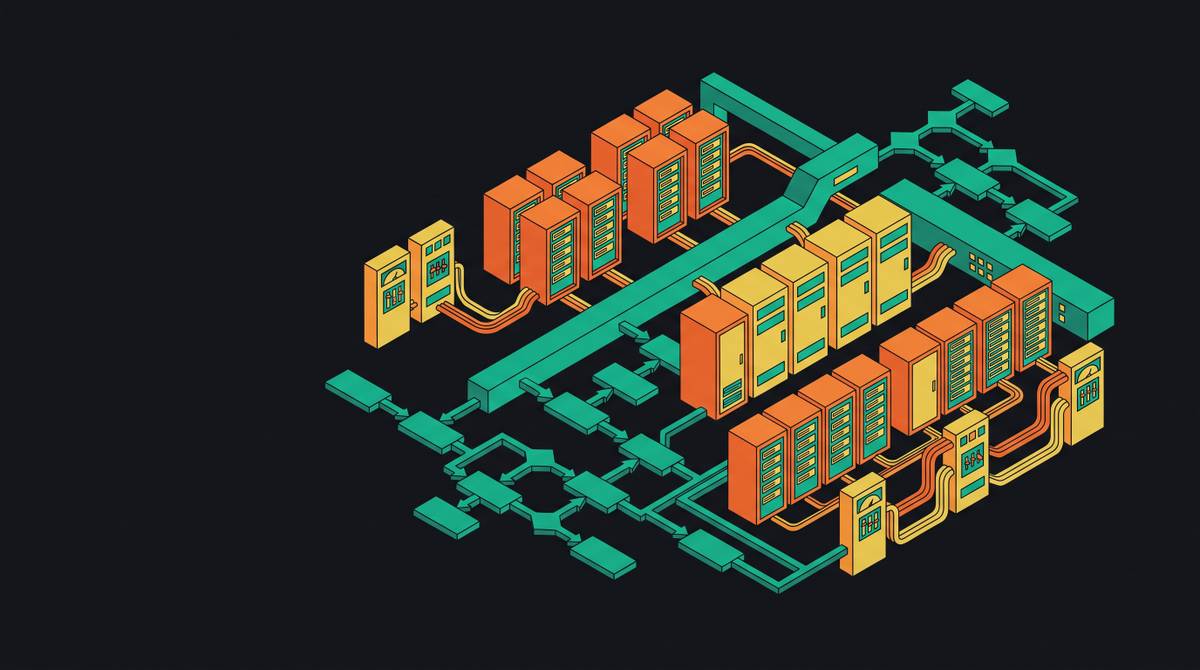
Handoff is where all of this stops being theoretical, because handoff means real systems inheriting real data. The BMS manages facility-level HVAC and environmental controls. The EPMS handles electrical distribution and power metering. DCIM sits above both, unifying IT and facility data for capacity planning and day-to-day operational decisions. Three systems, three distinct jobs, and none of them interchangeable.
One decision that has to get made early, and explicitly, is who owns what data. Telemetry authority and command authority are distinct design decisions, and the integration team must map which system owns which data stream to avoid duplication, conflicting values, or gaps during failover. Get them tangled and you end up with duplicated values, conflicting readings, or gaps that occur right when a failover happens and you need the data to be right. Natural language can't sort this out after the fact. It's a mapping decision that has to be made before integration starts, by people, with rules.
Where NL genuinely helps at this stage is translation work: taking asset data out of design models and reshaping it into DCIM-ready formats, generating the handoff documentation, parsing commissioning records. All real time savings, all reducing the manual grind of moving information from a design team's tools into an operations team's systems.
Where rules have to hold, without exception, is everything downstream of that translation. Protocol mapping, whether that's SNMPv3, Redfish, Modbus, BACnet, or OPC-UA, is deterministic by nature, not a matter of interpretation. Asset identifiers and the parent-child relationships in a DCIM register have to be exact, because a wrong relationship there breaks capacity planning downstream. And the power and environmental thresholds imported into EPMS and BMS have to match the design-validated values, not a synthesized approximation.
Greenergy Data Centers, a facility in Estonia completed between 2021 and 2022, is a useful real-world case here. It runs an integrated BMS-EPMS setup built on Siemens Desigo CC, paired with Power Manager, an extension module for Desigo CC, giving operators one unified view across mechanical and electrical systems. The value in that setup didn't come from a flexible chat interface. It came from structured data moving correctly across the boundary between systems that were never going to speak the same native language otherwise.
That's really the whole argument about BIM in one sentence: BIM data that arrives at turnover incomplete, or cut off from the operations systems that need it, isn't BIM doing its job. Structured handoff into DCIM, EPMS, and BMS is the actual finish line for a design project. An NL interface that hands over a friendly summary instead of a structured asset record has failed at exactly the moment it needed to succeed.
What a connected design platform looks like when the architecture is right
Most of the pain in this industry traces back to one habit: rebuilding the same information over and over, by hand, in every tool a project touches. Layouts in one system, power schedules in another, cable routing somewhere else, documentation in a fourth place, and operational asset records built again from scratch at the end. Moving one rack ripples that single change into hours of manual rework spread across every discipline involved.
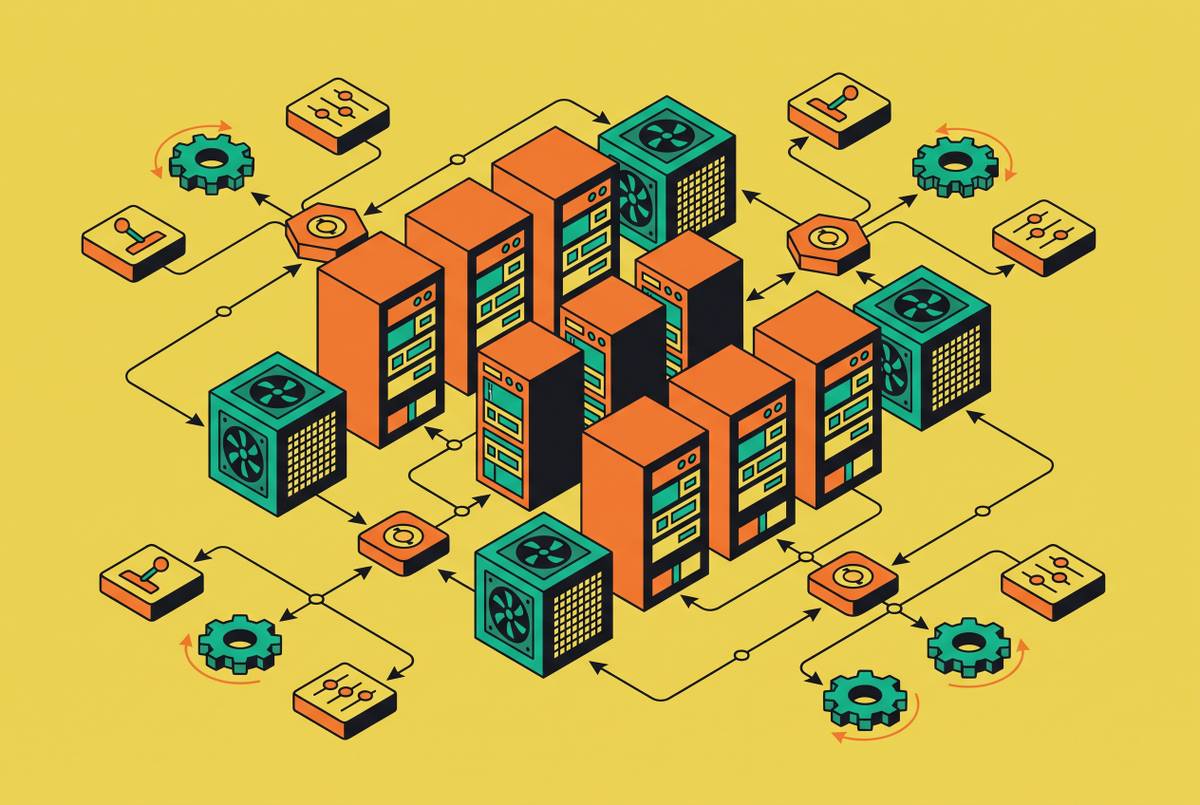
A platform that gets the architecture right does three things at once. It puts natural language in front of the tasks where it genuinely lowers the barrier to entry and speeds up creative or documentation work. It puts deterministic rules in charge everywhere a number is about to become a commitment, whether that's power capacity, a clash resolution, a compliance check, or a cascading change. And it keeps data structured across the entire lifecycle of the project, so nothing gets lost, and nothing has to be typed in twice, by the time it reaches DCIM, EPMS, or BMS.
ArchiLabs Studio is built on exactly that architecture: one connected workflow covering layouts, critical-systems engineering, cable routing, documentation, RFI management, and operations-ready handoff, with natural language doing the accelerating and deterministic rules doing the governing, each applied to the jobs suited to them. Structured data carries through the whole process, so handoff to DCIM, EPMS, and BMS is the natural endpoint of the work rather than a separate scramble tacked onto the end.
Traceability ties all of this together. Every RFI answer, every design decision, every equipment parameter needs to trace back to the information that actually supports it. A natural language interface that can produce a fluent answer but not a paper trail isn't a replacement for a governed engineering workflow, no matter how convincing the answer sounds.
Roughly 27% of AEC firms worldwide were actively using AI for automation and decision-making in their project processes as of 2026 introl.com. That leaves the majority still figuring out how to get there. The architectural choices being made right now, about what language gets to touch and what rules have to guard, are going to shape delivery economics for a long time introl.com. Whether a platform supports natural language isn't the question worth asking about it. Nearly everything will claim that soon enough. The real question is whether the platform actually knows which jobs belong to language and which belong to rules, and whether it enforces that line automatically, without waiting for someone to catch the mistake after it's already built.