Change Management in Construction Projects for Critical Facilities
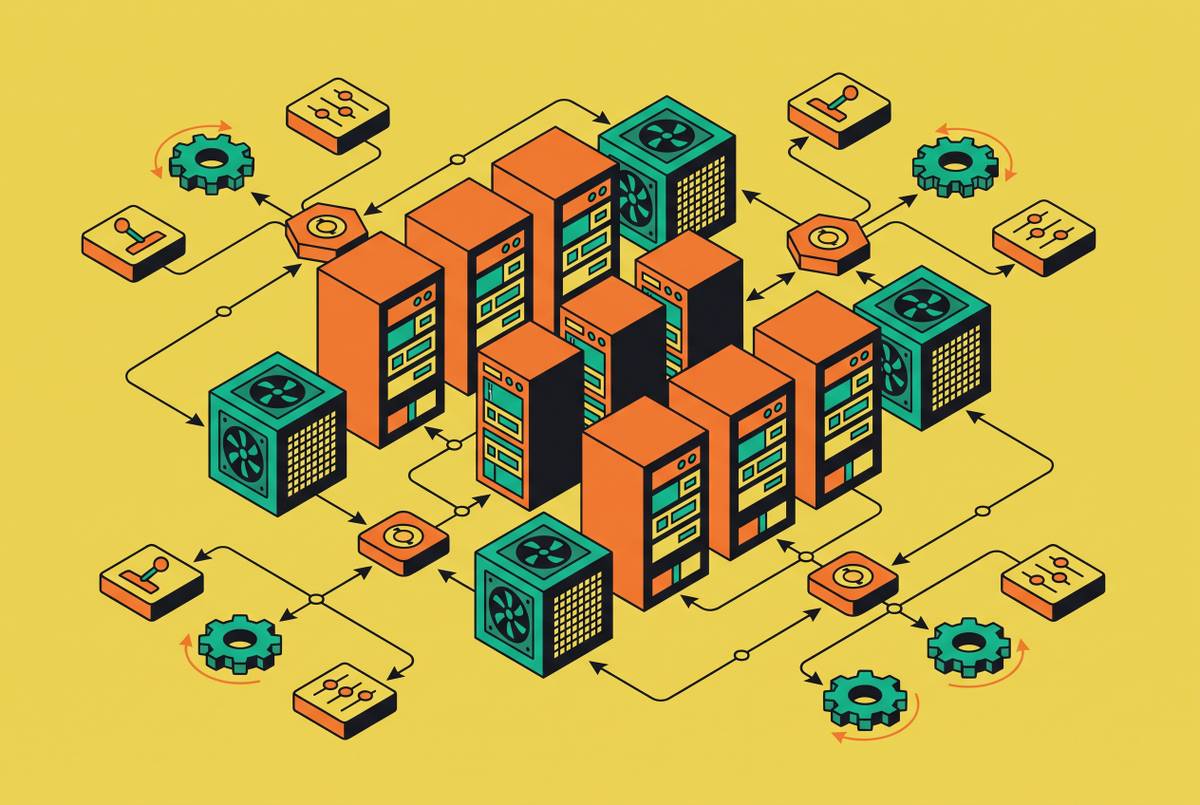
Interconnected systems mean one change cascades across power, cooling, and controls.
Change management in data center construction is not a paperwork discipline. It is the difference between a facility that reaches its ready-for-service date with the power, cooling, and controls it was designed around, and one that limps into operation with unresolved cascades running through every system. The reason is structural: in a critical facility, every system is load-bearing for every other.
Why data center construction creates a uniquely unforgiving change environment
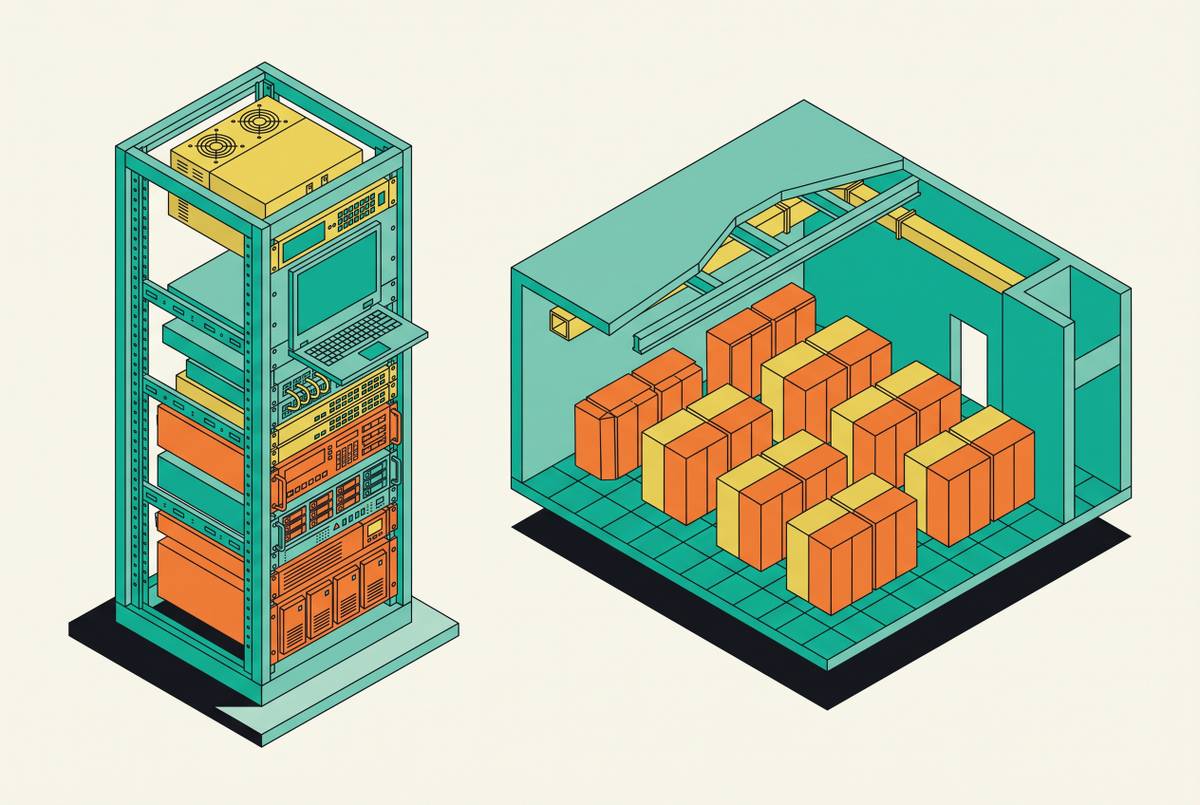
A data center is not commercial construction with tighter tolerances. It is a different category of project. In a conventional building, a scope revision can often be absorbed locally. A wall moves, a ceiling height changes, and the ripple stays bounded within one trade package. In a data center, that same revision travels. Power, cooling, cable routing, structural loading, controls, and fire suppression are coupled by physics and by code. Change one, and you have changed them all.
A rack density change is the clearest example. None of these can be handled in isolation because none of them exists in isolation. The facility is one connected system, and a decision made in one discipline is a load placed on every other discipline.
The 2026 delivery environment has made this coupling more consequential, not less. Liquid cooling and battery energy storage systems have added entirely new classes of interdependent scope. These are not bolt-on additions. They change the thermal envelope, the electrical architecture, and the structural assumptions of the building itself.
The ready-for-service date, not substantial completion, is the real finish line. The consequence is that change control in this environment cannot be treated as a back-office function. It is the discipline that determines whether the facility works at all.
How long lead times move change risk to the front of the project
The tight coupling of systems is compounded by procurement timelines. The window for consequence-free revision closes far sooner than most teams assume. The procurement schedule, not the construction schedule, is where change management either wins or loses.
Generators, switchgear, transformers, and cooling systems now carry lead times of 12 to 18 months. A scope change that affects an equipment specification after a purchase order is placed does not produce a revised delivery. It produces a new order at the back of a queue, and the original delivery slot is lost.
Hyperscale build times have climbed to 18 to 24 months on average in 2026. The equipment that will define the facility's capabilities is already on order while the design team is still working through load calculations and layout options. Every design change in that window has a procurement consequence, whether the team sees it or not.
Modular and prefabricated delivery, now a dominant execution model, compresses this window further. A late change to a prefabricated module is not a field adjustment. It is a production-line interruption with a cost and schedule penalty attached.
The practical implication is simple. One is an adjustment. The other is a new order, a new lead time, and a new risk.
What a single scope revision actually touches across a data center project
A change to rack density, cooling strategy, or power feed is not a change to one package. The cascade is not theoretical. It follows specific, predictable lines.
The power cascade is immediate. A rack density increase changes UPS sizing, PDU configuration, busbar capacity, generator load assumptions, and the switchgear sequence. The change reaches equipment that cannot be revised without resetting a production slot.
The cooling cascade runs in parallel. For liquid-cooled deployments, it changes direct-to-chip manifold design and pressure test requirements. A density adjustment that looks like a layout decision is actually a thermal engineering problem that reaches into pipe sizing and test procedures.
The cable and fiber cascade is easy to underestimate but expensive to get wrong. In AI-density facilities, GPU cluster topology means latency-sensitive fiber routing is a design constraint, not an afterthought. Rerouting fiber is not a documentation exercise. It changes the performance envelope of the computing systems the facility exists to house.
The documentation cascade is where all of these changes become operational risk. If those updates lag the field, the as-built record diverges from installation. That divergence is exactly the condition that makes operational handoff unreliable, because the operator inherits a record that no longer describes the facility.
The BIM failure mode compounds this. The divergence is not a modeling inconvenience. It is a commissioning risk, because commissioning validates installed systems against design intent, and the model is the record of that intent.
Why RFIs and submittals are the first place change cascades get stuck
The cascade becomes a project event through RFIs and submittals. These are not administrative overhead. They are the transactional layer where changes enter the project record, and they are the first place cascades get stuck.
In a critical facility, an unresolved RFI is a hold point. No power or cooling equipment can be released for fabrication until its submittal clears. An RFI that reopens a submittal therefore directly delays procurement, in a market where lead times are already measured in months.
The cycle is costly by structure. Each step is measured in weeks, and each week is consumed against a procurement release date that does not move. The schedule absorbs the cost even when no one notices it happening.
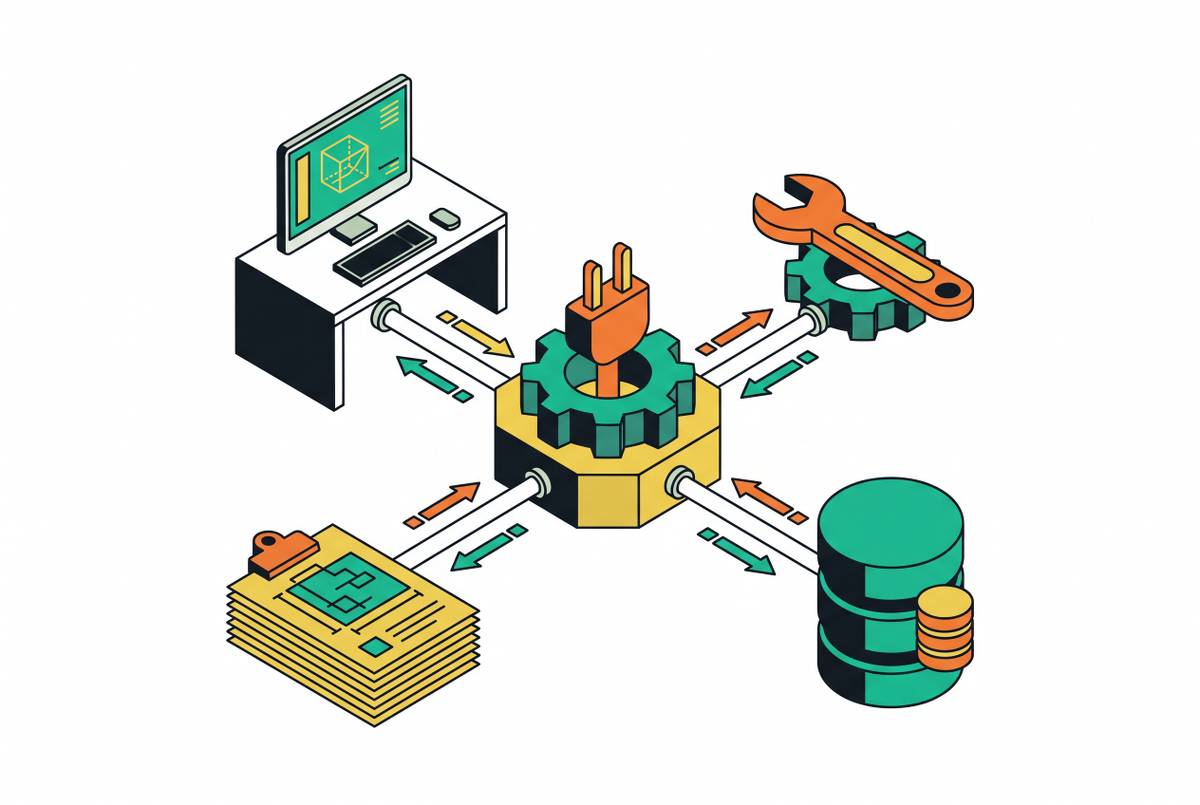
There is a deeper linkage. A submittal change can trigger a change order. These three instruments, RFI, submittal, and change order, must be linked in a single traceable record. If they are not, the project loses the thread of what was decided, why, and what it cost.
An RFI settled in a corridor conversation rather than written into the project record becomes a contract interpretation dispute later. In a critical-facility project, where commissioning validates every system against design intent, undocumented field decisions surface at exactly the wrong moment. They appear during testing, when the cost of resolution is highest.
Tying RFI disposition to BIM model updates and change order triggers is where disciplined firms recover weeks that fragmented firms lose permanently. The RFI is not the problem. The problem is an RFI disconnected from the model and the commercial record, so that an answer in one system never reaches the other two.
How BIM supports and fails change tracking in data center delivery
BIM provides genuine coordination value in data center projects. The argument is not that BIM is wrong. It is that BIM is necessary and insufficient.
BIM delivers that value only at the level of detail and discipline that data center density actually requires. Cooling layout is the most common failure. Placing CRAC units without modeling the hot aisle and cold aisle containment strategy means the BIM model cannot validate that the cooling layout works with the server rack layout and airflow plan. The cascade risk stays invisible until commissioning, when it is discovered as a thermal problem rather than a coordination problem.
Model-to-field divergence is the change management failure mode. On fast-track schedules, those gaps compound if model updates lag field decisions. The model becomes a historical record rather than a live representation of the building.
Software fragmentation compounds the limitation. Navisworks or BIM 360 handles coordination. The result is that the model, the coordination record, and the document record drift apart.
The net effect is that BIM becomes a change management liability rather than an asset when the model is treated as a static record. A live, connected representation of what is actually being built can control cascades. A model that is updated at milestone reviews cannot keep pace with the rate at which field decisions are made.
Where change management fails at the handoff to operations
The most expensive consequence of fragmented change management during construction is not a missed milestone. It is an operations team that inherits a facility it cannot fully interpret or trust. Consider a single alarm. BMS, EPMS, and DCIM are configured in isolation during construction, and each system may use different naming conventions for the same physical asset. When an alarm arrives, three people look at three screens and argue about whether it is the same unit. The construction team never saw it as a problem, because the three systems were never asked to speak to each other during delivery.
A single asset naming convention across BMS, EPMS, and DCIM, agreed before any of them are configured, is worth more than any amount of software. It is only possible if change management during construction maintains a consistent asset record throughout delivery. Every name change, every scope revision, every substitution has to reach all three systems in the same form.
Facility managers routinely ignore data in as-built models because the models are incomplete or inconsistent with what was actually installed. Every undocumented field change during construction is a gap in the operational record. Those gaps accumulate into an as-built that no one trusts, and a record that no one trusts is a record that no one uses.
Turnover should transfer O&M manuals, as-built drawings, test reports, warranty information, and training records to the operations team. The value of each document depends entirely on whether the change record behind it is complete and accurate. A test report is only meaningful if it reflects the system as built, not the system as originally designed.
The operational risk is not hypothetical. Configuration and change management issues are among the leading causes of major IT system and software-related outages. Firmware and software faults have recently surpassed them as the single most commonly reported root cause, but the connection stands: construction-phase change fragmentation leads directly to operational-phase failure. The gap between what the operator thinks they have and what the facility actually is becomes a source of outages that no amount of operational vigilance can fully compensate for.
What disciplined change management looks like across the delivery lifecycle
Effective change management in a critical facility is not a single process. It is a set of interlocking disciplines, established in design, maintained through procurement and construction, and closed at handoff. In design, define the asset naming convention, the data requirements for DCIM, EPMS, and BMS, and the model LOD expectations before any equipment is specified. A naming convention is not a documentation nicety. It is the foundation for every system that will need to speak to every other system when the facility goes live.
In construction, link RFI disposition, submittal revisions, and change order triggers in a single traceable record. Establish a clear protocol for product substitutions that routes them through the same RFI and submittal chain as design changes. A substitution is a change, and it has to be treated as one.
In commissioning, generate test scripts from the current change record, not from the original design. A test run against superseded parameters is not a test. It is a gap in the validation record, and it leaves the facility with a commissioning package that proves nothing about the systems as installed.
At handoff, treat the operations-ready package as a deliverable with its own change control. Every document in it should be traceable to the decision or field condition that produced it. The operator should be able to trust the record rather than having to re-survey the facility to discover what actually happened during construction.
The discipline that connects all of these phases is traceability. Without that, the project's change record is a story with missing chapters. Platforms like ArchiLabs Studio illustrate what connected change tracking looks like in practice, by tying layouts, critical-system coordination, documentation, and RFIs into a single workflow rather than leaving them scattered across disconnected tools.
Why fragmentation is the structural enemy of change control in current delivery conditions
Every change management failure described above has the same root cause. Information that should be connected is stored in disconnected systems, so a change made in one place is invisible to every other place it matters. The pattern is consistent. Power engineers work in one tool, mechanical engineers in another, cable designers in a third, document control in a fourth. The project depends on individuals remembering to propagate changes, and individuals forget.
Current delivery conditions make this worse. Change is not exceptional. It is continuous. Fragmented tools cannot sustain continuous change without accumulating error, and the error compounds with every revision.
The capital intensity of current delivery amplifies the cost of that error. Construction costs, lead times, and project scales have all increased materially. A missed change cascade in a facility that costs hundreds of millions of dollars is a larger financial event than the same failure in a smaller project a few years ago.
The answer is not more process layered on top of fragmented tools. Power capacity, cooling load, and cable tray ratings are not places for judgment calls. They are places for rules.
That is the principle. ArchiLabs Studio is built on exactly this premise, connecting layouts, critical-system coordination, cable routing, documentation, RFIs, and operations-ready handoff inside a single workflow so that a rack move cascades automatically rather than requiring manual rework across every downstream system. Fragmentation is the enemy, and connected automation with deterministic rules and structured data is the only structural answer.