Delivering BIM Handoff Packages Facilities Operations Can Load Into DCIM on Day One
Structured IDs, mapped fields, and linked circuits make handoff loadable.
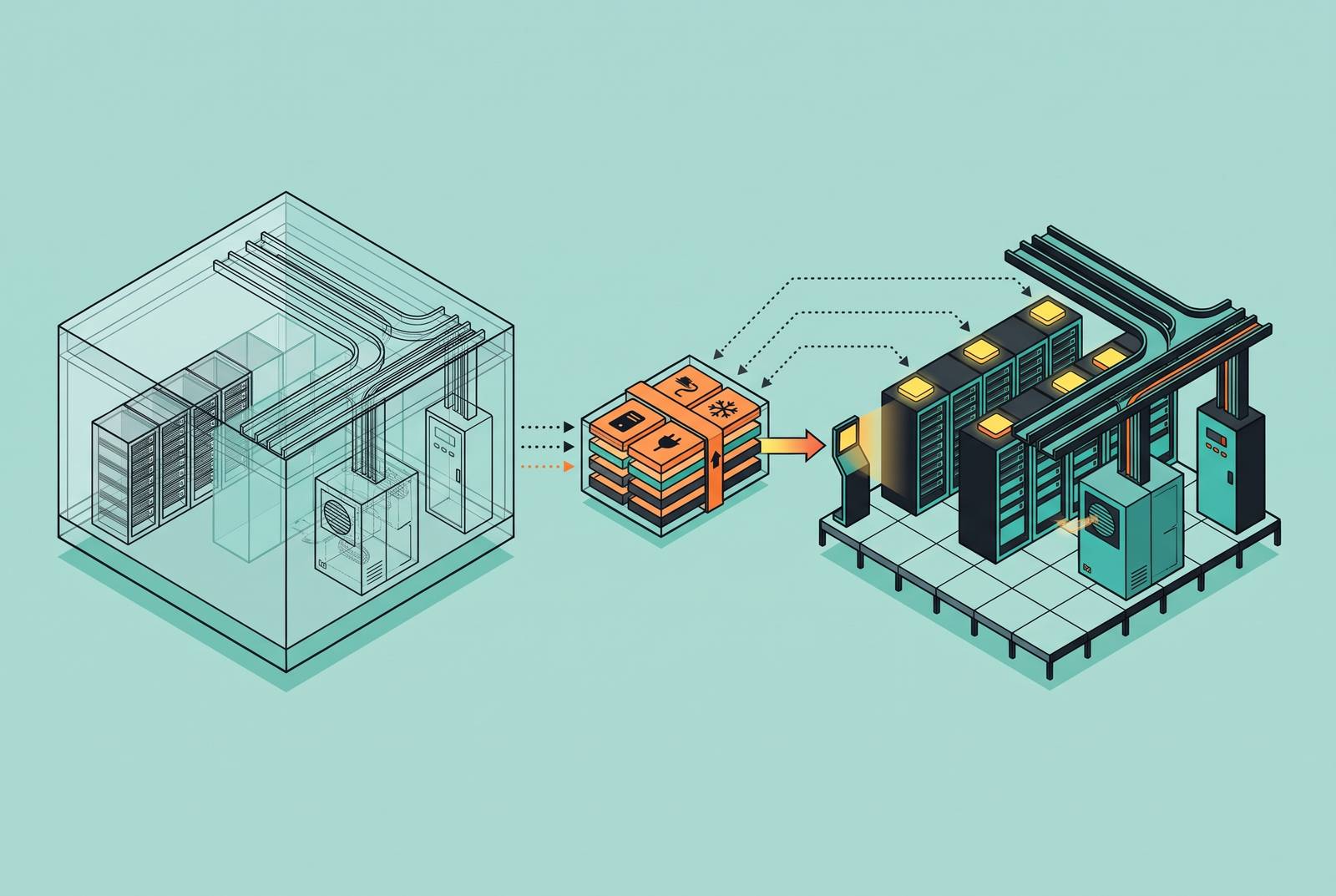
A DCIM-ready BIM handoff depends on structured data. Operations needs shared asset identifiers, mapped fields, and explicit power, cooling, and spatial relationships that DCIM can query. Delivering that package on day one means making those decisions during design and validating the records during construction to avoid reconstructing them at closeout.
Why the standard BIM deliverable fails at the DCIM import boundary
When the operations team opens the handoff package, it finds coordinated models along with equipment documents, drawings, and clash reports. Yet the package cannot populate the DCIM asset register as delivered. The information is there, but not in loadable form. A rack shown in the right place does not, by itself, provide a record that connects its identity, capacity, power circuits, and cooling assignment in the receiving system.
That failure reflects a difference in purpose. Conventional BIM deliverables support construction documentation and coordination, while DCIM needs queryable operational records. A successful drawing export establishes that the model can produce a drawing. It does not establish that the same model can tell operations which racks depend on a particular breaker or how much power is already committed to a UPS.
More geometry does not resolve that mismatch. Neither does a higher level of detail when the identifiers and relationships it needs are still buried in documents or left for someone to infer from position. The DCIM database is left partly populated at handover, with missing records that can persist for months. Because finishing those records falls between the team that delivers the design and the team that owns operations, the handoff can count as complete while the operating database is still unfinished.
What DCIM actually needs to know about every asset, circuit, and space
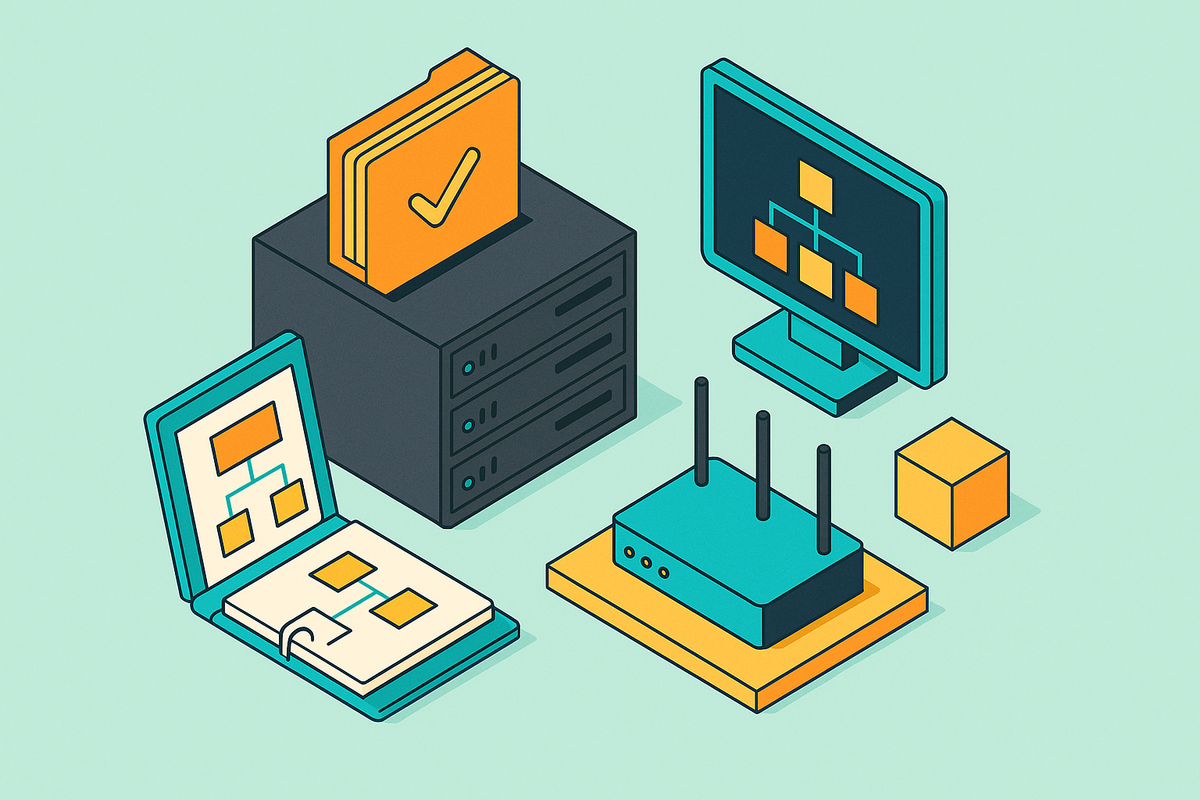
The requirements can be understood as four connected layers, beginning with the asset layer. Every equipment record needs the same identity in both the design model and the operational database. The approved equipment data, including weight and dimensions, must be part of that same record. Location must also be queryable. This layer establishes what the equipment is and where it belongs.
The second layer is the systems layer. It maps BMS, EPMS, SCADA, CMMS, ITSM, and security systems so that DCIM serves as an integration layer. These connections give the asset records an operational context. Without that mapping, the dashboard and the systems used to run the facility each hold a separate view of the same building.
The third layer is the capacity layer. It includes power available, power committed, cooling available, floor and rack capacity, redundancy state, breaker loading, and stranded capacity. These values need to come from design-phase data. Available space alone does not establish usable capacity.
The fourth layer is the relationship layer. It connects assets through power circuits, cooling assignments, and spatial containment so that DCIM can follow dependencies. A circuit must show a connected path, while a cooling assignment must show which racks it serves. All four layers need queryable records that agree with one another, because a full description of an asset can still leave out its connections in operations.
Where equipment data breaks down between design and operations: the multi-transcription problem
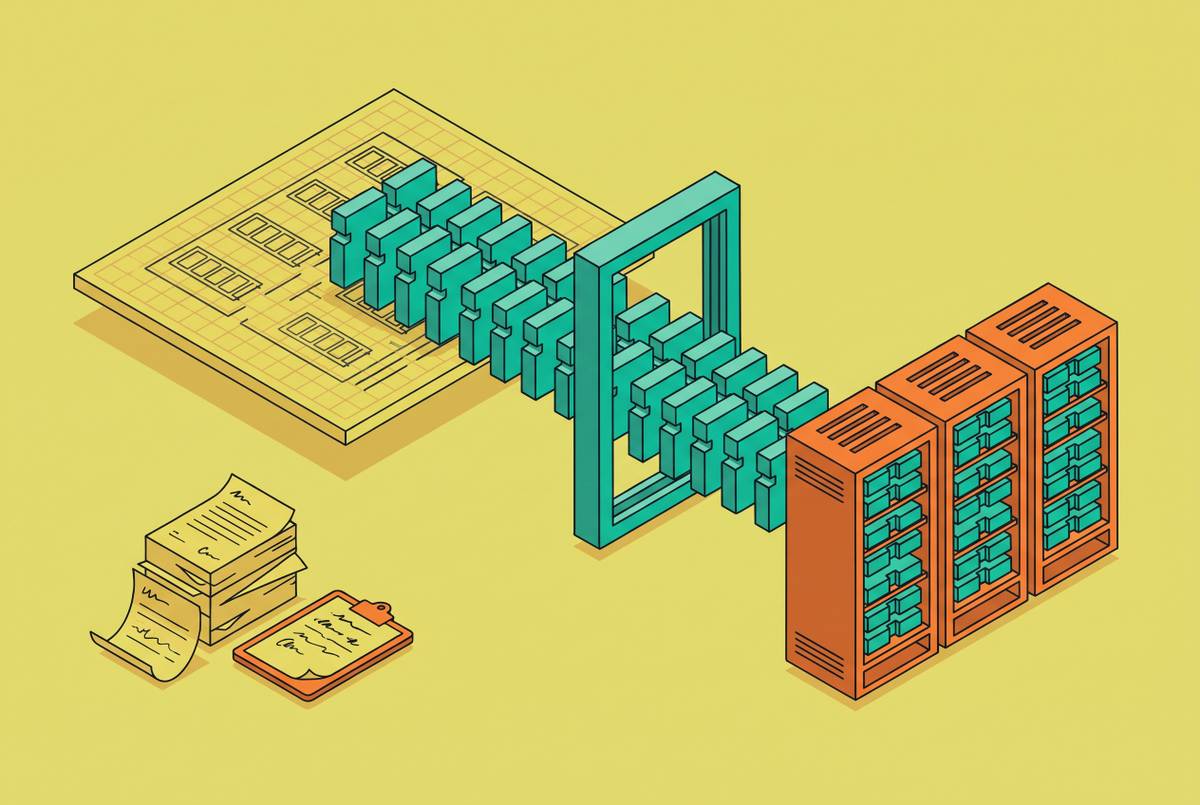
The data needed for those layers often begins in a manufacturer PDF. From there, people enter a specification by hand into different tools, each with its own field names and assumptions. Every transcription creates another chance for divergence. By handover, the DCIM asset register may reflect the last version entered rather than the approved submittal or as-built condition.
This is not an accusation against the teams involved. Careful work and reviewed submittals do not remove the structural risk of entering the same value into four tools with four different field names. Review can catch a discrepancy at one point in that chain. It cannot eliminate the possibility that another copy will diverge later.
The distinction is important because it changes where the problem begins. If the failure were simply an incomplete handoff review, a more thorough closeout check would be an adequate response. But when records have already split across naming conventions and independently entered values, closeout becomes a reconciliation exercise. Someone must decide which entry matches the equipment that was delivered, then link it to the right operational record.
The implication reaches back before design begins. Preventing this chain requires a data strategy that establishes how equipment information will pass between systems, rather than a final inspection of documents that were never structured for that exchange.
Why asset identity and schema alignment must be decided before construction begins
The upstream decision is whether design and operations will describe the same assets in compatible terms. Shared identifiers establish which records refer to the same equipment. Schema alignment establishes which fields mean the same thing. Both are needed, because matching a name does not resolve a field mismatch, and matching fields does not establish asset identity.
The team needs to make this decision at project kickoff, before construction begins. It sets the relationship between BIM object parameters and the import requirements of the receiving DCIM platform. The choice is an agreement about the asset classes, identifiers, naming conventions, and field mappings that this project will use. That agreement determines whether export can be a transformation of existing records or must become a reconstruction of them.
A design record and an operations record can each be internally consistent while remaining incompatible with one another. When that difference is left unresolved, collecting more information only adds to the volume that must later be reconciled. The project has data, but no agreed route for transferring it.
Deferral also changes who is available to resolve ambiguity. Before construction ends, the people responsible for design, submittals, and installation are still engaged in the project. Once the construction team demobilizes, that window closes, and reconciliation becomes a post-occupancy project with no clear owner.
Encoding power topology and cooling adjacency as traversable relationships, not geometry
DCIM needs to follow a power path from source to panel to breaker to PDU to rack. That is what a traversable relationship provides. It allows the system to determine which racks lose power if a breaker trips and what total committed load sits on a UPS. Geometry alone cannot answer those queries because where equipment sits does not show what it depends on for power.
A-feed and B-feed double the conduit and tray volume through the same corridors, but they also create separate paths that DCIM must track. Each feed therefore needs its own logical circuit. Parallel lines in a model can show how equipment is laid out without showing the separate dependencies needed to calculate redundancy or fault impact.
Cooling has the same encoding problem for a different reason. DCIM needs to follow the relationship from chiller to pump to CRAC to rack and identify which racks share a cooling loop. It also needs the thermal envelope constraints for each zone. A rack’s proximity to a cooling unit does not establish that the unit serves it, so cooling assignments must be explicit.
Spatial relationships must be just as precise when they determine where equipment can go. Anchor Defense’s 2026 build-phase DCIM guide describes modeling rack positions against floor tile ratings and referencing structural load maps against planned placements. That connection exposes a rack that exceeds the point-load rating beneath it before hardware is staged.
Using DCIM as a construction-phase verification layer rather than a post-commissioning population task
The timing of DCIM population changes what the same platform can contribute. Populated after commissioning, it records a facility whose physical decisions have largely been made. Populated incrementally during construction, it can help test those decisions before installation. This changes the sequence of work.
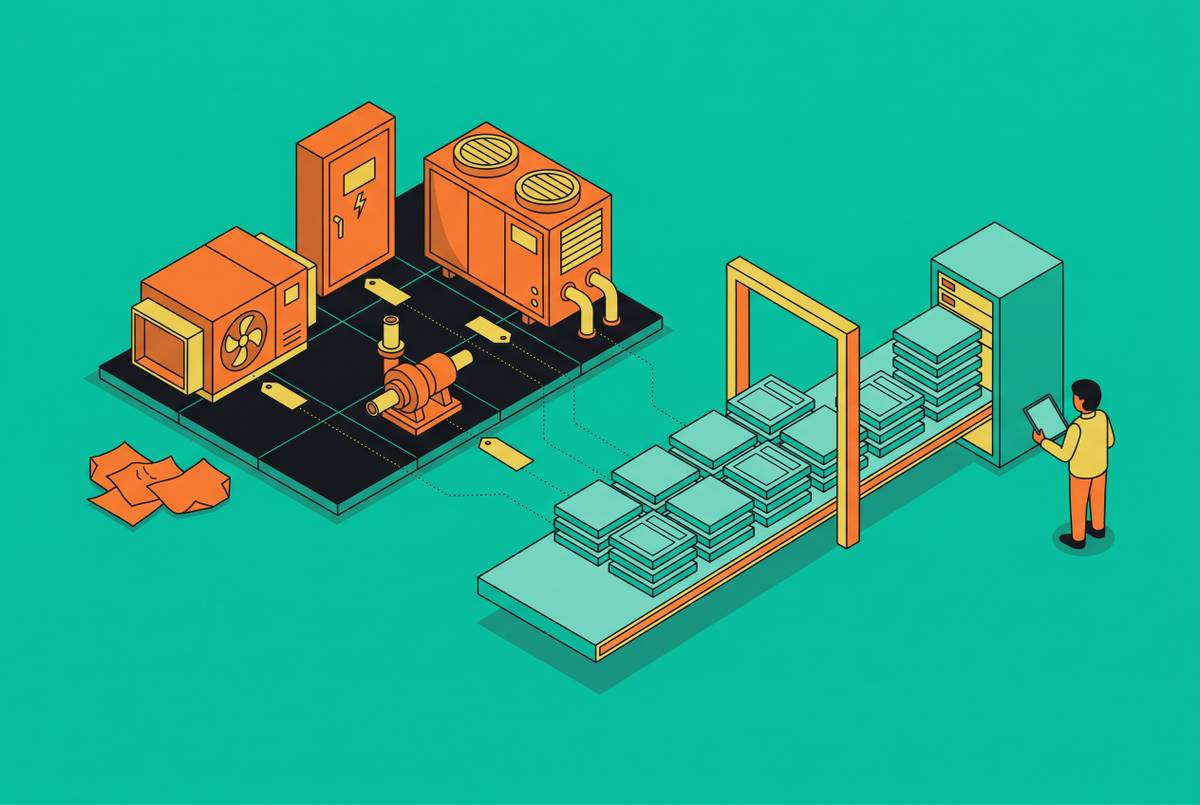
In that sequence, the room model draws on architectural and engineering drawings, while rack layouts use accurate footprint dimensions. Weight and dimensional data from approved equipment submittals go into the asset records. Planned placements are then checked against the physical constraints that apply to them. The guide describes this work as part of the build phase, when correction is still cheaper than moving installed equipment.
The same timing applies beyond floor loading. Aisle geometry conflicts, containment clearance failures, and delivery pathway obstructions belong in the model before construction is finalized. Discovering them after commissioning may produce a more accurate database, but it forfeits the opportunity to resolve them before installation.
The reconciled model can then become a contract deliverable and the baseline for capacity planning and lifecycle management from day one. That baseline still needs an owner after handoff. If the construction team demobilizes without explicitly transferring responsibility for model accuracy, even a sound construction-phase dataset can become an unreliable operational record.
Where AI assistance belongs in the handoff workflow and where deterministic rules must govern
AI assistance fits the parts of handoff work that involve interpreting and organizing information. It can accelerate metadata extraction, naming normalization, and handoff verification. Those tasks help with the work of handling documents that would otherwise feed the transcription chain. The boundary is the decision being supported. Assistance with preparing a record is different from deciding whether a circuit or floor load is safe.
Power circuit path validation, floor load compliance, redundancy state calculations, and breaker loading checks require deterministic rules. The same applies to any parameter feeding a safety or compliance decision. Confidence is not a substitute for a valid result. A model that is merely confident a breaker is not overloaded leaves uncertainty where an error could cause a thermal event or outage.
The NTU/NVIDIA Physical AI paper describes physics-informed machine learning that can predict thermal and airflow profiles in real time, in contrast with time-consuming traditional CFD simulation. That direction requires an accurate handoff and a simulation engine grounded in accurate as-built asset and topology data.
For a 2026 handoff workflow, the practical split is therefore narrow and clear. AI can assist with preparing and checking information, while deterministic logic governs the specified safety and compliance validations. This is an accountability boundary because responsibility for a safe operating baseline cannot rest on a probabilistic answer.
How can design teams produce a loadable handoff package from first rack placement?
The first decision is to establish shared asset identifiers before equipment records begin to spread across tools. Once those identities are agreed, the team can map BIM fields to DCIM fields for each asset class at project kickoff. BIM object parameters can then match the receiving platform’s import requirements. Export can then transform existing records. It also addresses the need to transcribe records at its source, before closeout.
The next decision is to provision DCIM during construction so that the mapped records can support verification. Equipment weights enter the asset records as submittals are approved, and rack placements are assessed against floor ratings, aisle geometry, and containment clearances before installation. At the same time, power paths and cooling zone assignments need explicit logical connections. Early population without those relationships would leave operations with a detailed inventory that still cannot answer dependency questions.
The acceptance decision follows from that work. Making the reconciled DCIM model a contract deliverable gives operations an agreed baseline and avoids leaving it with a best-effort database and no end to the fixes. When construction ends, responsibility for keeping it accurate must also pass to a new owner. Otherwise, the project delivers a snapshot without establishing who will keep it aligned with the facility.
The relevant software criterion is therefore not simply whether a tool exports a model, but whether its workflow supports the records and relationships the receiving DCIM system needs.