EPMS Integration and Power Data Continuity From Design to Operations
Clean asset data at handoff determines whether EPMS can actually protect your facility in real time.
What EPMS needs from the design layer, and what it almost never gets
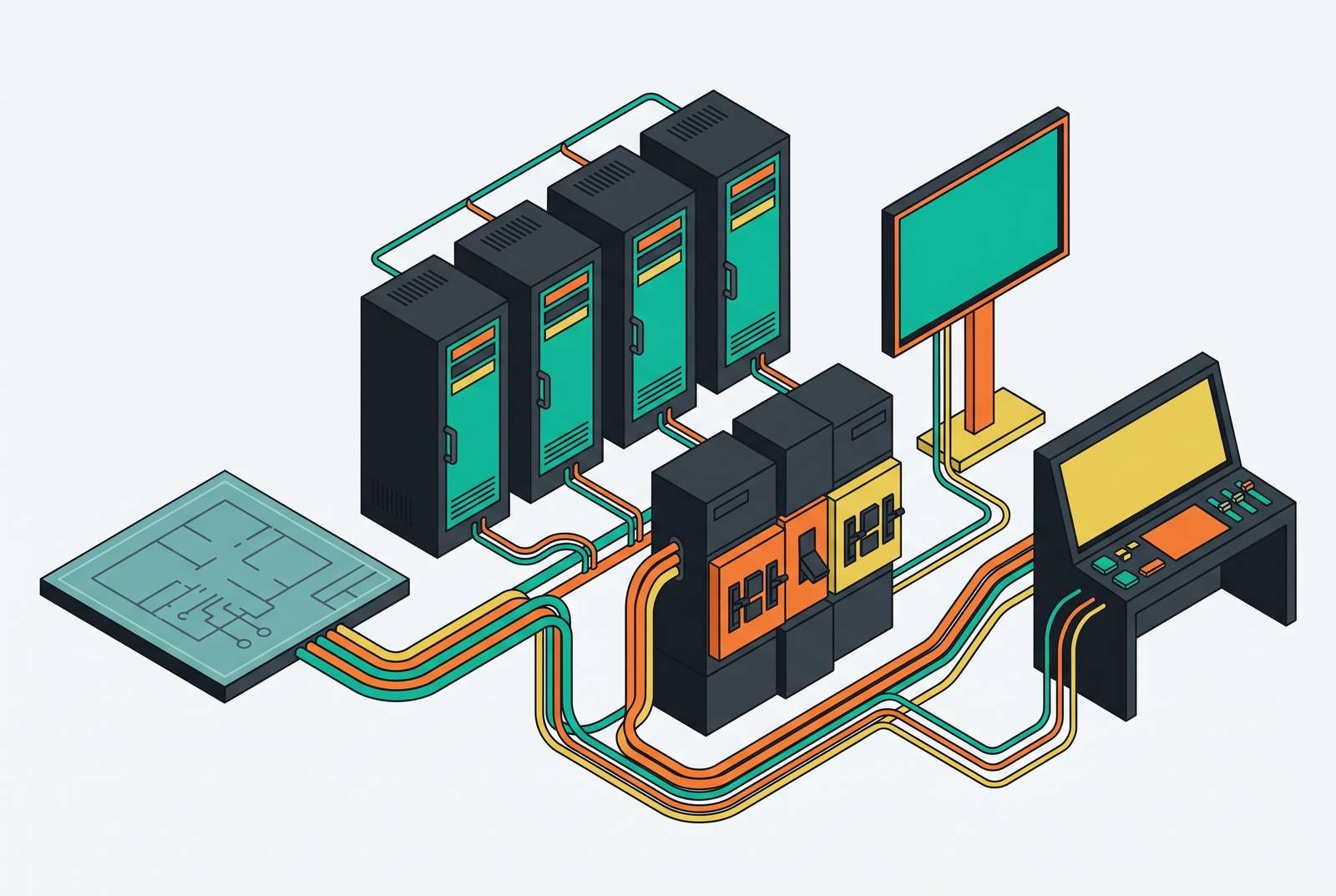
An EPMS earns its keep by catching electrical events at millisecond resolution, tracking load across the entire distribution hierarchy, and correlating power draw with cooling demand in real time. None of that works unless there is a clean asset and topology model underneath it, because that model is what allows the EPMS to identify what it is reading and what it is reading from. Speed is the whole selling point of an EPMS over a BMS alone, but speed means nothing if the panel record it's reading from was retyped by hand after the equipment went live, and lists the wrong upstream breaker.
To function, an EPMS needs panel identifiers that match the physical nameplate on the equipment, circuit-to-load assignments, upstream and downstream breaker relationships, capacity parameters, A/B redundancy paths, and exact metering point locations. Specific, verifiable, unambiguous data. Nothing else will do.
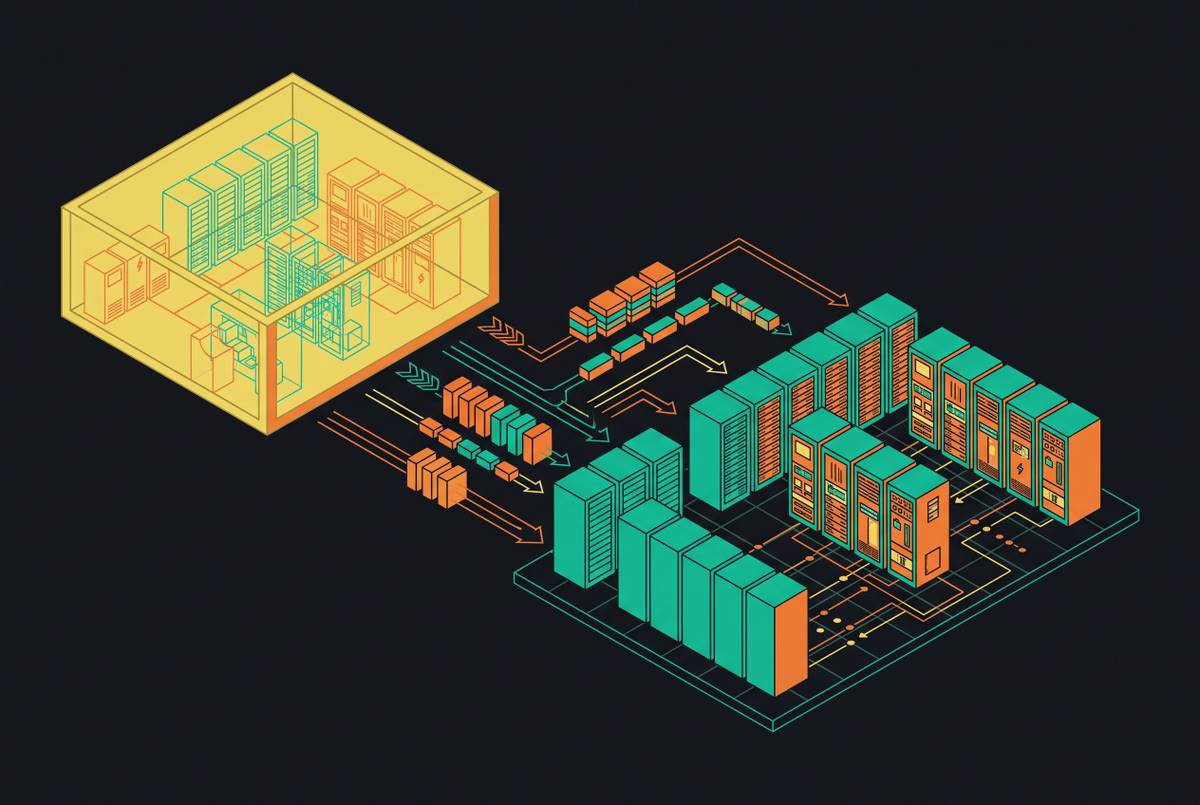
What design typically hands over instead is a stack of PDF one-line diagrams, a load schedule in a spreadsheet, and a BIM model full of geometry. Each carries a piece of the picture, and none of them agree completely with the other two, because none were built to be checked against each other.
Most teams treat this as a documentation gap, something a better template or a stricter checklist fixes after the fact. That reading misses where the damage actually happens. The three sources disagree because three different disciplines authored them at three different points in the schedule, with no shared identifier tying a circuit in the load schedule to the same circuit in the one-line diagram. Tighten the template as much as you like. The underlying objects still won't match, because the mismatch was never a formatting problem to begin with.
BMS and EPMS fragmentation compounding the handoff problem during operations
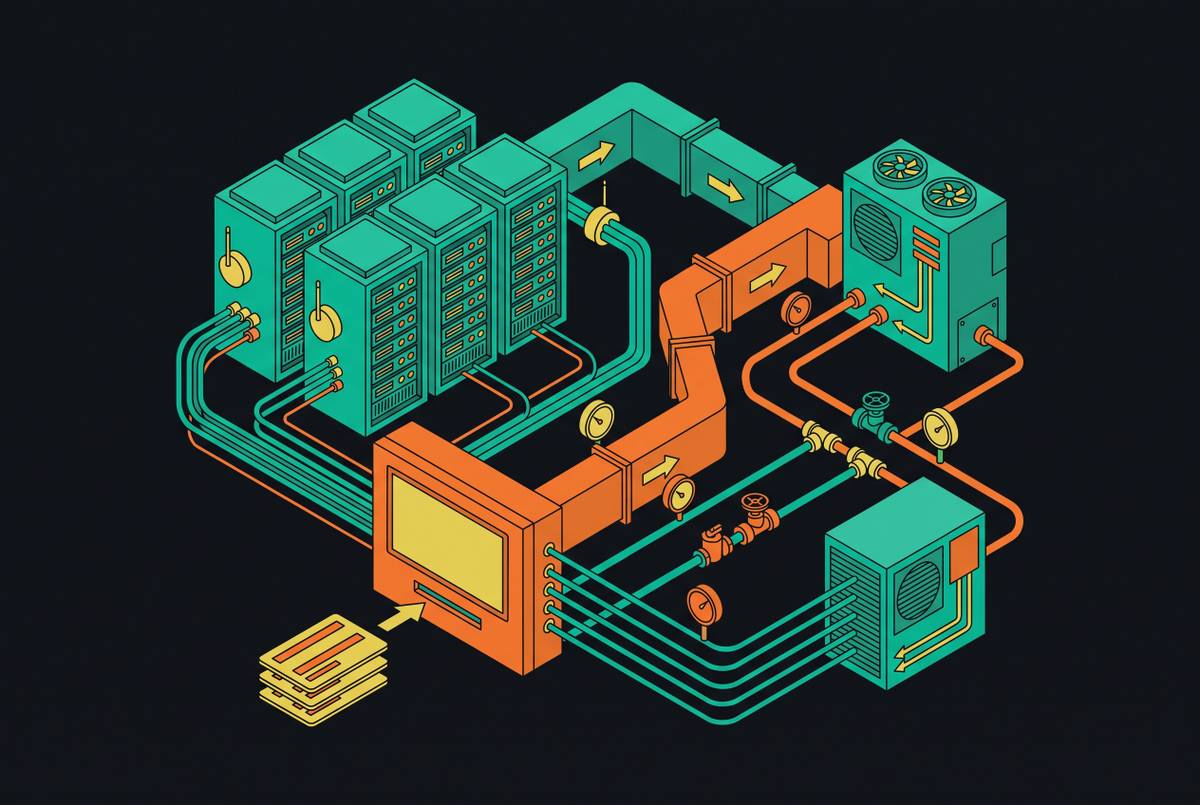
Power and cooling are physically inseparable in a data center, yet BMS and EPMS platforms usually run as two separate systems, on two separate screens, sometimes watched by two separate teams. That separation slows fault response and buries the cross-system correlations that matter most, like a breaker trip about to cause a thermal event three racks over.
The failure mode is specific and repeatable. If the BMS doesn't sequence cooling recovery in step with the electrical recovery the EPMS is tracking, inlet temperatures spike during the exact window the design was supposed to protect against. Two systems running on asset records that were never aligned produce that predictable result.
This goes deeper than a configuration issue. Coordinated response logic, the kind that lets a facility recover from a fault without a human stepping in, depends entirely on accurate asset records. Those records were built from handoff packages that were incomplete from day one, so feeding bad data into a well-configured integration doesn't break the integration. It just makes the integration faithfully carry out the wrong response, every time, without hesitation.
The margin for that kind of error is shrinking fast. AI and GPU workloads are pushing rack power from the traditional 8 kW range toward 30 kW by 2027, with some deployments already clearing 100 kW. At that density, power-cooling coordination has to happen faster, with far less room for error, and the data underneath has to be cleaner than it's ever had to be.
Where the design workflow breaks down before handoff
Data center design is a coordination problem before it's anything else. Power distribution, cooling systems, cable routing, security infrastructure, and structural requirements all have to fit into the same tight physical footprint, and each discipline generates its own drawings, schedules, and models along the way. Those artifacts rarely get reconciled into one structured record. They just get filed next to each other and called done.
A single change forces updates across every dependent record and drawing, and that is what makes fragmentation appear in operations the moment something changes. Moving one rack sends a ripple through power path assignments, cooling load calculations, cable schedules, panel schedules, and a stack of drawing sheets. Every one of those updates happens by hand, and every one is a chance for the new version to drift from the others.
That drift costs real money. When that kind of conflict goes uncaught until construction, the cost and schedule impact can be severe, all because two disciplines drew their own version of the same physical space and nobody checked them against each other early enough.
NEC separation requirements only add to the load. Power cable trays need minimum clearance from fiber or copper trays, which roughly doubles the pathway space a design has to account for. The rule of thumb that cable trays shouldn't exceed 40 to 50% fill also applies here. These aren't details a team can patch into as-built documentation after the fact. They need structured tracking starting with the first draft.
What schema alignment and asset identity strategy require, and why they must start before construction
Handing a BIM model to a DCIM or EPMS platform and expecting it to just work is asking for trouble. Schema alignment and a shared asset identifier strategy have to get settled before construction starts, not stitched together after commissioning wraps.
In practice, schema alignment means every circuit, panel, and load parameter carries one persistent identifier that means the same thing in the design model, the commissioning record, and the EPMS asset database. Skipping that step leaves every system to invent its own naming convention. Reconciliation then turns into a permanent manual chore that lands on somebody on the facilities team and never really goes away.
BIM and EPMS organize the world differently, and no amount of goodwill at closeout fixes that on its own. BIM objects get grouped around construction disciplines and drawing sets, because that's what a construction crew needs to build the thing. An EPMS needs physical asset records, spatial relationships, power topology, and connectivity organized around how operations teams actually run the facility day to day. Those are two different filing systems for the same building, built for two different jobs.
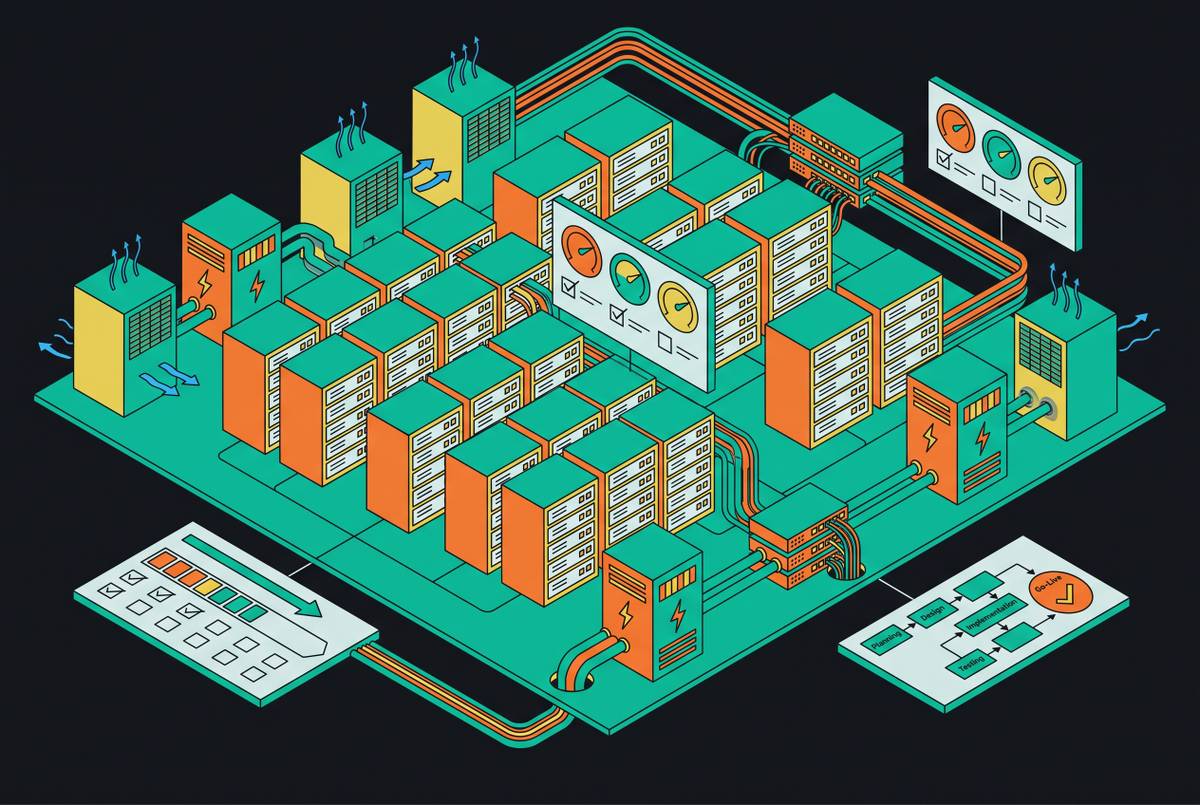
Design-to-as-built reconciliation should run as a formal workflow with defined acceptance criteria, checked and signed off like any other deliverable, not an informal walkthrough where someone from operations follows the electrician around with a clipboard three days before go-live, guessing which as-built matches which drawing.
Structured power data continuity in a connected design-to-operations workflow
The principle is simple to state, harder to build: every circuit, panel, and load parameter gets authored once, carries a persistent identifier, and flows forward into commissioning records, into the EPMS asset database, into change-control workflows, without ever getting retyped by a human trying to match up two documents that don't quite agree.
At the design layer, that means modeling power topology as a structured data object. A/B path assignments need to be explicit and machine-readable, not implied by two lines that happen to run parallel on a sheet. Load parameters should tie directly to equipment submittals instead of getting typed in by hand from a spec sheet somebody printed out. Panel schedules should generate straight out of the model, rather than living as a separate document somebody updates on its own schedule, on its own timeline.
The right split automates the mechanical parts, A/B power paths, cable tray, fiber, piping, ductwork, while keeping hard rules in place for the separation, clearance, and connection requirements that NEC and sound engineering practice demand. When a rack moves, the change should cascade on its own, so power, cooling, cable, and documentation update together instead of drifting apart one manual edit at a time.
ArchiLabs takes a clear position on where automation belongs and where it doesn't: AI for the layout work and the judgment-heavy tasks that benefit from speed, and deterministic rules for anything touching power path separation, NEC clearance compliance, or redundancy configuration. That split isn't a matter of taste. A power topology error that slips through to EPMS population is far harder to catch than the same error stopped by a hard rule at design time. By the time it reaches the EPMS, it looks like data, not like a mistake.
The economics of data center delivery as a cost argument for power data continuity
The dollars involved make this more than a matter of engineering hygiene. The national data center construction sector was valued at $48.18 billion in 2024 and is projected to reach $112 billion by 2030. A power data error costs real money on a project of any size, and the incentive to skip careful reconciliation only grows as budgets and schedules grow with the market.
Delivery timelines are getting tighter, not looser. Major tech companies are estimated to spend $650 billion on AI data centers in 2026 alone, and that kind of capital pressure pushes schedules forward, which squeezes the time available for manual reconciliation at commissioning and handoff. There's less room for the cleanup work that fragmented data currently demands, arriving right when the stakes for getting it wrong are highest.
Facility infrastructure gets amortized over 15 to 20 years, but AI accelerator hardware turns over every 12 to 18 months. Every one of those refresh cycles needs accurate power data sitting in the EPMS to plan around. If that data got rebuilt by hand at initial commissioning, with all the small errors that process invites, every hardware swap afterward compounds the error instead of starting from a clean baseline.
Operationally, the case is just as direct. A single integrated BMS-EPMS system takes less maintenance effort and less staffing to run than two fragmented systems bolted together after the fact, but that savings depends entirely on the asset data underneath being correct, because the integration only functions when the data feeding it is accurate. Incorrect data forces manual correction that erases the savings. Fragmented handoff data quietly erodes the very benefit an integrated system is supposed to deliver, and hands the cost right back to operations, one manual correction at a time, for the life of the facility.