Operational Readiness Framework for Enterprise Data Center Projects
Human error in data center operations traces back to poor handoff planning, not equipment failure.
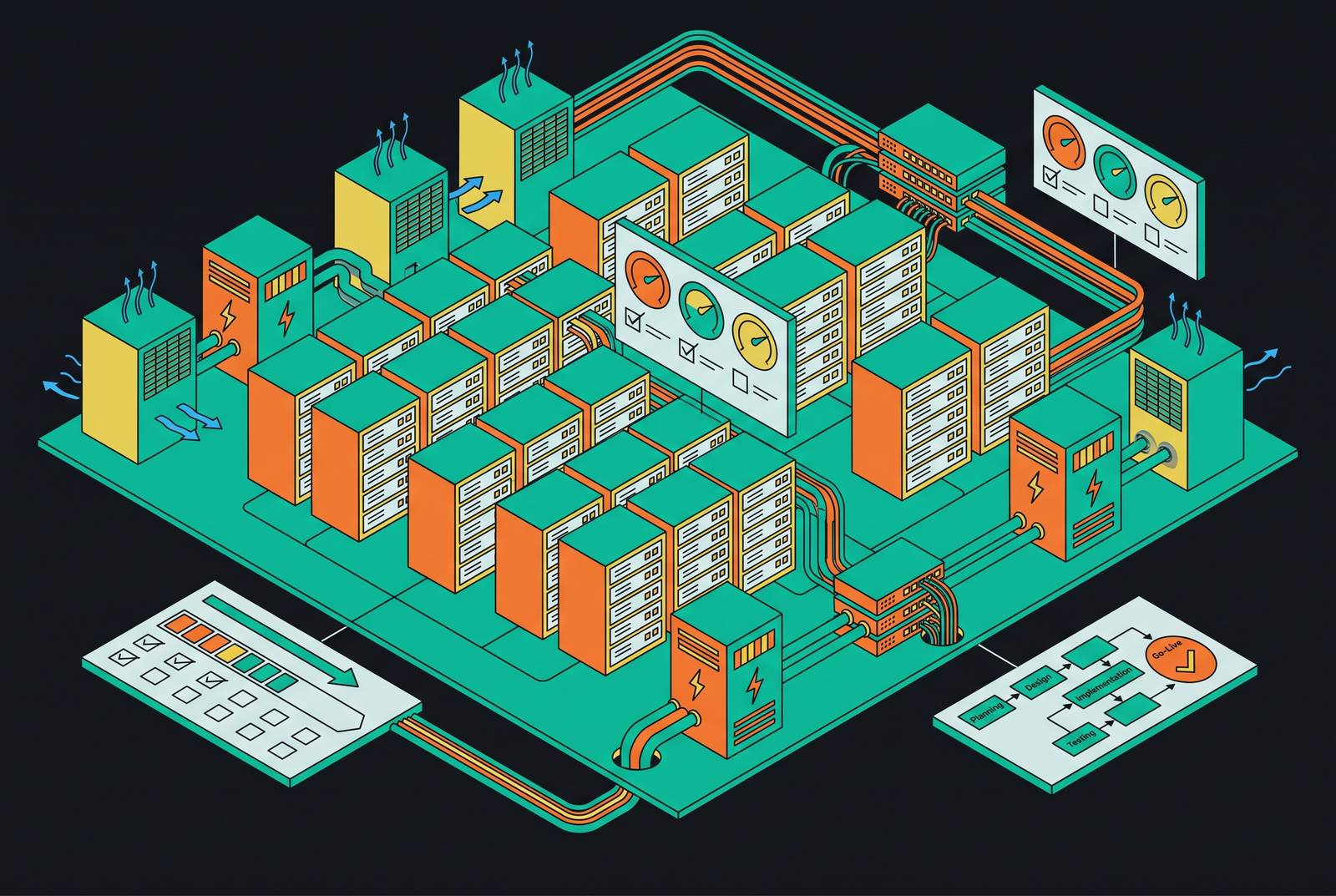
A data center can pass every commissioning test on the checklist and still hand operations a facility they can't run safely. Operational readiness isn't a phase you bolt onto the end of a project. It has to run through planning, design, and construction, or the handoff on day one is already broken. Uptime Institute's 2025 Annual Outage Analysis found a 10-percentage-point jump in outages caused by human error tied to failure to follow procedures, not equipment failing on its own. That's an information problem, and it starts months before anyone signs a turnover document.
The capital context that makes operational readiness non-negotiable
Money is pouring into this industry fast enough to make old habits dangerous. Data center capex jumped 57% in 2025, driven almost entirely by AI buildouts. The top four U.S. cloud providers grew their own spending 76% that same year, per Dell'Oro Group, and Dell'Oro expects worldwide capex to hit $1.7 trillion by 2030, crossing $1 trillion in 2026 alone.
Standard facilities run $10 to $12 million per megawatt to build now. AI-ready facilities run $20 million or more. At that price tag, a $9,000-per-minute outage isn't bad luck, it's what happens when an operations team gets handed a building they don't have the information to run. Over 60% of data center outages trace back to power, cooling, or cabling failures, and the pattern in post-mortems is consistent: these are decisions made during construction that got expensive to unwind later.
Spend nine figures on a single facility and treat operational readiness like a box you check at the end, and you're betting against your own capital. Most owners probably don't realize that's the bet they're making.
How AI-era density is rewriting what operations teams need to know at turnover
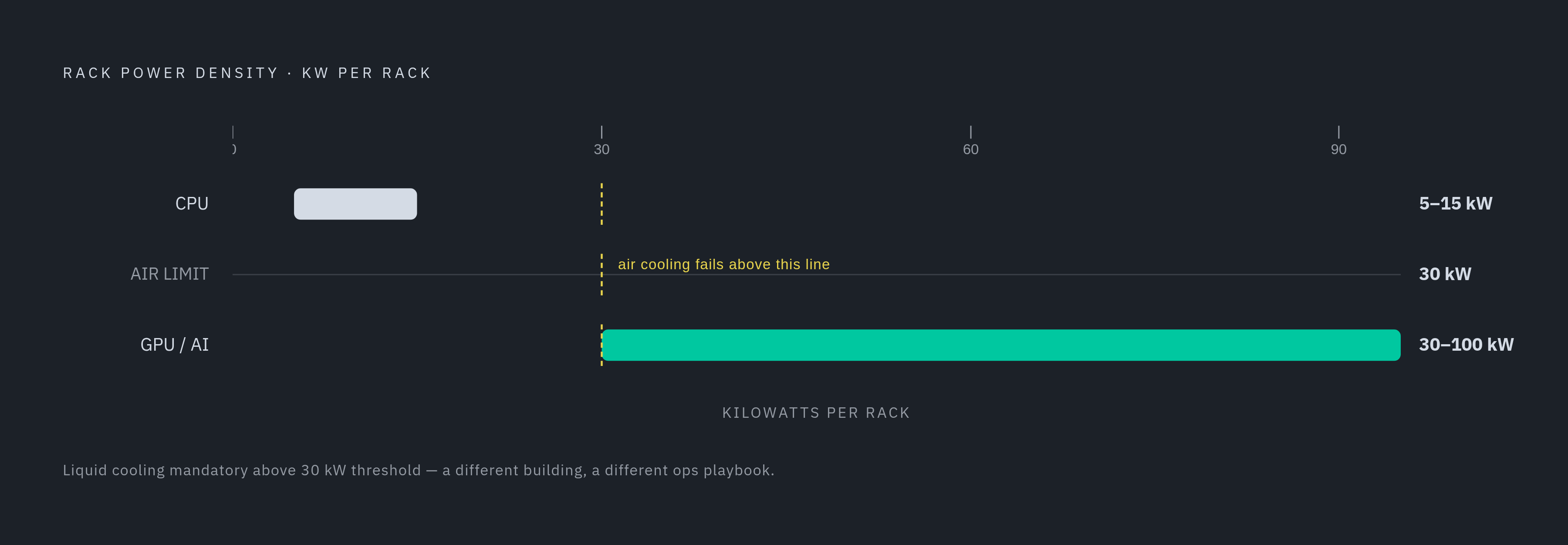
CPU racks draw somewhere between 5 and 15 kilowatts. GPU racks start around 30 and climb to 80, sometimes 100. That's not the same building anymore, not operationally. Different runbooks, different alarm thresholds, different maintenance windows.
Air cooling gives out around 30 kilowatts a rack. Past that you need liquid cooling, full stop, and if a facility can't support 60 to 120 kW per rack, it can't run current AI hardware. Liquid cooling changes the physical building too, in ways that ripple into every downstream document. Immersion tanks weigh several tons. Raised floors give way to slab. MEP routing has to account for coolant manifolds and pump layouts. None of that is optional detail; if it doesn't show up accurately in what operations receives, the record is fiction.
There's a load behavior problem underneath all this. Traditional diversity assumptions, the idea that not everything draws full power at once, just don't hold for AI clusters. These things often run at full draw simultaneously, and that concentrates stress on distribution systems in ways older models never planned for. NERC documented a 1.5 gigawatt load drop within 82 seconds at a Virginia data center in 2024, triggered by a 230 kV line fault. Eighty-two seconds. That's how fast an AI-scale electrical event moves.
The operations team inheriting a facility like this needs validated, system-specific numbers reflecting the actual installed configuration, not the spec sheet from eighteen months ago. JLL's 2026 Global Data Center Outlook projects global capacity growing by 97 gigawatts between 2025 and 2030, and most of that will be dense, AI-optimized, and complicated to run from the day it opens. There's very little room left to misread a parameter at these densities.
Where critical-systems coordination breaks down before handoff even begins
Mechanical and electrical systems eat 60 to 75% of a data center's construction budget. That's also exactly where coordination failures do the most damage, because power, cooling, and cable routing are all fighting over the same physical space, and the National Electrical Code requires separation between power and data cabling on top of it.
Here's a real one, from a documented 10 megawatt project: a chilled water main sat six inches too low and blocked the primary cable tray route to 40% of the server cabinets. Nobody caught it in design. It surfaced in the field, mid-construction, at the worst possible moment to fix it.
That's not bad luck either. Power, cooling, and cabling decisions get made in separate tools by separate teams, with no shared information model connecting any of it, so conflicts stay invisible until they physically collide on site. Meanwhile transformer lead times now average 128 weeks for power units and 144 weeks for generator step-up transformers. Whatever gets decided at design has to carry forward accurately through procurement and installation and land correctly in the asset record operations will lean on for the next twenty years.
Every coordination conflict resolved in the field without updating the design record becomes a gap in what operations eventually gets. A shared model, where a change in one system automatically pushes updates to the others, closes that gap. More coordination meetings don't.
What structured information flow looks like across each delivery phase
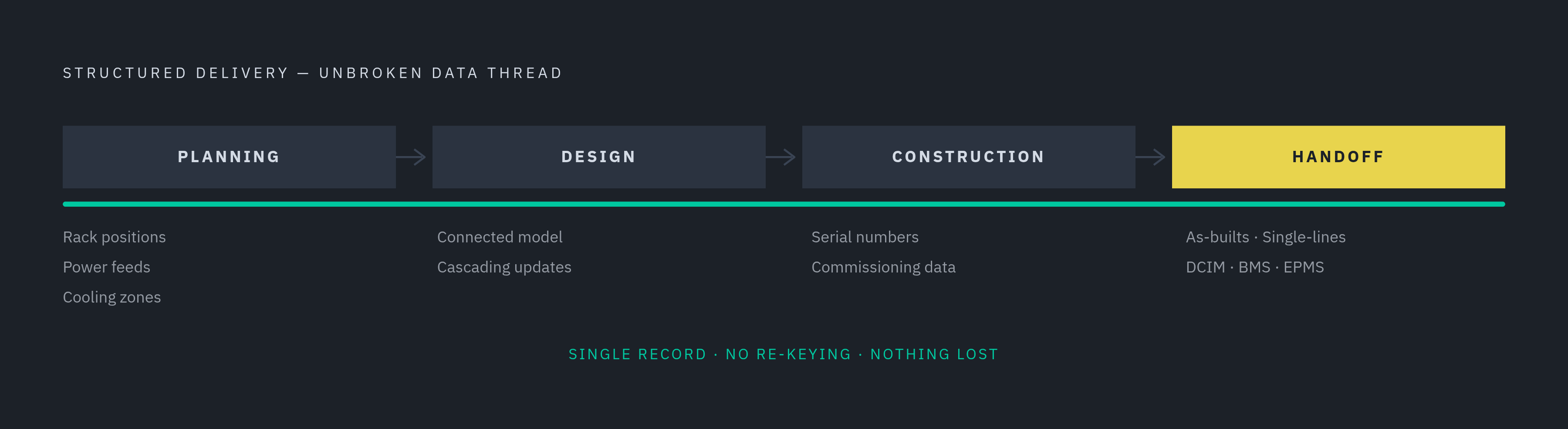
Planning. This is where the schema for everything downstream gets set, rack positions, power feeds, cooling zones. Equipment parameters, load ratings, clearance requirements, connection types, should get pulled from manufacturer documentation and built into the model right here, not re-typed later by someone squinting at a PDF at 11pm. BMS, EPMS, and DCIM integration needs have to be design requirements from day one, not something bolted on after construction wraps.
Design. Every power path, cooling circuit, and cable route belongs in one connected environment, so a single rack-level change cascades automatically into power schedules, cooling loads, and cable routing. RFI and submittal responses need to be captured as structured data, not filed away as loose PDFs, so every decision stays traceable to whatever justified it. BIM methods paired with prefabricated modules can cut on-site construction time from 36 weeks down to 16, and the same structured data that makes prefabrication possible is the data operations needs at handoff.
Construction. As-built conditions have to update the model in real time. Field changes that never make it back into the record create the exact as-built gap that invalidates the whole handoff package later. Commissioning results, alarm setpoints, equipment serial numbers, all of that needs to attach directly to the asset record, not sit buried in a test report nobody ever links back. Industry reporting consistently documents staffing and supply chain strain across the sector, meaning construction crews are already stretched thin. The information discipline has to live inside the workflow itself, since it can't depend on someone remembering extra paperwork at hour twelve of a shift.
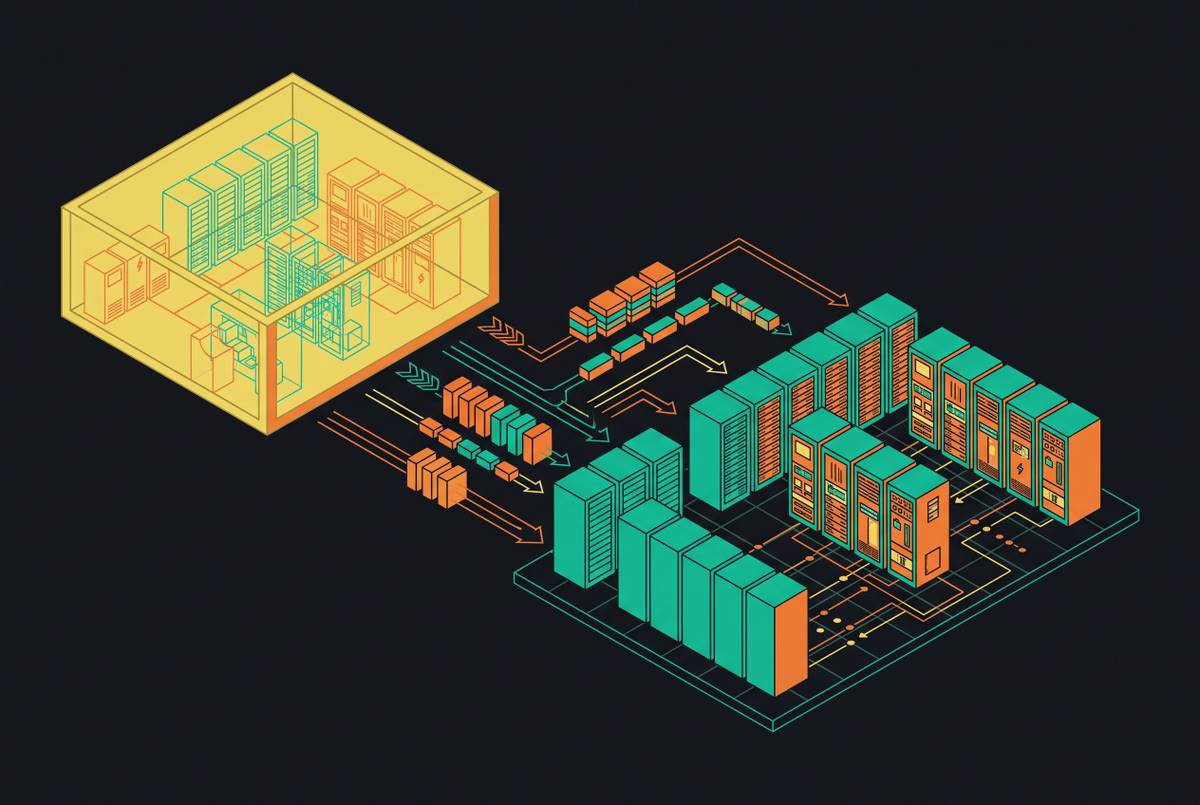
Handoff. Operations needs current as-built drawings, single-line diagrams, equipment records, warranties, test results, asset data, vendor contacts, and working access to BMS, EPMS, and monitoring tools. Whoever's taking over the facility needs to know which records are actually final and who owns each open item still hanging out there. Ambiguity right here is where silent failures start. Handoff works best as a structured transfer of validated information into the systems that will actually use it, not a folder of documents dropped on a desk and forgotten.
The integration gap between BMS, EPMS, and DCIM that undermines operations from day one
Three systems, three separate worlds. BMS runs facility-level HVAC and environmental controls. EPMS handles electrical distribution and energy metering. DCIM pulls IT and facility data together into one operational picture, in theory. Without tight integration planning, DCIM never gets full use out of what BMS is producing, and what does arrive often isn't in a workable format anyway. That's a design and handoff failure, not a limitation of the software.
The same causes appear repeatedly: integration starting too late in construction, incomplete vendor testing requirements, missing alarm escalation logic, and poor coordination between mechanical and IT teams. Every single one is an information problem, and every one is preventable if integration gets treated as a design objective from day one instead of something you figure out during commissioning, under deadline pressure.
Repeatable BMS and EPMS architectures, used consistently across multiple sites, cut down on variability and shrink timelines, whether you're doing a new build, a retrofit, or converting a live facility. An operations team that inherits a building where BMS, EPMS, and DCIM aren't exchanging validated data is operating half blind, in practice. Alarm escalation gaps and siloed dashboards are what that looks like on a Tuesday afternoon. Real integration means defining data exchange requirements, alarm hierarchies, and asset tagging conventions during design, then verifying every bit of it during commissioning, well before turnover.
Why asset data trapped in PDFs and spreadsheets is the handoff failure nobody tracks
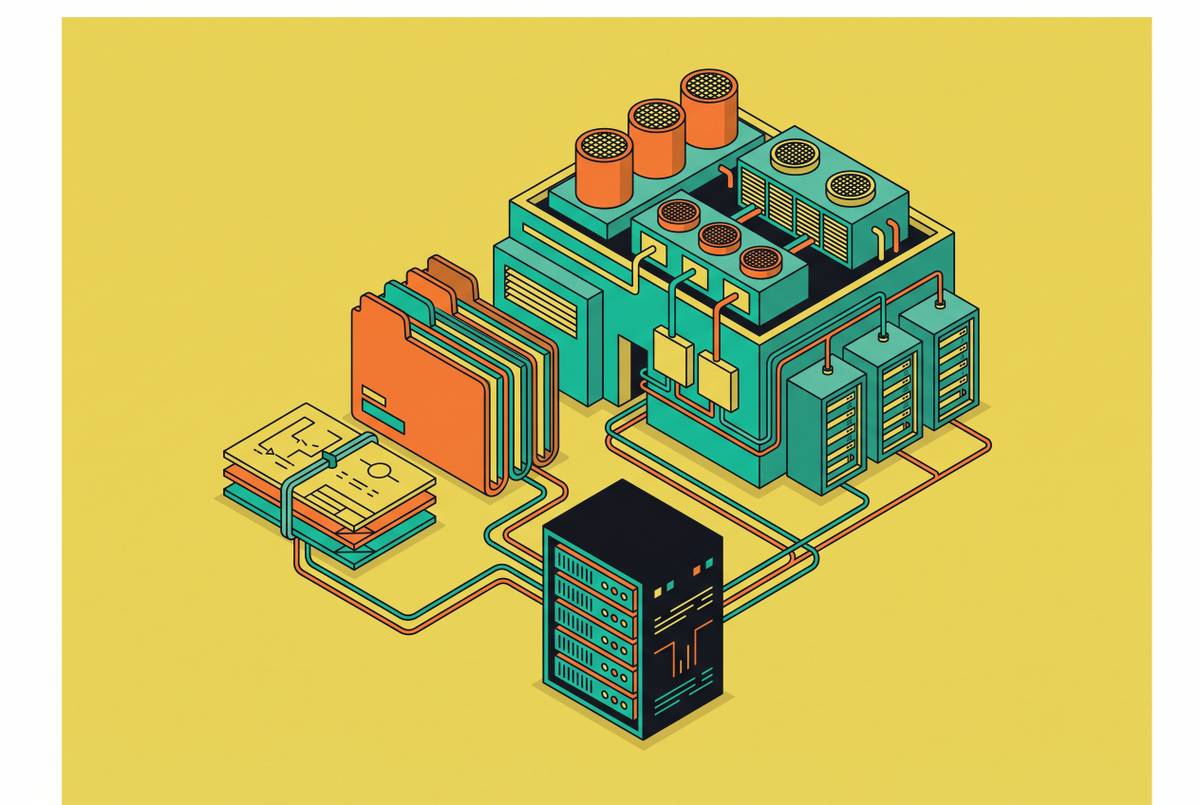
The standard handoff package, O&M manuals, submittals, equipment schedules, exists as documents. DCIM and CMMS systems can't read a PDF; someone has to manually re-type equipment intelligence, load ratings, firmware versions, maintenance intervals, connection parameters, into operational systems by hand. Every re-entry point is a chance for error and delay.
It's also a version-control problem, and a sneaky one. The asset record sitting in DCIM might reflect the original spec sheet rather than what actually got installed, because field changes never made it back into the record. Commissioning wraps, the project gets declared complete, and weeks or months later the operations team discovers the asset data in their management system doesn't match the physical building standing in front of them. Nobody flagged it at handoff, because nobody was checking for it. That's the silent failure.
The fix has to happen upstream, not at the end. Equipment parameters pulled from manufacturer documentation should flow straight into the design model, then the schedule, then the handoff record, without anyone re-keying data at any step in between. Every parameter handed to operations should trace back to the design decision or submittal that established it. That way, when something doesn't match, you're resolving it against a record instead of somebody's fuzzy memory of a meeting six months back.
How connected design automation changes the economics of operational readiness
Fragmentation has a real cost, and it's not abstract. The same information, rack positions, power feeds, cooling loads, cable routes, gets manually rebuilt across layouts, power schedules, cooling models, cable documentation, and operational asset records. Each one is a separate re-entry point. Each one carries its own chance of error.
Move one rack in a fragmented workflow and watch the rework cascade: power, cooling, cable routing, schedules, sheets, all touched by hand, one at a time. In a connected model, that cascade happens automatically and the record stays current without anyone chasing it down after the fact.
AI has a real job here, and it's worth being specific about what job. Generating layouts faster, pulling equipment parameters out of manufacturer documentation, flagging coordination conflicts before they reach the field, that's where pattern recognition and flexibility do good work. Deterministic rules do a different job: enforcing clearance requirements, NEC separation rules, redundancy path verification, alarm setpoint validation. These are spots where precision and compliance aren't up for negotiation, and a wrong answer isn't acceptable at any confidence level, however high.
That split matters specifically for operations. A facility designed with deterministic rules enforced end to end produces a handoff record the operations team can actually trust without double-checking it. One designed with advisory tools and manual overrides produces a record that has to get re-verified before anyone trusts it, which sort of defeats the point of having a record.
Connected design automation is what turns this into a project's actual operating system, linking layouts, critical-systems engineering, cable routing, documentation, RFIs, and handoff artifacts into one workflow instead of six disconnected ones, and platforms like Archil Labs, a data center design automation platform that automates that entire chain from layout through structured ops handoff inside one connected environment, are built specifically to close that gap. ArchiLabs Studio works this way: one environment where data center layouts, power and cooling coordination, cable routing, RFI management, and structured handoff to DCIM, EPMS, and BMS run as a single workflow rather than separate tools stitched together after the fact. What reaches operations is the same information that drove every design decision along the way, not a summary written after everyone's already moved on.
What an operations-ready handoff actually contains and how to verify it
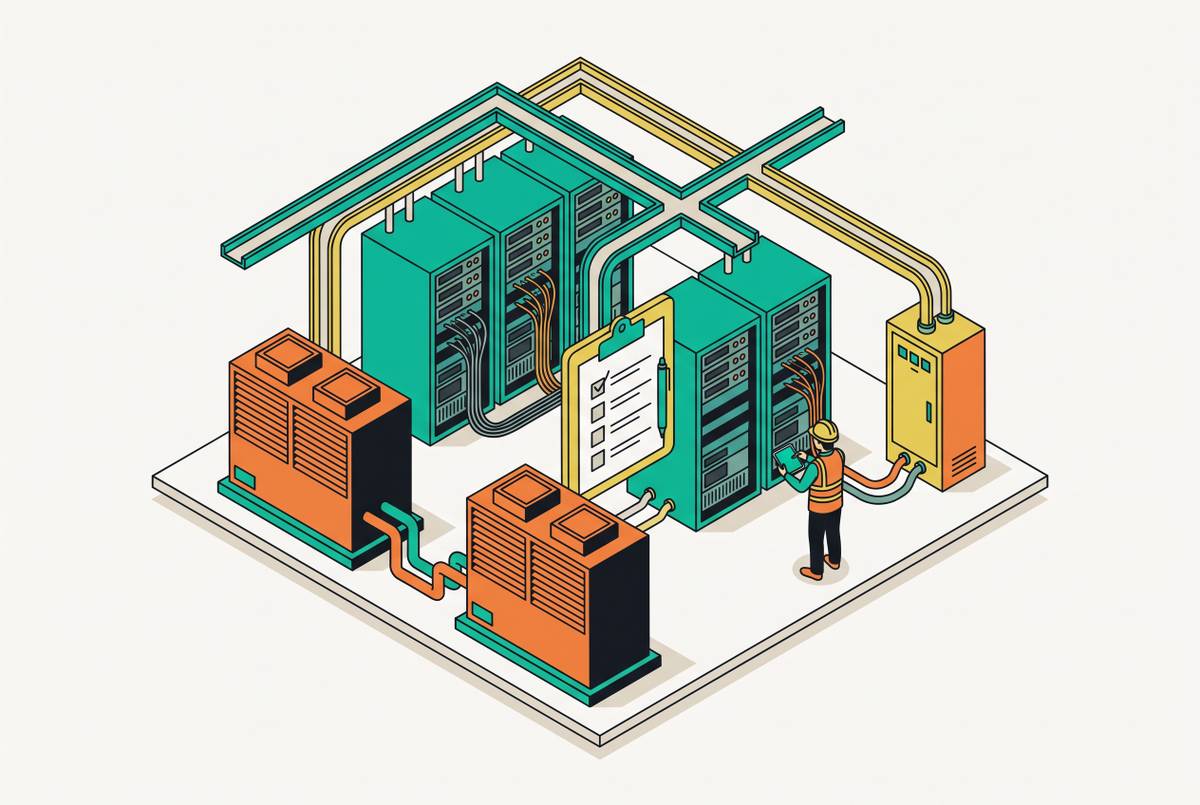
A complete handoff record includes current as-built drawings, single-line diagrams, equipment records with serial numbers and firmware versions, warranty documentation, commissioning test results with alarm setpoints, structured asset data formatted for DCIM and CMMS ingestion, and vendor contacts tied to specific pieces of equipment, not a general company switchboard number.
Verifying it calls for a data audit, not a document count. Does the asset record in the operational system match what's actually installed? Can every discrepancy trace back to a documented field change or RFI? Operations leaders need to know, at the moment of handoff, exactly which records are final and who owns whatever's still open. Ambiguity about ownership is how gaps survive past go-live and turn into 2 a.m. phone calls nobody wants to take.
BMS, EPMS, and DCIM should already be live and exchanging validated data before operations takes custody of the building, not configured afterward while the facility is already running hot. Staff readiness matters just as much: that 10-percentage-point rise in human-error outages Uptime Institute documented in 2025 is what happens when teams inherit systems without usable procedures behind them.
The real test is simple to state, even if it's hard to pass. On the day construction ends, can the operations team answer, using the handoff record alone, where every circuit feeds, what every piece of equipment requires, how every alarm escalates, and what to do when any of that changes, without picking up the phone to call the design team? A "no" here means the facility isn't done. It's just built.