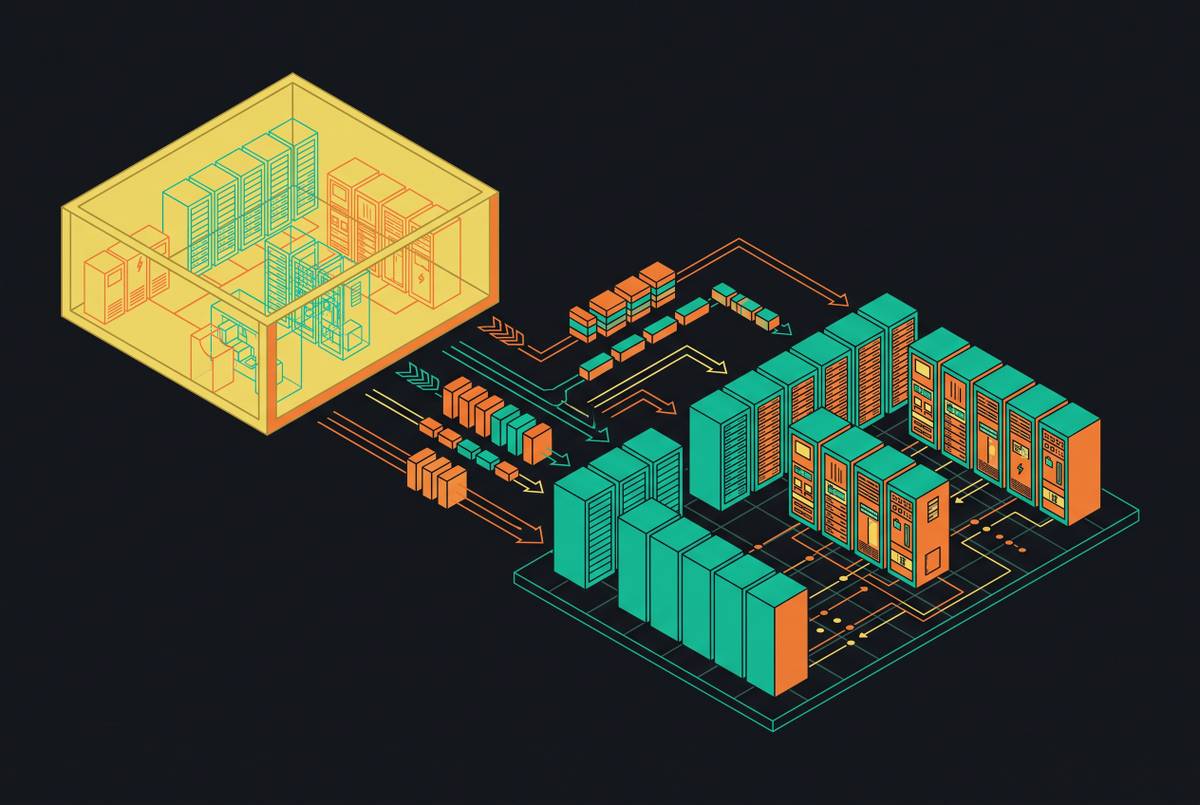
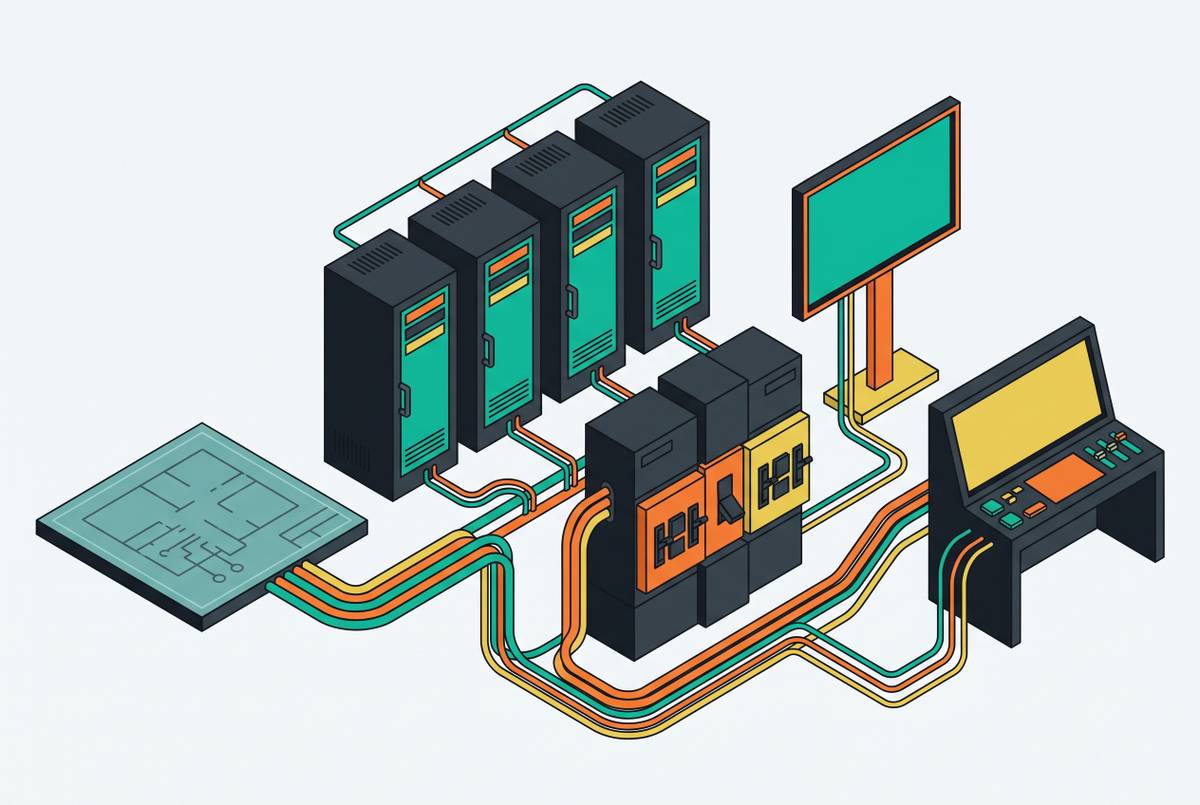
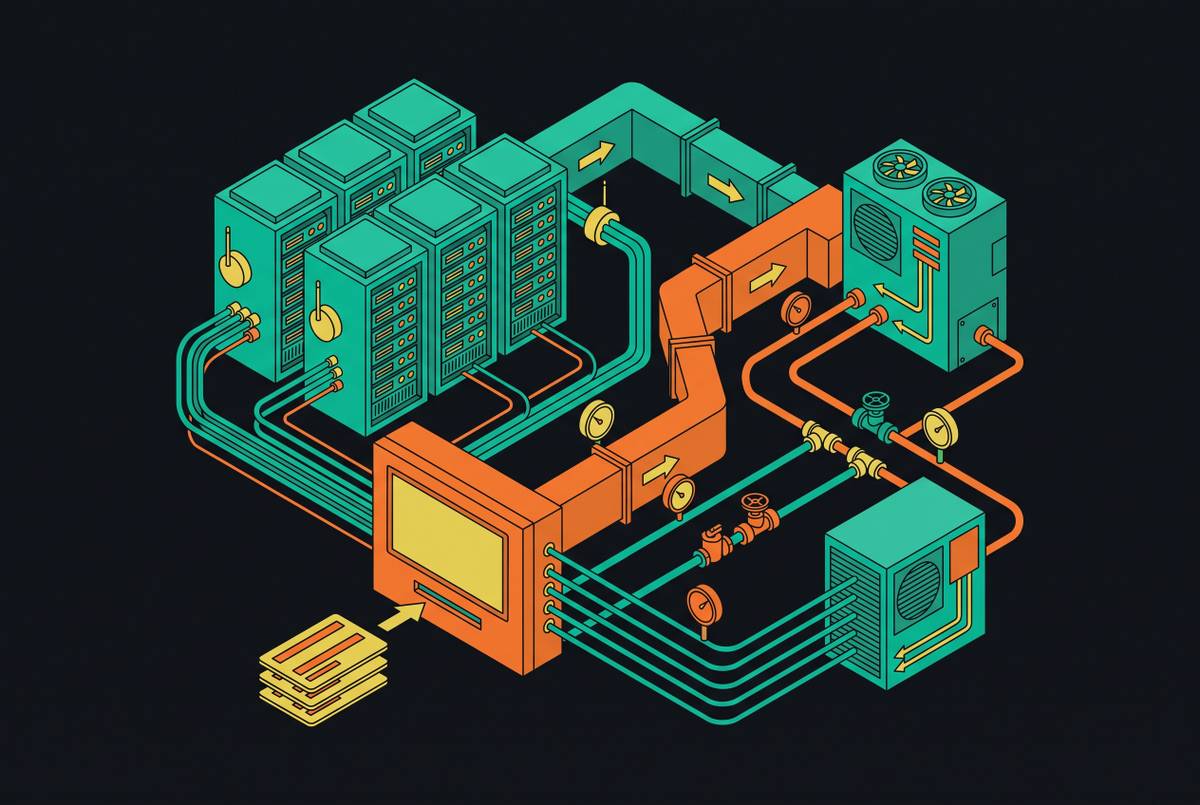
Go-Live Readiness Checklist for Critical-Facility Turnover
Five gates separate construction-complete from operations-ready facilities.
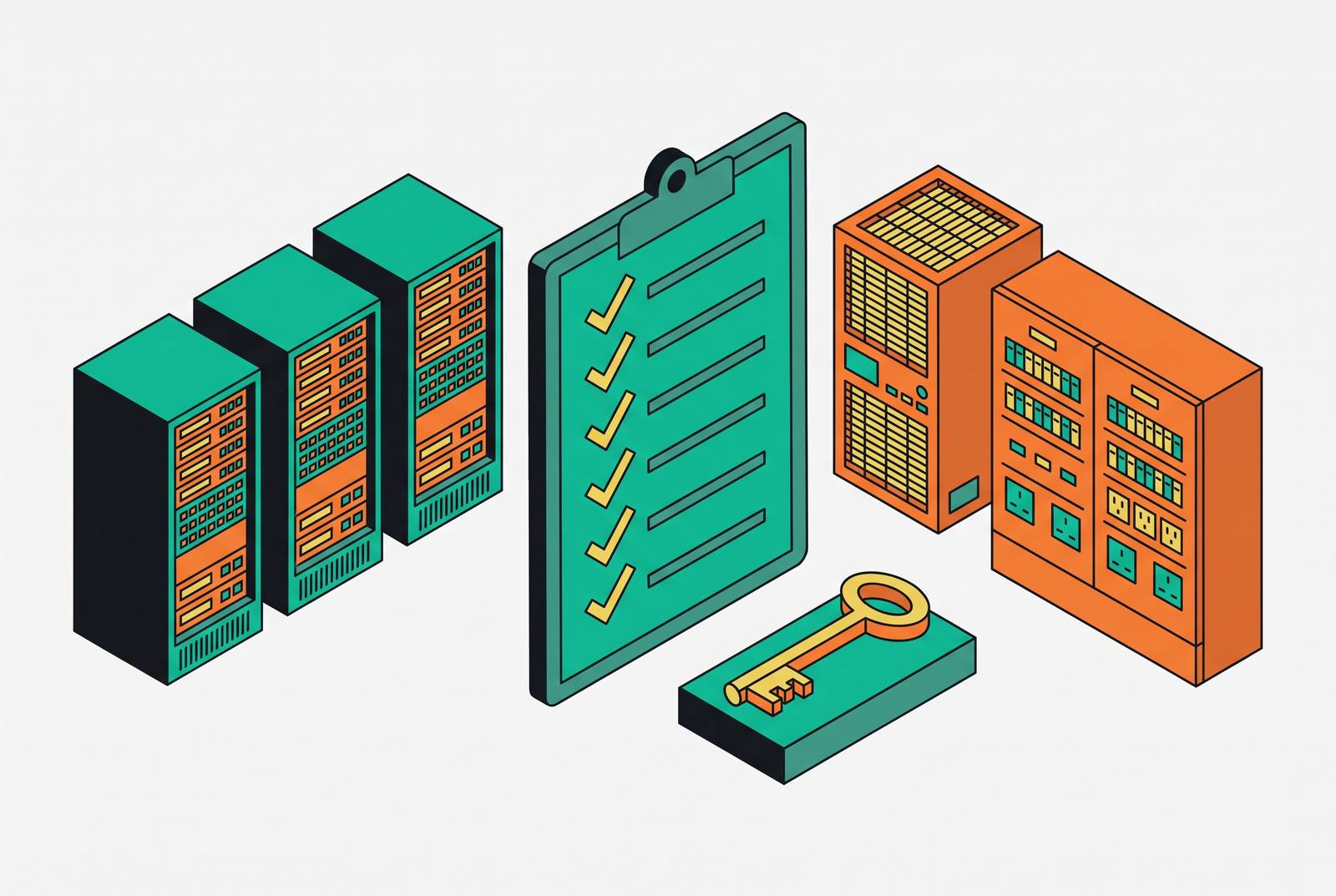
A go-live readiness checklist for critical-facility turnover must prove more than equipment performance. It must show that the people, procedures, monitoring systems, and outside support needed to run the facility are ready too. Five owner-assigned gates bridge that gap, with evidence rather than assurances deciding whether real load can arrive safely.
Why construction-complete and go-live-ready are two different states
A generator can pass testing while the permanent shift team still lacks the knowledge or approved procedures to respond to its alarms. Construction can be complete with operational gaps such as a lack of qualified coverage for every shift. They remain the owner's problem after the construction team leaves.
Commissioning sign-off therefore cannot end the delivery obligation. The finish line is a trained operations team that can carry real load, recover from a real failure, and account for assets in its monitoring systems. Falling short can trigger liquidated damages, transfer hidden risk, or leave the team unprepared for its first incident. With larger facilities, tighter schedules, and higher rack densities, that gap is harder to close and costs more if left open.
What a go-live readiness checklist must accomplish that commissioning checklists do not
Commissioning tests power, cooling, controls, and life safety against the Owner's Project Requirements and Basis of Design. Go-live readiness asks whether those systems can support safe operations under a permanent team. That means checking whether the organization, procedures, documentation, and integrated systems are ready, as well as how the equipment performs.
The useful structure is a set of gates, each with a single named owner, an acceptance standard, and evidence of completion. Evidence can include a signed acceptance record, a closed defect log, a completed drill report, or a written vendor response-time agreement. A status-call acknowledgment is not a substitute. The gates must also make dependencies clear, so the team knows what must close before the next readiness claim can stand.
One named readiness or operations leader must be in charge of the integrated plan. Construction, commissioning, and operations each control parts of the handoff, but none of those departmental boundaries should leave an item unowned. Gate ownership belongs to a person. That person must produce the evidence, which takes more than asking other teams for updates.
Gate 1: Integrated systems testing — proving the facility works as a system, not as a collection of subsystems
Individual subsystem commissioning is the precondition for integrated systems testing, or IST. It is not a replacement for it. A generator can pass its load bank test and a BMS can pass its point-to-point check without the two coordinating correctly during a utility event. IST exercises those interdependencies together, while failures can still be corrected before live operations depend on them.
Utility-loss testing must test generator start, ATS transfer, and UPS switchover as parts of the same sequence. Cooling-failure testing must check chilled water valve behavior, CRAH response, and liquid cooling loop performance at the rack density the tenant will use. Control checks must test interlocks and alarm-to-action sequences, including reversed contacts and closed valves that tests of individual systems may miss. Life safety and access control must also be tested with power and mechanical events. BMS and EPMS coordination must prove that monitoring sees and correctly interprets the physical response.
AI and high-density workloads make cooling tests especially hard to pass. A room can meet nameplate cooling capacity and still fail to remove heat at the rack. The test must therefore prove airflow, liquid cooling loop performance, or hybrid cooling behavior at the density being deployed. Nameplate capacity alone cannot close this gate.
Set out each scenario's acceptance criteria in the Owner's Project Requirements before testing starts. Log every test, deviation, retest, and final sign-off with timestamps and contractor and commissioning authority signatures. A test against undefined criteria cannot support owner acceptance. Finding a failure means IST is doing its job, but the gate closes only after a clean retest.
Gate 2: Documentation verified against the field — as-builts, SOPs, MOPs, and EOPs that reflect the actual facility
A technician responding to a 2 a.m. alarm works from the available records. If a sequence of operations was not updated after the last change order, the document can mislead the person relying on it. Spare-parts and bill-of-materials data can create the same problem when they describe something other than the installed equipment. Field accuracy is therefore a safety and operational continuity requirement.
The handoff must include current as-built drawings, single-line diagrams, equipment records, warranties, test results, asset data, and vendor contacts. Operations must know which records are final and who owns each open item. Warranty and service records must be centralized where the team can find them.
Standard operating procedures, methods of procedure, and emergency operating procedures must match the site's equipment, sequences, alarms, and staffing model. Procedures copied from another facility may not fit any of those conditions. Before handoff, the team must also have written records of change control, escalation paths, work permits, and risk-acceptance authority and understand how to use them. Design-to-as-built reconciliation needs a formal workflow and defined acceptance criteria.
ArchiLabs Studio addresses this fragmentation through a connected workflow for equipment data, cable routing, single-line diagrams, and rack layouts, so changes cascade through structured data rather than wait for manual reconciliation at closeout. That approach supports field accuracy, but it does not replace acceptance. Operations leadership must sign off that the documentation is field-verified and complete. Delivery is not sign-off.
Gate 3: Staffing and organizational readiness — the roles that must be in place before testing concludes, not on go-live day
Operations leaders hired after commissioning take on past decisions without knowing enough about the testing to challenge them. Shift technicians who arrive late miss the chance to see failure modes and system behavior. Reports cannot replace that participation. The permanent team must therefore be onboarded early enough to help with testing.
The Operations Readiness Manager holds the integrated handoff plan and assigns critical items an owner and acceptance standard. The Critical Facilities Manager is accountable for facility operations and shift coverage from day one. The Controls/BMS/EPMS Specialist must understand what the monitoring information shows and know how to respond correctly. The CMMS or Maintenance Planner prepares preventive maintenance schedules, spare-parts inventories, and work order workflows before load arrives.
These roles cannot be treated as extensions of the commissioning job. A commissioning engineer validates a failure sequence, while the operations team must recognize it and respond safely under shift conditions.
Uptime Institute's 2025 Annual Outage Analysis found a significant increase in human-error outages linked to failures to follow procedures. That makes training and procedure quality part of the uptime case. Evidence must include system training, alarm-response exercises, emergency drills, maintenance preparation, and role-specific qualifications. This gate closes when every shift position has a named, qualified individual, every procedure has been rehearsed, and the team has participated in at least the final stages of integrated testing.
Gate 4: DCIM, EPMS, and BMS integration — structured asset data that operations systems can actually use
Provisioning and populating DCIM for a single site is a multi-month effort. Starting at commissioning is already late, and treating integration as a go-live-week task is a structural mistake. DCIM, EPMS, and BMS need structured asset data at handoff. The schedule must account for software delivery and getting that data into working operational systems.
The technical crux is the BIM-to-DCIM exchange. Explicit schema alignment and a shared asset identifier strategy must be established before construction begins. Without that groundwork, design data can be lost between the design model and the systems that operations will use. Retrofitting integration after handover is significantly more expensive and rarely complete.
The recommended model uses DCIM as the live-state backbone and BIM as the geometric reference and design-of-record. With DCIM, IT operations and facilities teams can see the same physical assets, capacity, energy, and infrastructure dependencies. Mapping space, power, cooling, and weight together lets operators judge whether equipment can fit in a location without coordinating separate accounts of the same facility. That capability must exist before the first tenant load arrives.
ArchiLabs Studio's connected workflow can carry equipment data, rack layouts, power paths, and cable routing into a structured, schema-aligned handoff, avoiding re-entry from a stack of PDFs. The acceptance test, however, is the working operational environment. DCIM must be provisioned, populated with verified asset data, and integrated with EPMS and BMS. Monitoring coverage must be confirmed, and the team must be trained on the live system.
Gate 5: Vendor and supply chain readiness — confirmed in writing, not assumed from signed contracts
A signed service contract does not prove that a vendor is ready to respond. The gate must check whether the promised support is in place, whether the team can reach it, and whether the parts it needs are available. Response-time commitments need written confirmation in an active service agreement. The facility team also needs a specific escalation contact.
Critical spares must be physically staged at or near the facility. Catalog availability is a different state from staged availability, and it does not meet the same operational need. The same check applies to critical replacement components across the supply chain.
Escalation paths must be tested through a live scenario. A drill exposes whether the contacts and commitments work before an incident depends on them. Finding a vendor gap during that drill gives the team a chance to discuss the schedule. Finding it during a live event can mean an outage.
Close the gate only when every critical system has a named vendor contact, a written response-time commitment, confirmed spare-parts staging, and a tested escalation path. Operations must own the supporting records and be able to locate them at 2 a.m. Those records belong with the technical and asset knowledge handed over to the team.
Running the checklist: how to assign ownership, set acceptance standards, and manage the go/no-go decision
The Operations Readiness Manager or equivalent must turn these gates into an executable plan. Give each gate one owner and agree on the acceptance evidence before judging the work complete. Set out what depends on what early enough for staffing, documentation, and systems integration work to start before final testing ends. Gate order describes the logic of acceptance.
The go/no-go meeting must require each gate owner to present closure evidence. For IST, that means signed reports with acceptance criteria met and retests recorded. The other gates need operations to sign off on field-verified documents, proof that every shift has all its qualifications, monitoring that works, and written proof of vendor readiness.
Items safe to carry into a defined hypercare window need a named owner and a close date. Go-live should wait if open items put operations at risk. Compressed schedules will put pressure on that distinction, and holding the evidence standard is the readiness leader's central responsibility.
ArchiLabs Studio's connected records of design decisions, equipment parameters, RFI answers, and as-built data support traceability at this decision point. Connected delivery makes evidence easier to produce than fragmented records reconstructed at closeout. It does not remove the need for post-go-live hypercare during the two to six weeks when remaining gaps become visible in operation under real conditions. Define that period with on-call operations leadership, escalation paths, and a formal stabilization review.